The Way You Tell ’em

Did you hear the one....?

Did you hear the one….?

A one-act play I penned was recently selected as runner-up in the STERTS annual competition and will receive a rehearsed reading in the Cornish Theatre as part of the prize for the same on December 7th, a night I’m very much looking forward to. If anyone is in the Liskeard area, it would be great if you could come along.

The play in question was initially inspired by a joke so I thought I’d revisit why jokes are such a great source of plot ideas. They are plots in miniature. Stories sealed up and ready to go. You’ve got your beginning, middle, end, your conflict, your characters – flaws and all. All you’ve got to do is flesh it out, expand on it, change gender and setting if possible. And no, your ‘adaptation’ doesn’t have to be funny because many jokes (indeed, stories) need an element of tragedy to make comedy (and vice versa) and you can just crank up the aspect you want to emphasize.

Here’s the joke that gave me the idea for ‘The Angel of Szepfalu’:

“It was Ryan’s funeral and the pallbearers were carrying the casket out from the church. When they bumped into a pillar, one of them heard a moan from inside the coffin. They opened the lid and found Ryan alive. He lived for another ten years before he properly died. Another funeral was held for him and, as the pallbearers were carrying out the coffin, Mrs Ryan shouted “Now, watch out for that pillar!”

OK, it’s the way ya tell ‘em… But the point is that they don’t have to be the funniest jokes – just so long as there is a story in there, a universal truth with which your readers will react and engage. Wordplay/puns won’t work so well, go for the story…


Ommmm…

Image

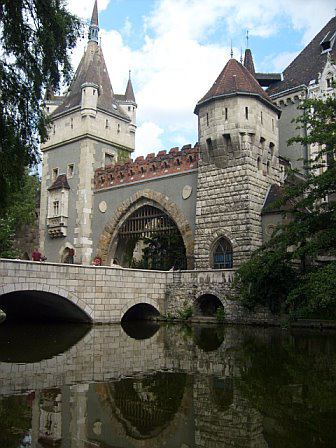
After the whirlwind of an Escalator Showcase reading in London – a launch platform to present us ten Escalatees to agents and publishers up in the big smoke –  I’ve retreated to the Tyrone Guthrie Centre at Annaghmakerrig, Co. Monaghan to breathe.  There’s a lot to take in, so much has happened over the past six months – not least that I’m now happy to say I’ve signed with Andrew Mann Literary Agency and am represented by the lovely Louise Burns.

I’ve been contacted by some good agents over the past few months and all were nice, interesting and helpful, but I felt that Louise and co. at Andrew Mann were the most excited about my work. This is the essential factor for me. And I really clicked with Louise.

So, I’m here lost amongst the undulating green hills of Co. Monaghan for two weeks, doing final revisions on the novel and trying to digest all that has transpired since last January.

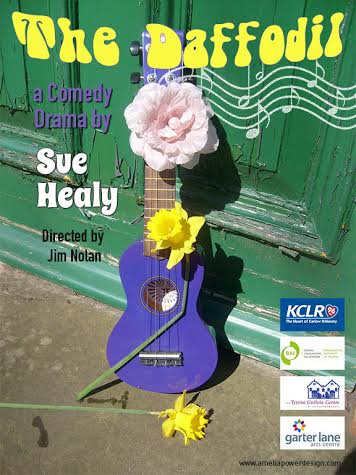
It’s hard to believe that this year alone, I’ve served as artist-in-residence on Inis Oirr, been an Escalator Artist and had my debut radio drama ‘Cow’ broadcast (which I also produced). I’ve seen a staged reading of my play ‘Shellakybooky’ in a Festival of Contemporary Drama, in which I also acted. I wrote a radio drama series ‘The Daffodil’, for which I’ve also now received funding  – we hit the studio in Ireland next month. And, of course, I’ve written a novel, ‘The Hole in the Moon’, which will hopefully start doing the rounds of the publishers next month. Not forgetting that I concurrently wrote a screenplay of the same which has been now selected for the Script HotHouse scheme.  In December, my one act play ‘The Angel of Szepfalu’ will receive a rehearsed reading in Cornwall’s STERTS theatre as runner up in their annual playwriting prize and lastly my short story, ‘The Boot’ has been shortlisted for the HG Wells Prize and will be published in the anthology, to be launched in Folkestone in November. Yes, all of this has happened this year. But it took years and years of work to get a year like this.

It’s been a whirlwind, thankfully for the next two weeks, this is my view every morning. Ommmm…


Cornwall Ahoy!

A little ship has come home to port, fittingly a Cornish one.

If you follow my blog, you’ll be aware that I liken my speculative writing send-outs to ships. I keep a ‘ship’s log’ of the short stories, plays and other texts that I’ve sent off and their fate. The idea of surrendering my ships to the waves, where I am no longer responsible for them, appeals to me. Once it’s gone, it will either sink or come home to port laden with the encouragement provided by a publication acceptance, an award or recognition in some form. And a ship home to port is cause for celebration, no matter how little the vessel.

Yesterday, I received news that a one act play I wrote, ‘The Angel of Szepfalu’, was runner up in the annual play-writing prize run by STERTS Theatre, Cornwall. As runner up, I receive a small cheque and a rehearsed reading of my play at the theatre. I’m travelling to Cornwall for the same. It might seem like quite a trip (from Norwich) just for a rehearsed reading but any recognition of a writer’s work needs to be embraced. I’m flattered that they like my play and want to support any organisation which does the same.

This will be the third rehearsed reading of my work. Previously, my rehearsed readings have taken place in Brighton and Norfolk. So, if nothing else, my plays are taking me on a tour of coastal England – rather fitting for ships.


12 Little Screenwriters

Image

I’ve been X-Factored. Or, at least, I’ve been chosen as one of twelve screenwriters selected from the East of England region for a script development scheme which will feature mentoring and round eliminations, a structure reminiscent of X-Factor (albeit sans Cowell).

Write2screen’s “Script HotHouse” is supported by Creative East and the National Writers’ Centre. And in late September, we, the  selected dozen of writers, were given an initial intensive day-long workshop by Michael Lensfield and Christabelle Dilks, both highly experienced film industry professionals. In fact, many of us have been previously tutored by Michael at UEA where he lectures in screen adaptation. What Michael taught me about plot and story back then has influenced all areas of my writing – so if I don’t get any further than that one day workshop we had in September, just having another opportunity to attend a class led by Michael was worth it. Seriously.

We now have to submit a revised synopsis and the first thirty pages of script by Oct. 25th. Thereafter, only six will be selected to be ‘hot-housed’ to completion of the script. And from this half dozen, only three scripts will be chosen to have their work presented to industry professionals and film-makers.  I’ve already written a draft of this script so I’m currently revising the first act in accordance to what we gleaned from Michael and Christabelle’s workshop.

So, here’s hoping my ‘act’ makes it through to the next round. I’m certainly giving it my best shot. Action!


The Shape of Things to Come?

Today is HG Wells’ birthday – and he must be sending some of his groovy bday vibes my way as my story ‘The Boot’ has just shortlisted for the HG Wells Grand Prize. Will be published in the anthology following the launch and winner announcement on Nov. 17th in Folkestone. Will keep you posted.


A Novel Approach


Writers’ Centre Norwich, who oversee the Escalator Scheme of which I am part this year, have uploaded to their website an excerpt from my recently completed novel, ‘The Hole in the Moon’. To access it, please click HERE

Image

Synopsis: Dan P. Power is a self-loathing Irish dwarf who, as a child, fell from a tree and flattened his younger brother. With a life so luckless, no one should blame Dan P. for snubbing society, employment or for whiling his time away in Dublin’s pubs – least of all his dwarf girlfriend Stella, his parents or his therapists. They should leave him alone. He’ll stop drinking when he meets ‘the one’, everyone does.

And he meets her, Dora, a beautiful Hungarian masseuse who concocts strange herbal brews. Dan P. is so enraptured that he makes a pilgrimage to a mysterious ‘sheila-na-gig’ carving on land his father has acquired on Trafadden Island, to seek help with the conquest of Dora. Dan P. soon learns that Dora has abruptly returned to Hungary, however. Undeterred, he elects to go in pursuit of her, leaving Stella heartbroken. 

Dan P. doesn’t like abroad. It’s too hot, all wrong and Stella isn’t anywhere to help; she won’t even answer her phone. Aid eventually comes via three old eccentric sisters: a flower seller, a beggar and a bee-keeper. The trio lead him to a castle where Dora is being held by the enigmatic guru, Wolfgang Attila, the leader of a strange cult. Thus, gathering all his courage and honing his circus skills, Dan P. sets about rescuing Dora, with a number of unexpected outcomes…

‘The Hole in the Moon’ is a humorous Magic Realist tale which weaves redemption plot and love story.


Pitch Perfect @ #pitmad

Image

#pitmad is a Twitter event, a twelve hour window today during which you can pitch your novel to agents via a twitter post. The post must include the hashtag #pitmad and the genre of your novel (ie Adult, Young Adult etc..) – which leaves about 135 characters with which to pitch your MS and is an excellent way to hone your ‘elevator pitch’.

For those of you unfamiliar with the phrase, ‘elevator pitch’ is a Hollywood term script writers use fo the one/two line story synopsis one might use to sell one’s screenplay if one had the good fortune to run into Stephen Spielberg in an ‘elevator’ – and wished to use those 30 seconds to impress upon the director, your script’s great potential. The most cited example of an ‘elevator pitch’ is Star Wars being touted as ‘Jaws in Space.’

Getting to the crux of your story is crucial for a writer. Nonetheless, it is surprising the number of writers who are unable to sum up the kernel of their tale. And if you can’t, you’ve got a problem. You may have to finish your novel before you figure out the essence of your story but you do need to know what this is before you submit to agents.

For fun (useful fun!), I decided to write ‘twitter pitches’ for most of my recent work. See below or follow me on Twitter:

Novel THE HOLE IN THE MOON: Self-centred Irish dwarf leaves girlfriend & follows sexy Hungarian into kooky cult – redemption via 3 crones.

Radio Drama THE DAFFODIL: Closet-case narcissist hire alcoholic Eurovision has-been for singing lessons, forcing both to face their true selves.

Radio Drama COW: Infertility & arrival of Hungarian woman unsettle Irish couple. Howevr friendship develops & both women come to new world view.

Stageplay SHELLAKYBOOKY: Expats in Budapest are ignorant of host country/culture until son’s graffiti obsession unwittingly ignites revolution.

Stageplay SHEILA-NA-GIG: Opposing philosophies battle as diverse inhabitants of island vie for possession of recently unearthed female carving.

Stageplay ANGEL OF SZEPFALU: A legacy-focused racist mayor, a bitter Roma ghost & a technophobe blogger in farcical tale regarding human hubris.


Would love to read yours…


A Definite Daffodil

Image

Just got news that my KCLR 96fm radio drama series The Daffodil has been given the funding nod by Broadcasting Authority of Ireland – should be hitting the studio in October. Oh yeah!


The Agent Secret

Image

There’s a crackle in the air this morning, kids are back at school, autumn is here and it’s time to take stock. I’ve had a high gear year so far. Having won the Escalator Award – a professional development scheme for writers – I was determined to use 2013 finish my novel with the encouragement and direction of my Escalator Mentor, the novelist Tobias Hill. And I have.  The time and investment the scheme afforded me has not only resulted in a completed MS of ‘The Hole in the Moon’, but also a screenplay of the same (and the screenplay has now been selected for further development with the Script Hot House scheme).

Next step for the novel is to find an agent. This is not the easiest step. As an Arts Council funded Escalator Prose Artist and a UEA Creative Writing MA graduate, who is also an award winning writer with a long list of short-stories published, plays broadcast and staged – you might think that I’ve automatically acquired the secret handshake that allows entry into the exclusive world of agented writers. This is not the case. My track record makes it likely that my submission will achieve some attention when submitted, ie I might make it to the top of the slush pile that week, but only the quality of my writing will result in an agent contacting me re representation. 

I’ve been researching the subject of agents over the past week and it makes for sobering reading. Most agencies in London will receive an average of 450 manuscripts a month. From this figure, they might contact 3 or 4 regarding representation. And from those, perhaps one will go on to be published. Yes, it’s that competitive so don’t approach an agent lightly and send them you work only when you feel it is perfect. Tips on approaching agents include the following:

1)      Finish your novel before you contact an agent.

2)      Buy the lastest Writers and Artists Yearbook (if in the UK or Ireland) or the US/Can/Aus equivalent and make a list of agencies/agents who might be interested in your work. Think of an author whose work yours resembles and find out who their agent is (usually mentioned in “acknowledgements” page in a novel.) Research – make sure the agent you contact is interested in the type of book you are proposing. Check the “Yearbook”, if the agency states ‘no Romance’ don’t send them your love story. If they say no email submissions, do not submit by email etc… Make a list of twenty suitable agents.

3)      Most agents (but do check first) should be approached with a cover letter of not more than a page in length, outlining your project and a brief bio. Also attach a one page synopsis and the first three chapters (or first fifty pages) – but as I said, do check with the submissions guidelines on their website.

4)      Be polite and business like. Don’t adopt a grovelling/humorous/aggressive or any sort of extreme tone in your cover letter. Don’t send pictures of your cat or try to be cute.

5)      It has now become acceptable to send out multiple submissions to various agents however, if you are doing so, it is only polite and respectful of agent time to let the agents know you are doing this. You might want to limit this send out to three agents at a time.

6)      Some agents will get back to you within three weeks, others might take up to six months. Some you’ll never hear from at all. I feel that if you’ve not heard back after three months, it’s unlikely they’re digging your manuscript. It is acceptable to send a nudge email at this point to clarify but don’t be terribly surprised if you don’t even get a reply then. This happens, don’t take it personally.

7)      If a number are interested in your work, make a list of your specific needs and choose the agent who might best meet them. However, your choice may all come down to chemistry in the end. Do meet them personally.

8)      If you’re turned down across the board (say 20 or 30 rejections) you might want to rethink your project, put it in a drawer and get started on another. Some agents may have been generous enough to give you feedback re why they didn’t feel the book was right for them. Take note and come back to their comments in a few months when the raw disappointment has eased. If it is any consolation, I don’t know a published author who hasn’t got at least one unpublished novel languishing in a drawer. Put it down as part of your training as a writer and get cracking on your sophomore MS.

I Read the News Today, oh Boy!

Image

Following a brain popping sojourn at the Edinburgh Fringe I had to whoosh to Kent for the wedding of two of my favourite people on earth. A perfect day, finishing a perfectly inspiring couple of weeks. I’m on my way back to Norwich and saw this headline advertised in a railway station and it made me think of how wonderful a source of story ideas newspapers are.

 I worked as a journalist for many years and believe that the paper press is the richest source of inspiration available to writers. For starters, take this headline, and without reading the story what do you think could lie behind it? Or, you could just take an existing story and change the setting/gender etc… to make it your own. Ideas will come to you as you work on it.

Alternatively, you could apply the ‘what if’ question to a story’s possible outcome. The‘what if’ question prompts you to consider alternative endings. A good example of this question is Stephen Fry’s Making History, in which he explores a world where Hitler was killed in WWI but an even more dastardly figure comes to prominence, and wins.

The small ads section can spur the imagination. Hemmingway once said his best work was one he wrote in six words: “For sale: baby shoes, never worn”. It’s clever as there is clearly a heavy back story here but Hemmingway, being Papa, does not spell it out. My point is that you could operate in reverse, search the small ads and then write its back story. Think of the tale behind a novel that ends with that small ad.

Then there are photos. Ignore the captions/related stories. Look at the photos and guess what is going on. Develop an identity for someone in the background of a picture. Give them a problem. Imagine how they are being affected by the main event in the photo. The key is to go for the more obscure shots. Obviously, if it’s a picture of 9/11, the chances are you’re not going to come up with anything too original but if it’s a picture of a man biting a dog, you may be on to something.

Go hunting, Newshound!