Send me the Displaced

Image

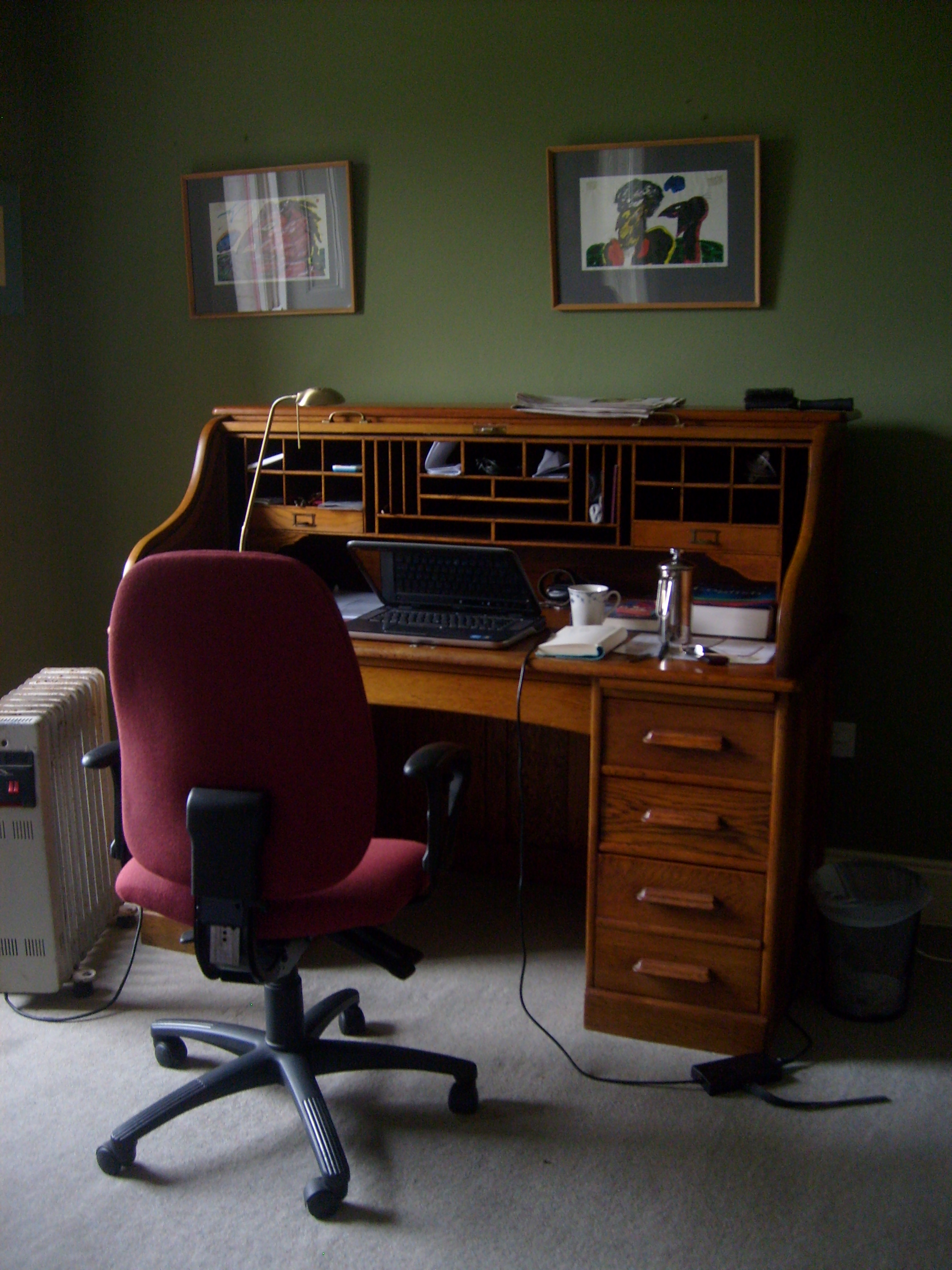
Sit at computer, bring up blank page, make a cup of tea. Sit at computer, look at blank page, do the washing up. Duration: 1 hour. Word count: 0

If this sounds like your typical writing pattern, you’ve got company. The sudden urge to do housework, rearrange books, check your bank statement- when you really ought to be writing is known as ‘Displacement activity’.

Displacement activity, all the stuff you do that is not the stuff you are SUPPOSED to be doing, is the bane of a writer’s life. Avoidance is probably a more readily understood term, but doesn’t sound half as writerly. What happens is a little ‘displacement monkey’ in your mind distracts you from the task at hand, by urging you to ‘make another cup of tea/check the TV guide/your bank account/ebay/post on this blog : ) rather than crack on with that difficult piece of dialogue you’re trying to get down.

I don’t believe displacement activities are wholly bad. They sometimes happen for a reason. Perhaps what you’re working on needs time to settle, or percolate in your mind and, after you’ve bought those gloves on ebay, it will all come together. However, I think I’d get a lot more writing done if I didn’t have an Internet connection in my office.

Still, I know a few writers who keep their displacement activity on hand – as another creative hobby such as painting, and they believe one such activity complements and feeds the other. So, they may start painting and then half way through THAT activity they’ll turn back to their writing as a displacement activity for their painting and so on…

As with everything in writing, if you find your displacement activity works for you, then go knock yourself out with it. If it is a hindrance, then find a way to stop it distracting you such as getting a room with no internet connection. I recently heard of an app called ‘Freedom’ which will block your internet connection for an hour, making you get on with that section you’re meant to be finishing today… maybe I need to try it out right now… bye…


Image

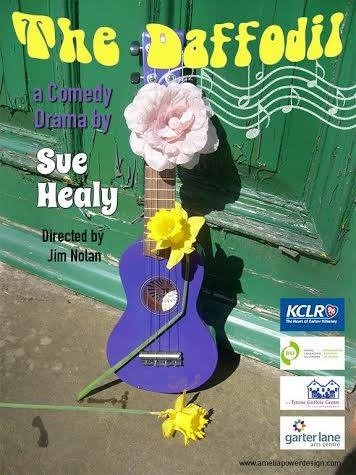
Delighted to post this review from Waterford Today Newspaper for my radio play ‘The Daffodil’ which broadcast on KCLR 96fm at the end of February.

“A very funny play, ‘The Daffodil’ nonetheless dealt with a number of serious global themes which impact contemporary Ireland: alcoholism, closeted homosexuality, the dangers of celebrity culture, loneliness, misplaced nostalgia and denial. However, the work is essentially entertaining and its sparky dialogue combined with a significant musical aspect to lend it a broad appeal.”

Please note: I don’t know when/if there will be a podcast – but I’ll keep you posted. Please see the side bar for a link to listen to my previous radio play ‘Cow’.

And if any of you are in Cork, Ireland, please see if you can catch ‘Dreamland’ playing at the Everyman until March Sat. 15th. ‘Dreamland’ was written by one of Ireland’s leading playwrights and directors, Jim Nolan, who directed both my plays. Michael Power who plays ‘Liam’ in ‘The Daffodil’ and ‘Damien’ in ‘Cow’, also stars in ‘Dreamland’. It’s a great play and causing quite a bit of controversy in Ireland – which is always a good sign.

Continue reading

What Writers Want

On Tuesday, March 4th, I was asked to give a provocation at Writers’ Centre Norwich (monthly salon) re what writers want. I thought it might be of use to publish the points I made here. Please feel free to comment.

Image

Writers want to write (usually). However, writers may also want a holiday in the Maldives, a Thai massage, to lose weight, to meet George Clooney and to win the Lottery. So, for the purposes of this provocation, it is probably best to concentrate on what writers need. There are three needs to which all writers must attend: to find time, to obtain honest criticism and to cope with rejection.

Time:

Individual writing needs are subjective, obviously. Stephen King likes to write with a wall of heavy metal music blaring in the background. Zadie Smith opts for a silent, darkened room, while J.K. Rowling famously favours bustling cafes and the motion of trains. Nonetheless, one need all these writers have in common is that they all need time to write. Virginia Woolf once said that a great obstacle for writers (particularly female writers) is a pram in the hall. Children are doubtless demanding of the writer’s time. However, Virginia was a wealthy woman and perhaps unaware that in the hallway lurks another time-killer for writers, one which probably didn’t bother Virginia that much – bills on the doormat. Yes, the need to pay rent, bills, feed and clothe yourself means that unless independently wealthy or supported by a generous, affluent partner, most writers will have to work to survive. This will result in limited writing time. Therefore, one of the first matters to address when you begin your career as a writer is how you are going to find and fund time to write.

Get a day job seems the obvious answer. Some writers opt for a writing-related gig such as teaching creative writing or journalism. However, both are rather stressful jobs and you have to be careful that you leave time for your own writing. When I worked as a journalist, a keyboard was the last thing I wanted to see when I got home. Therefore, there is much to be said for working in a monotonous job that requires no writing and little mental effort (on a factory line, for example). And such a setting keeps you connected to the real world and can provide good material for our work. The writer Nell Dunn chose factory work for this reason and her experiences translated into her landmark 1960s T.V. series ‘Up the Junction’. That said, taking a factory line means the loss of social status, which can be an issue for some, especially if they have spent many years studying for an MA etc… Alternatively, yo ucna investigate obtaining funding from the Arts Council which allows writers to buy time. As a 2013 Escalatee, I received an Arts Council grant which gave me the freedom to go part-time at work for the greater part of a year – the fruit of which was a completed novel and screenplay. Be aware that the Writers’ Centre Norwich will read over your Arts Council application before you submit.

Criticism:

Writers need objective criticism and your mum usually doesn’t provide the same. Rather, you need honest feedback from fellow scribes. It is an idea to approach writers in your community whose work you admire and offer to swap work for feedback purposes. It is not easy to take criticism onboard but to improve, you must. It is fine to defend your work or disagree with comments made but remember your critics are giving a reader’s perspective and if they’re confused/unimpressed, it is likely your readers will be also and you will not be able to phone all your readers and defend your choices. Learn to listen and consider the criticism you receive. You can contact fellow writers via writers’ groups, writing classes and the Internet. Also, there are commercial manuscript-critiquing services. The Writers’ Centre Norwich has some recommendations in this regard. Moreover, rejected work is sometimes returned with helpful criticism. Read it, consider it, re-work your piece and send out a better version. Your writing skills will improve with each new draft of your work.

Rejection:

Learning to cope with rejection is one of the most difficult, yet most important of the writer’s needs. You are a writer and you will fail and your work will be rejected. And you will be rejected again, and again. Not only do you need to keep going, you need to learn how to deal with these constant dismissals of your work. Having a brass neck would help, however writers tend to be a sensitive bunch. I’ve seen a number of very talented writers give up because they couldn’t hack the (seemingly endless) rejection. Equally, I’ve seen lesser talents succeed because they mustered the strength to suck it up and keep going. Some use drink as a crutch (probably not to be encouraged, but it can be fun in the short term). My own coping method is to send out so many ships, be they short stories, screenplay pitches, radio dramas, funding applications, that if one ‘sinks’ I hardly  notice and simply concentrate on launching more. As someone said to me once, if you knock on a door three times you might not get a reply, if you knock on a door three-hundred times, someone will hear you.

The Top 5%

Image

Good Valentine’s day news from the Beeb yesterday; of the almost 3,000 script submissions to the BBC Writersroom scheme, my screenplay, ‘The Hole in the Moon’ has now shortlisted to the final 5%  full read. Another month before final decisions are made – but I’m happy to have made it thus far.

With my radio series ‘The Daffodil’ kicking off next week – 2014 is striking a good pose.


Truth Will Set You Free

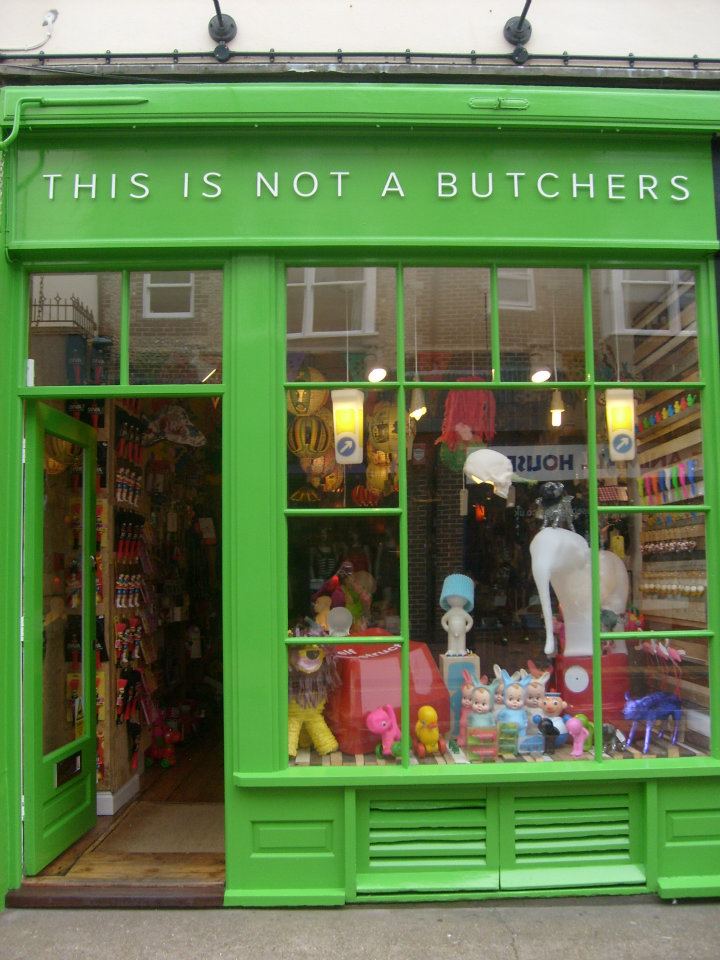
A Truthful Shop, Brighton.

Truth is not fact.  A fact is, well, a fact – something undeniable like ‘the sun rises in the east’. Truth is far less easy to quantify, to prove, to grasp. Truth is more subjective than fact, and depends on the belief system of the beholder.Truth is the reality you feel it to be and the artist’s job is to capture and communicate that truth.

Writing from truth, what you feel passionate about, can lend work real emotion, emotion difficult to conjure otherwise. Tears in a writer will bring tears to a reader. And as an artist, it is often your job to stand naked in front of the world, truth in hand. Truth is writing what you believe.

Writing from fact is reportage, when you write using ‘truth’ you add extra spice and colour to the mixture to make it fiction, more interesting, and more moving.

And remember, an issue with writing from reality is that ironically, fact is often too weird and too unbelievable to work as fiction. Your readers will say, ‘oh, come on, that would never happen.’ And you can’t phone them all up and say, ‘actually, it did. I’m not making it up. I once knew this bloke…’ Instead, you’ve often got to tone down the story to make it more credible. Real-life coincidences can be particularly problematic here.

So, be careful with facts… but always write with truth.


The proverbial…

Wise old trees

Writers worth their ink need to be making some point with their story. Beneath your storyline, there should be  a deeper message. It is a writer’s (or artist’s) job to present the human condition as they interpret it. So, once you’ve shaped the general idea, you should sit back and consider what it could be saying on a universal scale.

Consider Aesop’s Fables; each one is a tale that could be enjoyed on a superficial level by a child, yet there is a deeper meaning, or moral, which endeavors to teach the child some universal truth about life, i.e. being slow yet determined is often better than being hasty and fickle (Tortoise and the Hare).

A good place to seek inspiration is a list of proverbs. A proverb is usually a metaphor and encapsulates in simple terms, a lesson from the common experience of humanity. Here’s an exercise that might get you going: sit down and have a think about the specific meaning of the following and then go freewrite a story illustrating this philosophy.

Graveyards are full of indispensable people.

You can catch more flies with honey than you can with vinegar.

A little learning is a dangerous thing.

The belly has no ears.

Trees don’t grow to the sky.

A dumb priest never got a parish.

The only free cheese is in the mousetrap.

Eaten bread is soon forgotten.

The squeaky door gets the oil.


New Year Ships’ Log

It’s 2014 – a year that still sounds to me like the title of a Sci-Fi movie. And I’m hoping the spaceships I encounter over the next twelve months will be of the friendly variety .Veterans of this blog will know that when I refer to ‘ships’ I’m talking about all the texts/scripts which I’ve sent out on spec re publication, staging or broadcast etc… I have always liked the idea of my work as ‘ships’ as it somewhat relieves me of responsibility – once launched, they are out there and I can only hope they return to port in some form, preferably laden with a win or publication.

Last year I sent out a total of 59 ships. Some 17 returned to port, 39 never made it. Rejections/disappointments/ non-runs/PFOs are part and parcel with the writer’s lot and learning how to handle them is one of the most important (and difficult) lessons a novice writer faces.

I when I was 22, I wrote seven short stories. They were bad, really pretentious, decorated with adjectives and adverbs and with no theme or character development or point to any of them at all but I thought they were pure genius. I sent them off to every magazine I could find in the bookstore. And waited. And waited. And waited… until I became convinced that they had all been lost in the post. It was the only explanation, surely, as any editor would recognize my genius immediately, no? A couple of months later, I received a single rejection letter. And the truth dawned. No one else even bothered replying. It was 100% rejection. I was floored. I burned the stories I was working on and I didn’t send anything else off for another ten years.

That was very stupid of me. I should have brushed myself off and tried again. I would be in a much better position and be a better writer now if I had. But I wasn’t strong or  mature enough to know that then. Ah, well. During my first year on my MA at UEA  (2009), I sent out another batch of stories. I’d had a few shorts published at this stage and was confident that I’d now win every competition going and it would pay my MA tuition. And, again I got nowhere. I was pretty down but I recalled how I’d let rejection defeat me before and vowed it wouldn’t happen again. I sent out more, and then more and after six months, I had bagged the Mary and Ted O’Regan Award, and then the Annaghmakerrig award and the Molly Keane Award, the HISSAC, the Sussex Playwrights’, the Meridian, the Escalator Award. I’ve now got two broadcast radio plays under my belt (and am working on a third)  as well as signing with an agent and my novel is currently on submission to publishers. My  short stories have been published in seven anthologies/literary publications. I’ve had staged readings of my work in Norfolk, Brighton and Cornwall. I’ve served as writer in residence on the Aran Islands, lead workshops in creative writing in Ireland and the UK and teach writing for a living. These are all ships that came home to mama over the past five years but believe me, many had to sink before I saw the slightest hint of success.

Don’t give up – look at how you can improve your rejected story/script/novel/play and send it out again. Remember, much depends on what the magazine or the competition judge is looking for at that particular time, it may not be a comment on your writing skills. It’s all about not giving up.

The 2013 stats:

Ships sent out: 56

Wins/acceptance/short-listings/publications:17

Ships sunk: 39

The 2014 stats thus far:

Awaiting news on 13 ships launched

Wins/acceptance/short-listings/publications: 1

Ships sunk: 3


You On Your Rocking Chair, Me On My Bench

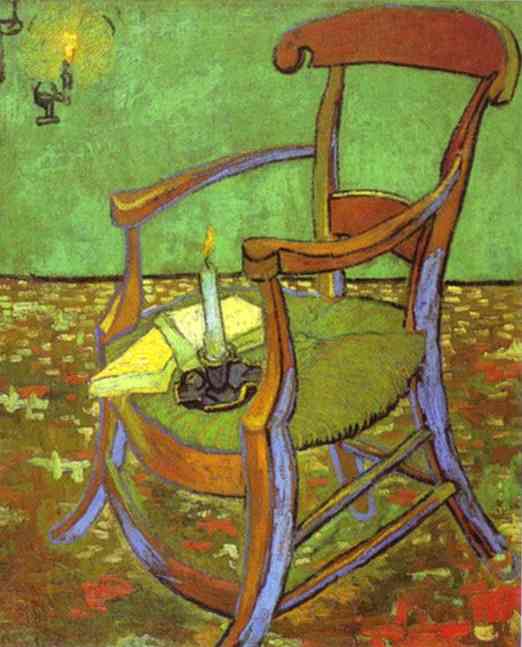
Van Gogh’s Portrait of Gauguin’s Chair

Setting and character description are linked. A man who favours a torn leather armchair filled with cushions is  quite different from a man who rathers sleek minimalist designer furniture. The setting should complement and reflect the character.

It is often effective to draw around the character, sketch them in their absence. What type of chair do they favour? Wallpaper? House? What book is left on their bedside table? Is their office desk obsessively orderly or natty and neat?

I have a background in fine art painting and I find painting is a great way to understand this aspect of character description – the concept of describing your characters by drawing around them rather than delivering a direct portrait of the same. I like to compare these two portraits by Vincent Van Gogh: one a self portrait and the other Van Gogh’s portrait of Paul Gauguin.

What do you think Vincent is communicating regarding his own and Gauguin’s character and personality?

(Bear in mind that Van Gogh and Gauguin were close once but their relationship became strained when they house-shared at Arles – when these portraits were painted.)

And how would you paint these two portraits in words?

Van Gogh’s Chair, Self Portrait


Cow – the movie

I’ve finally uploaded my debut radio play, ‘Cow’ to YouTube. I’d love you to have a listen…

Storyline: Agi Kovacs, a beautiful Hungarian woman, arrives on Clearys’ farm, Glenmore, Co. Kilkenny, Ireland, to work as a mushroom picker. The Clearys’ already strained, childless marriage appears under further threat by her presence, however an unlikely friendship develops between Marie Cleary and Agi, leading both women to a new world view.

I wrote and produced the play which was directed by Jim Nolan and featured Michael Power (Game of Thrones), Madeleine Brolly and Geraldine Crowley,

‘Cow’ was made with the support of the Broadcasting Authority of Ireland (BAI) for broadcast on KCLR 96fm in April 2013.


Daffodil Wrapped

Daffodil Wrapped

Sorry about my silence of late. I’ve been very busy with a number of projects most particularly ‘The Daffodil’ – a radio drama series in five episodes which I wrote, produced and wrapped this weekend in Ireland.
Starring Michael Power and Jenni Ledwell, with Jim Nolan in the director’s chair and Eugene Sully on sound – and musical arrangements by Natasha Purwin and Will Fergusson. It was a blast to make.
Set on the fictional Irish island of Trafadden, The Daffodil tells the tale of the relationship between Eurovision wannabe ‘Liam Egan’ and Eurovision hasbeen ‘Banba’, both mired in denial for different reasons. It’s got laughs (I hope) and music and brio – all of which were brought to the table by a stellar cast and crew.
I don’t have the dates of broadcast yet, but expect it will be in early January 2014. I will let you all know. Promise to get back on top of regular posts very soon.