Tag Archives: writing exercise

Murder Your Darlings

The importance of editing.

Giving it polish

A writer has to be prepared to wear two very different caps. First cap is that of the creative free thinker who is focused on the big picture and is not too worried about the details. This is the person who comes up with the story, the theme, the basic structure, the person who invents characters and decides on the tone. This artist-writer will draw up the first draft of the story, writing only to please themselves. Finishing a draft wearing this cap is only some of the journey, however…

Next comes the cap of editor-writer. This is when the writer combs through the text, ruthlessly chopping, restructuring and cutting unnecessary/ unsuitable words, characters, scenes, phrases etc… or as they say in publishing “murdering your darlings”. This is the writer preparing the text for other people. It is a good idea to leave a few weeks between your artist and editor incarnations.

Editing can be painful, and time-consuming. You’ve quite likely become attached to some characters, scenes, words and phrases and are loathe to see them go. Don’t worry, you can store them in your “writer’s bag” for use at a future time in a more suitable context. In the meantime, get pruning…

Chopping advice:

Cut all surplus adjectives and adverbs.

Examine the phrases you’ve shoehorned in just because you liked the sound of them – do they really fit that scene? Be honest. If not, bin them.

Take out all vague words such as “seem/seemingly” and try to do without your “justs”.

Look at all sentences that run for two or three lines. Do they really need to be that long? Can you reduce them or break them up? If you can, do so.

Active forms are better than passive forms, where possible (ie. “John cleaned the flat” rather than, “the flat was cleaned by John”).

Finally, every writer on Earth needs a reader or two – fresh eyeballs to run over your work and give you honest feedback. I suggest using three friends whom you trust will be frank with you. You don’t have to take everything they say on board. Do consider what they say, however, and if all three come back and say a character is not working. The character is not working. Rewrite.

So, what’s your story?

I’ll tell you a story about Johnny McGory.

Will I begin it?

That’s all that’s in it.

Irish nursery rhyme.

What's the story?


Story trumps all. The toppermost bough of the literary elite tree may disagree and say literature is about language, the perfect sentence, la mot juste. However, for most writers in today’s economic climate – if you don’t have a sound story, you don’t have a publishing deal. Having a well constructed plot and a good story means you’ll be forgiven all sorts of other failings (blingy adverbs, oddball syntax, clichéd characters). It’s simply today’s reality.

Firstly, in order to have a story, you have to have some sort of conflict. These conflicts usually fall into one or more of the following categories:

man vs. nature

man vs. man

man vs. the environment

man vs. machines/technology

man vs. the supernatural

man vs. self

man vs. god/religion

Examples of good conflict ridden plots can be found everywhere, in the Bible, Greek mythology, Shakespeare, ethnic folk tales and even jokes.

Structure

A typical story structure might be plotted thus:

Stasis – the status quo. The reader is introduced to the character and setting.

Disturbance. Something occurs which upsets the normal run of things. For example, a stranger arrives in town.

The main character is affected by the disturbance.

The main character decides on a plan of action to rectify or improve matters.

Obstacles stand in the way of the plan of action succeeding.

Complications occur in the guise of choices/new characters/new ideas/discovery.

These lead to a crisis, when the focus of a play comes together in an unavoidable way.

The crisis usually leads to a climax or the major confrontation.

Finally comes the denouement or resolution which results in a new stasis.

The above will often feature a character development arc whereby the protagonist is changed in a fundamental way by the events.


A good exercise in plotting is to take a book or a film you’ve really enjoyed and try to break it down into a series of plot-steps, like the ones I’ve outlined above. Now, change the setting, the gender of the protagonist, the era, the goal and the type of obstacles that stand in the way. Yet, stay true to the plot template. When you’ve finished you’ll find you have a completely new story. Don’t feel as though you’ve stolen another’s plot. In truth, there are no new plots, each is a retelling of an older version. You’ve simply adapted and updated a classic plot line and in the process have created a unique story.

That’s all that’s in it.


‘“Damn,” said the Duchess.’

The all important first line…

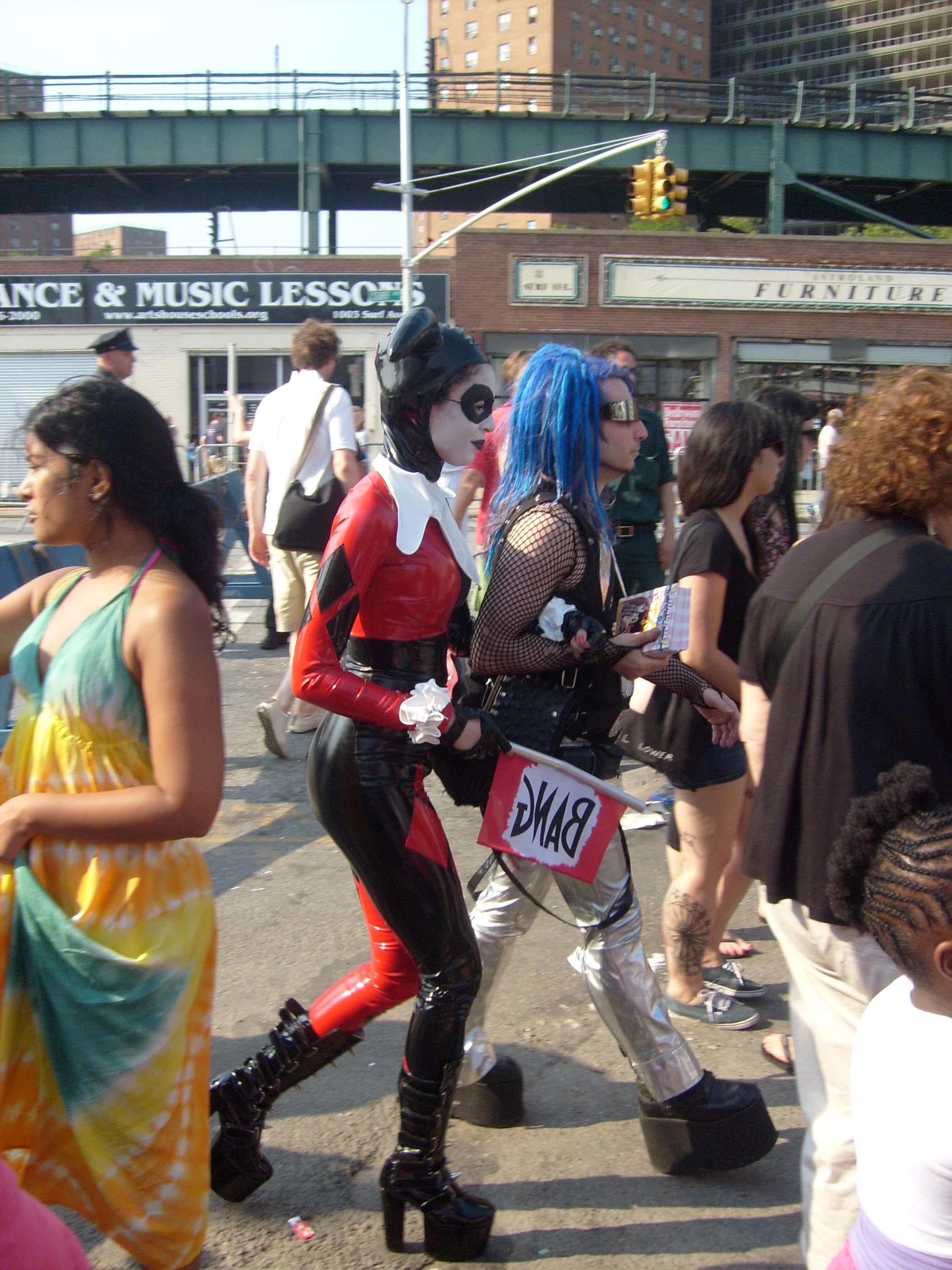
"Bang!" Grab your readers' attention.

 The titular quote here is attributed to Agatha Christie, though I am unable to identify which of her novels is thus launched. Regardless of its provenance, this line is arresting, or was in its day. “Damn” was a pretty raw word in 1920 or so, rarely uttered in front of ladies, not to mind say by one, and then one of high social standing. So, an opening line such as ‘“Damn,” said the Duchess’ was written to shock, to intrigue, to grab the readers’ attention.

If writing a book, make sure your first line is memorable, striking, the type that will hook and reel in your reader keen to find out more. Follow it by a seductive, pacy set of three chapters. They are also the showpiece you’ll be sending off to agents and publishers so best make sure they’re written to hook.

Some writers write their last chapter first, so they can figure out their plot, and then leave writing those all-important first few pages until last. In fact, the very last piece of writing they’ll do is the first line. Therefore, don’t fret over your opening, get the rest of your work down and come back to it later if necessary.

And, take note that just as your first line should reach out and grab your reader – your final line should linger with your reader for sometime afterwards…

 Can you guess which works gave us the following opening lines?


‘It is a truth universally acknowledged, that a single man in possession of a good fortune, must be in want of a wife.’


I’m writing this sitting in the kitchen sink.’


‘It was the best of times, it was the worst of times.’


It was a bright cold day in April, and the clocks were striking thirteen.’


If you really want to hear about it, the first thing you’ll probably want to know is where I was born, and what my lousy childhood was like, and how my parents were occupied and all before they had me, and all that David Copperfield kind of crap, but I don’t feel like going into it, if you want to know the truth.’


‘Stately, plump Buck Mulligan came from the stairhead, bearing a bowl of lather on which a mirror and a razor lay crossed.’


‘Mother died today.’


‘It was the day my grandmother exploded.’


‘The past is a foreign country; they do things differently there.’


He – for there could be no doubt of his sex, though the fashion of the time did something to disguise it – was in the act of slicing at the head of a Moor which swung from the rafters.’


‘They say when trouble comes close ranks, and so the white people did.’


It’s Show (and Tell) Time!

“Show, don’t tell” is something of a mantra for fiction writers.

Here’s an example of both:

Telling: “Close the door,” she said nervously.

Showing: Her cigarette trembled in her hand: “Close the door.”

Telling: Peter was a fussy, neat sort of man.

Showing: Every Monday, Peter ironed and folded his towels into perfect squares and stacked them in the airing press, according to size and colour.

“Showing” your reader what your protagonist is thinking/doing, encourages your reader to engage more with your book/story/play, to interpret and  picture what is going on. Showing also allows for more atmosphere and lends insight into character. Conversely, “telling” tends to deliver all the information neatly wrapped and can deny the reader all the fun of involvement and imagining.

Therefore, rather than telling the reader, ‘Bob was depressed,’ you might describe what Bob was doing and saying and the reader will also get a greater sense of ‘Bob’ if you do so.

Having said that, if the writer “shows” every inch of their novel it may bore the reader and slow the pace. There are times, for the sake of speed and economy, the writer needs to “tell”, so they can quickly move on to the next stage of the story.

If I could suggest a rule of thumb, it would be “show” the most important parts/events of the story and “tell” the minor linking passages. It’s your judgement call as to when and where to show or tell, but do give it thought.

Finally, please bear in mind the general consensus is that you always avoid telling via adverbs in speech attribution: “he said arrogantly”, “she shouted defiantly”, “we mumbled apologetically”. Instead, try to think of ways you could show this arrogance, defiance or apology.


Mona was a waitress and she was in trouble. Big trouble…

Telling stories in the third person…

Shift over, she was beat. Checking her phone, Mona saw Detective Daxter had called again...

The third person (he/she/it) is the most common narrative point-of-view. The third person observes the main character(s) from a distance, describing how others might see/consider your protagonist. In other words, it gives the narrator greater scope and view privileges than the first person narrator.

If you are writing an extended piece of fiction, you might find it easier and more accommodating to work with a third person narrator. The following are some varieties of this narrative point-of-view

* Nowadays, it is common to have a third person narrator that observes your main character whilst simultaneously looking over his/her shoulder and seeing the story almost from his/her point of view. This ‘over-the-shoulder’ third person narrator can provide some of the advantages of the first person without the drawbacks – however, it is somewhat limited as you are largely viewing events from your character’s POV. For emerging writers, this third person narrative may be a safer bet if wanting to attract an agent.

* You may want your narrator to be quite separate from your character, however. In which case, you could have your narrator follow him/her from a distance, observing actions as if a camera and not directly informing the reader of the character’s inner thoughts.

* Or you could have an omniscient third person narrator – a ‘God-like’ storyteller who sees all and knows all.

The “It” narrative

This is an unusual form of third person narration that tells a tale from the point of view of an object or an animal. An “it” narrative might conceivably be the story of a ring, told by the ring, as it recounts its many owners etc…

Multi narrators

Some books/plays/films are narratives told from various POVs. More common in Victorian prose than in contemporary writing, multi narrators allow for a vigorous description of a community and is useful if the author wants to concentrate on the interconnectivity of a place.

Whichever variety you choose, it is important to be style consistent throughout your work (or if you aren’t, have a reason for that).


I, Me, Mine


Once you’ve found your character, the next decision you’ll make regards narrative point-of-view. Think of your favourite novels. Do you favour 1st person (“I”) or 3rd person (“he/she/it”) books? Chances are, you’ll write more comfortably using the type of narrative point-of-view you prefer to read.

Today I’d like to blog about using the first person narrative point-of-view. If you chose the “I” narrative, or first person, your tale will be viewed through the eyes of one of your characters and events will be expressed in that character’s language and should reflect this character’s perceptions and opinions.

The first person can be very intimate and often allows access to the protagonist’s innermost thoughts, which is a helpful method of hooking the reader.

 On the negative side, all that “I, me, my” can be akin to listening to a monologue – and may bore the reader, if you’re not careful. Additionally, you are limited as to what you can tell the reader, as you can only “know” what your narrating character “knows”. Finally, littering the page with “I”s – neither looks nor “sounds” appealing. For the above reasons, the first person is often more suited to short stories rather than novels. Having said that, there are wonderful first person novels out there and if you are determined to use a first person narrator, you really ought to read great examples of this narrative point-of-view to get a good handle on it:

The Adventures of Huckleberry Finn by Mark Twain

The Catcher in the Rye by J.D. Salinger

The Sun Also Rises by Ernest Hemmingway

Also, a first person narrator could be a minor character observing a major character, which may remedy some of the pitfalls outlined above. Examples of this type of narrative include Sherlock Holmes and Wuthering Heights.

The Unreliable First Person Narrator 

My personal favourite first person narrator is the unreliable variety. It has great comic/tragic potential. With an unreliable narrator, the story is told by a character that doesn’t really “get” what is going on. The reader guesses the true state of affairs, however, and the narrator becomes the butt of the joke. An unreliable narrator is often a child or a naïve or foolish person who does fully comprehend how the world works (think Forrest Gump). The resulting book/play/short story can be quite funny and/or very moving. See the following examples:

The Curious Incident of the Dog in the Night by Mark Haddon

Good Behaviour by Molly Keane

Bridget Jones’ Diary by Helen Fielding


That’s Just Pathetic!

Your Character Looks on the Bright Side?

“Pathetic fallacy” is the posh academic term that refers to the technique of ascribing human emotions to inanimate objects, usually to reflect a character’s mood. For example, say your protagonist falls in love; you might describe flowers laughing and trees waving their branches gleefully. Or perhaps there’s been a loss, and suddenly the landscape looks bleak and there’s rain and clouds a-brewin.

“Pathetic fallacy” was very popular with the Victorian novelists – I always think of Thomas Hardy when asked to give an example. Therein, however, lies the problem – “pathetic fallacy” is a little out of fashion nowadays. This demise is partly due to the modern attention span. If you’ve ever read novels by the Brontes, Dickens, Elliot or Hardy – you’ll know all about lengthy landscape description and frankly, how dull it can be for modern readers. If you absolutely need to say how each field in the valley looked, then spread your descriptions out over the course of your work. Above all, as Elmore Leonard wrote, “Try to leave out the part that readers tend to skip.”

Another reason “pathetic fallacy” is no longer de rigueur in the literary world, is that it can seem a tad cliché. For example, if your protag is heading home to see his wife and there’s a storm, and they fight… yawn. Your foreshadowing’s is derivative, predictable and boring.

Still, “pathetic fallacy” has its place in the literary toolbox. It can provide emphasis for mood. I suggest using it sparingly, with caution and avoid storm/argument, rain/depression, sunny days/falling-in-love clichés.

Personally, I like to turn PF on its head and have my character see beauty in rain or trouble in sunshine or make a storm a symbol of peace. In short, my advice would be to use PF by all means, but when you do, surprise your reader.

Oh, and whatever you do, never open with a “pathetic fallacy” weather report. That’s the biggest cliché in the cliché box. I mean, it’s just pathetic : )

There's a Storm Comin'


Life In The Blurbs

Can You Sum Up Your Story On A Pebble?

Blurbs, those wee plot synopses on the back of books, are a great writers’ tool. Firstly, writing a blurb for your yet-to-be-written novel helps you get to the kernel of what it is all about. Secondly, penning such a blurb will prompt you to imagine your novel as a reality and motivate you to keep going and finish what you’ve started.

Also, reading the blurb of a novel that closely resembles your own will help you get to the bones of your own story, structure and theme. Look at how these other works are summed up. Do they concentrate on plot or theme or character? What is the hook? And what is yours?

Remember, a blurb is not a synopsis. Blurbs are short, the shorter the better, maybe a line or two long. Some are even just a few words. You don’t have to condense your story to “Jaws in Space” but do boil it down as much you can. If you had to sell your story on the back of a postage stamp or a pebble, what would you write?

When you’ve crafted your blurb, place it close to your writing place. It will keep you focused on what your book is about – and make sure that point is then evident in the very DNA of every moment of your book.

Finally, when it comes to approaching agents, having a well-written blurb you can include in a cover letter will prove very useful. Your blurb is your elevator pitch. Spend time on it and perfect it.


Think Outside the Castle

Aliens invade Liverpool building?

When considering the setting for your story you turn to atmosphere. What mood do you want to give your work? If you require a spooky setting, you may be inclined to set your story in an environment that most would find unnerving such as a disused factory, an isolated house, a museum at night etc… If your novel is a romance, then perhaps an elegant European hotel on a lake might do the trick. Although….

Challenging Your Readers’ Preconceptions

…You could think about capturing your reader’s imagination by turning settings on their head. In Alex Garland’s book, The Beach, he took a paradisiacal environment and made it a hellish place, as did William Golding in Lord of the Flies.

Likewise, you could take a grim, poor council estate riddled with crime and drugs and set a love story there. Endear its readers by accentuating the positives in the ugly setting (sense of community spirit, humour etc…).

Surprise and challenge your readers’ preconceptions, it will make for a memorable tale. Why not take a suburban house and people it with elves to create a Fantasy novel. What about an action thriller set around the world of chess? Or yoga? Horror often works all the better when set in a mundane, everyday location rather than Dracula’s Castle. Think outside that castle.

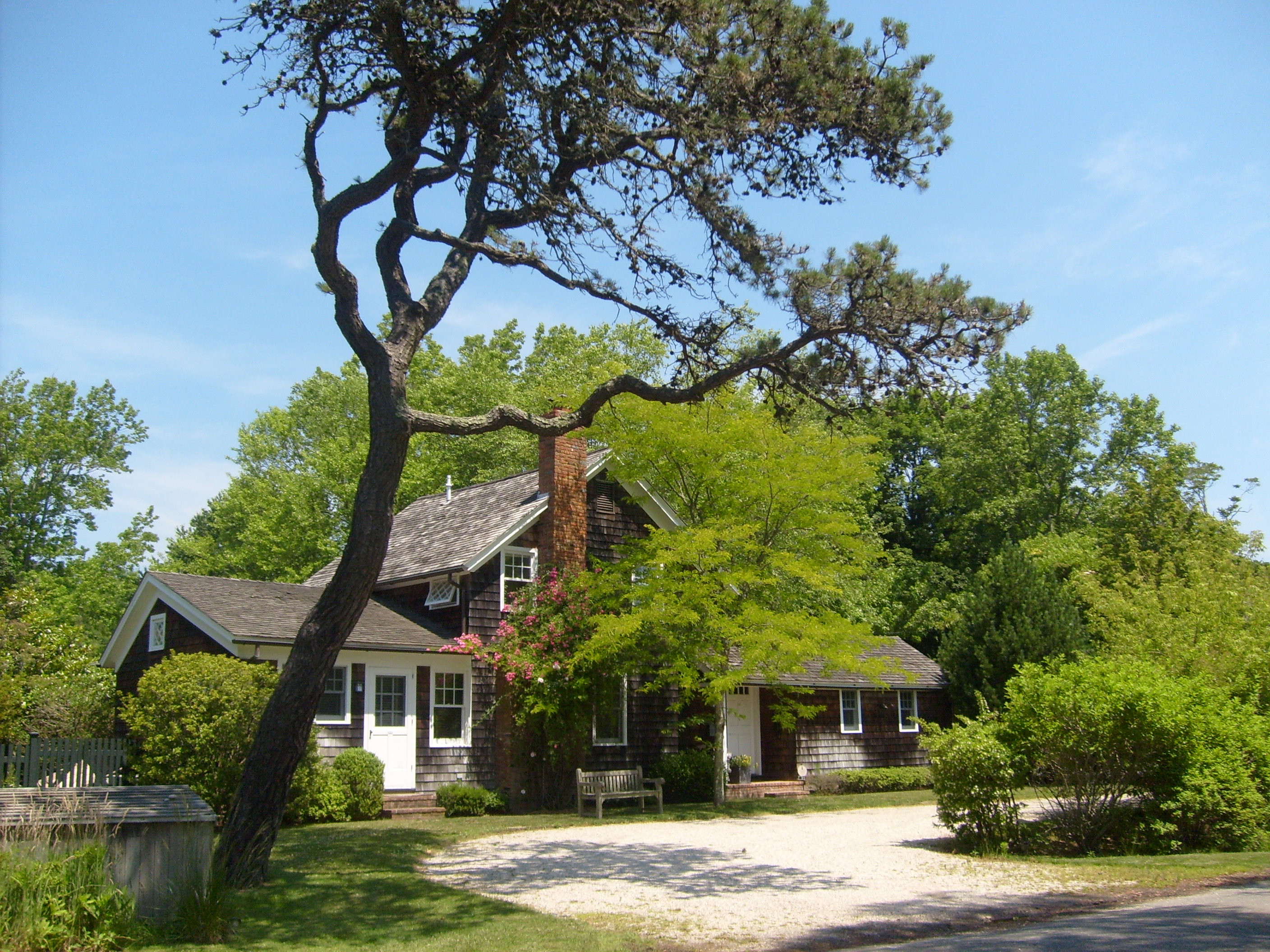
A Family of Trolls Move to Amagansett, East Hampton?


Haiku! Bless you…

Autumn at Annaghmakerrig

The Japanese know how to appreciate the moment: think of those tea ceremonies where the design and the feel of the cup is lauded, the colour of the drink discussed, the scent, the very feel of the beverage dissected and praised. Not surprising, therefore, the land of the rising sun gave us the haiku.

Haiku is a poetic form that, traditionally, aims to capture a moment in nature, like a snapshot with words. Again, this is most typically achieved using seventeen syllables arranged in three unrhymed lines of five, seven and five syllables.

The practice of writing haikus is particularly useful if you are engaged in a word-limited literary arena such as writing songs. In such instances, words should be chosen carefully so that they can convey the specific mood, meaning and impact you require and haikus can help you build up that muscle. Haikus encourage you to pick up every word and study it closely for its sound, meaning, feel and impact. Here are some examples of the haiku:


Over the wintry

forest, winds howl in  rage

with no leaves to blow.

Soseki (1275-1351)

My all time favourite, however, is the haiku by the ‘punk poet, John Cooper Clarke:


Writing a poem

In seventeen syllables

Is very diffic.

(John Cooper Clarke, 1979)


Which also serves as a useful memory aide for the form…


The picture here is crying out for a haiku, can you think of one?