Category Archives: Writing

Hey Waiter!

Clear that table!


I’m sitting in a cafe on London’s Sauf Bank – because I’m an idiot…. I came down to see a fellow Waterfordian Jamie Beamish perform in the Taming of the Shrew at the Globe – but only found out on the train that it is a matinee. So, I’ve missed it… Ah well, looks like Jamie and a few other Waterford thesps, including my cousins Michael Power and Des Healy, will be along to the bar soon and it’ll be a Deise arts reunion of sorts… For now, I’m sitting here watching the wheels, or the waiters, go round. And I’m thinking about all the waiting on tables jobs I’ve had in my life.

A wise writer once said to me that it’s not so much the pram in the hall that’s the impediment to a writing career, but the bills on the door-mat. Money worries are the bane of creativity. And unless independently wealthy, the emerging writer will have to make a living while waiting for that book/film deal (and probably for a while after that fact too). Writers need to work; the question is what kind of jobs are out there?

Many will consider other (more lucrative) forms of writing to bring home the bucks. Journalism is an obvious  choice and is still, probably, the most common second career for many creative writers. Moreover, a journalistic background provides marvelous training re editing and brevity of approach. Copy-writing, particularly website copy, is also a popular income booster for writer but both copy-writing and journalism are less satisfying forms of writing for the creative writer and spending all day writing on the day job can make it difficult to come home and do the same at night.

Teaching English and/or creative writing is another common earner for writers. My TEFL training and experience has given me a sound grip of grammar and the intricacies of the English language – all of which is of great practical use to a writer. A TEFL teacher also (usually) travels and such experiences can feed into your work. Teaching creative writing allows you to deconstruct the tools of creative writing, which may benefit your own writing. However, you usually need a track record of publication before you begin to look for work in this area.

It is not uncommon for writers to work a mundane job such as on a factory line or as a manual laborer. Such tasks sit quite well with a writing career as they give the writer time to think, to let ideas bubble and boil ready to write down after the shift has finished. Also, with a job so utterly removed from writing, you will be fresh and eager to sit at your laptop of an evening. The downside of any brain numbing, repetitive work is that it has no status. This fact should not be important but it is because writers are human, so for a writer to stay in a lowly job, s/he needs determination, focus and confidence in their reason for doing this type of work.

Writers, of course, come from all walks of life and all career backgrounds. For those of you who may be considering giving up your job to write full time, you need to remember that you’ll (most likely) still need to make a living. Maybe the job you have is not glamorous or interesting, but these are often the best complementary jobs for writing. So, if you really want to be a writer, the greatest sacrifice you make may be NOT giving up the day job –  but staying with it.


The Good, The Bad, The Ugly

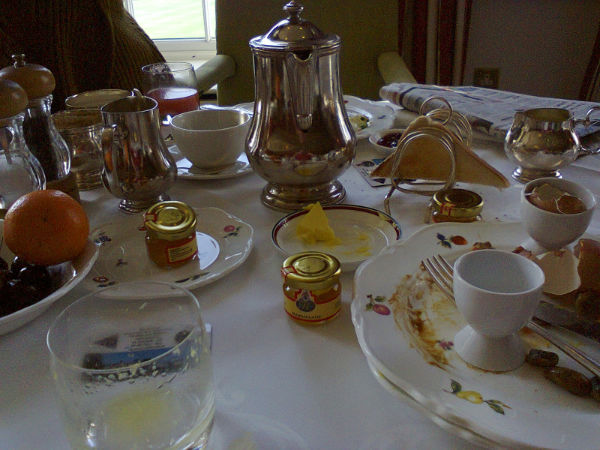
Me at breakfast, Ireland, September 2012. Am I good or bad?


Probably the most common question a writer gets asked is ‘Where do you get your story ideas from?’ Well, from everywhere. From newspapers, from life, from events that upset, move you or fill you with passion, or anger. You can get a lot of good material from bad situations.

As a writer you have a built in advantage over non-writers in that you can put bad events in life to good use. A broken heart can (with some distance from the event) give plot and substance to a short story – as they say, no tears in the writer, no tears in the story. Ditto a betrayal or some such extreme circumstance.

These difficult personal experiences, often awful, also lend opportunity to observe human behaviour in its rawest form – a crucial study for any writer. Take note re who behaves in an altruistic manner (and does that even exist) in the circumstance? Who looks for the easy option? What type of person sticks their head in the sand and hides behind others? Who makes a stand despite risks of personal loss? The answers are often surprising. The meekest are often the bravest, the erstwhile idealistic often less so when faced with a truth that is inconvenient to their own life and circumstance. Bad situations make for rich people study material.

Alternatively, another story prompter is to use the ‘what if’ question. The ‘what if’ question prompts you to consider alternative endings to a real situation. A good example of this question is Stephen Fry’s Making History, in which he explores a world where Hitler was killed in WWI but an even more dastardly figure comes to prominence, and wins. Apply the ‘what if’ scenario to your personal difficulty and see where it takes you storywise…


Time Out

A beach hut in Southwold, Suffolk, England – peculiarly named after a village in south Co. Kilkenny, Ireland. ‘Mooncoin’.

There are times when home life just gets too much. It may be the pram in the hall, or the lodger on the drums or just, well, stuff. I’m having one of those periods and have decided to run away for a while with my laptop and think about, well, stuff and the future and the present, and hey, the past too while I’m at it. One needs these respites from life and as an artist, retreating can be an fertile and focusing time. And, in all honesty, sometimes one senses that people need a break from you too : )

I’m Irish, so I know most about the residencies and retreats in my country – and there are a disproportionately large number in Ireland, a land noted for its writers. Surprisingly, there are far fewer over in the UK, even though they have a much larger population. America is where the writers’ colony was born however, and it still provides the best, the most prestigious and the most difficult colonies to get into.

Yes, “get into”. Therein lies the difference between a “residency” and a “retreat”. Residencies are institutions to which you must apply and demonstrate your professionalism as an artist via a portfolio, and perhaps references and a CV that shows you are considered by your peers to be a practicing artist. Residencies are often funded by an arts and/or educational body and can mean you must also provide a service such as creative writing classes in the locality. Residencies can last from two weeks to a year.  In Ireland, prestigious residencies include The Tyrone Guthrie Centre, Cill Rialaig and the Heinrich Boll Cottage, Even if accepted, you may have to pay for your stay. However, attending one of these establishments is an impressive addition to your C.V. and you may come into contact with some top tier “names” during a stay.
Then you get retreats. These are institutions that sometimes offer courses – the UK’s ‘Arvon Foundaction’ is a good example which has three properties around England and holds intensive writing courses throughout the year. Other retreats just offer room and board to writers for a fee, somewhat like a hotel but with an emphasis on creativity and productivity during your stay. Anam Cara and the Molly Keane house are Irish examples. They’re not as prestigious residencies, so you won’t find yourself having dinner with Seamus Heaney etc… but you might meet some interesting people and the surrounds are usually very picturesque and perhaps inspiring. Retreats are good for novice or emerging writers who are not yet at the stage in their career where they might gain acceptance on a “residency”. I’ve been lucky enough to bag a month at Aras Eanna on Inis Oirr in January – as artist in residence, which I’m greatly looking forward to.

A sample (and by no means exhaustive) list:

Ireland

Residencies

http://www.araseanna.ie/

http://heinrichboellcottage.com/html/Residency.html
http://emergingwriter.blogspot.com/2009/04/cill-rialaig-residency.html
http://www.dlrcoco.ie/arts/pp.html

http://www.tyroneguthrie.ie/

Retreats:

http://www.anamcararetreat.com/

http://www.dinglewritingcourses.ie/

http://www.mollykeanewritersretreats.com/

France

Residencies:

http://www.chateau-lanapoule.com/residencies/index.html

http://www.centreculturelirlandais.com/modules/movie/scenes/home/index.php?fuseAction=residences

Retreats:

http://www.lamuseinn.com/

UK

Residencies:

http://www.writersservices.com/agent/bur/Hawthornden_Castle.htm

http://covepark.org/apply-or-book

Retreats

http://www.arvonfoundation.org/p1.html

urbanwritersretreat.co.uk

USA

Residencies:

www.andersoncenter.org

www.atlanticcenterforthearts.org

www.calderaarts.org

www.coloradoartranch.org

www.saltonstall.org

www.djerassi.org

www.dorlandartscolony.org

http://www.exeter.edu/about_us/about_us_537.aspx

www.albeefoundation.org

www.hambidge.org

www.headlands.org

www.hedgebrook.org

www.jentelarts.org

kerouacproject.org/application-page

www.khncenterforthearts.org

www.artomi.org

www.montanaartistsrefuge.org

http://www.macdowellcolony.org/

http://www.millaycolony.org/

springcreek.oregonstate.edu

http://www.kfw.org/grants.html

www.kulcher.org

http://www.lynchburg.edu/thornton.xml

www.nmwcolony.org

http://montalvoarts.org/programs/residency/

www.onewritersplace.com

http://www.radcliffe.edu/fellowships/apply.aspx

www.red-cinder.com

www.soapstone.org

http://www.stanford.edu/group/creativewriting/stegner.html

www.poetrycenter.arizona.edu

www.vcca.com

http://www.ucrossfoundation.org/residency_program/

http://www.vermontstudiocenter.org/

www.writersdojo.org/residency

http://www.woodstockguild.org/artist_in_residence/index.html

http://www.wurlitzerfoundation.org/

http://www.yaddo.org

Retreats:

http://www.myretreat.net/

http://thompsonpeakretreat.com/

http://wildacres.org/about/residency.html

http://www.creativeledgestudio.com/

http://espyfoundation.org/

http://www.astudiointhewoods.org/sitw/?page_id=72

http://artcroft.org/eligibility.htm

http://www.montanaartistsrefuge.org/residencies.html

http://www.nisda.org/air.htm

http://www.ragdale.org/residency

http://www.nps.gov/romo/supportyourpark/artist_in_residence.htm

http://www.ozarkcreativewriters.org/

Canada

http://www.skwriter.com/?s=skwritercolonies&p=colonyguidelines

Australia

http://www.tasmanianwriters.org/self-funded-residencies

If you know of more, please feel free to post!


Try and Try Again

Watching the horizon, Brighton Beach, U.K.


I when I was 22, I wrote seven short stories. They were bad, really pretentious, crammed with adjectives and adverbs and with no theme or character development or point to any of them at all but I thought they were pure genius. I sent them off to every magazine I could find in the bookstore. And waited. And waited. And waited… until I became convinced that they had all been lost in the post. It was the only explanation, surely, as any editor would recognize my genius immediately, no? A couple of months later, I received a single rejection letter. And the truth dawned. No one else even bothered replying. It was 100% rejection. I was floored. I burned the stories I was working on and I didn’t send anything else off for another ten years.

That was very stupid of me. I should have brushed myself off and tried again. I would be in a much better position and be a better writer now if I had. But I wasn’t strong or  mature enough to know that then. Ah, well. During my first year on my MA at UEA, I sent out another batch of stories. I’d had a few shorts published at this stage and was confident that I’d now win every competition going and it would pay my MA tuition. And, again I got nowhere. I was pretty down but I recalled how I’d let rejection defeat me before and vowed it wouldn’t happen again. I sent out more stuff, and then more stuff. And after six months, I won the Mary and Ted O’Regan Award, and then the Annaghmakerrig award and the Molly Keane Award, the HISSAC and the Sussex Playwrights’ and this year I’ve been shortlisted for an international award, published in two anthologies and it looks quite likely that a lot is about to bloom on the drama front for me (though I don’t want to jinx that by talking too soon).

Anyway, the moral is don’t give up – look at how you can improve your rejected story and send it out again. Remember, much depends on what the magazine or the competition judge is looking for at that particular time, it may not be a comment on your writing skills. Do a bit of research, try to find a suitable home and try and try again. You will get there in the end.


Wonderwall

My Wonderwall for ‘Sheila-na-Gig’

I recently blogged about feeling blocked. I had lost my productivity and inspiration and the realisation spun me into a six-week panic attack which was pretty horrible. Nonetheless, I got through it and a lot of pent up creativity burst through with me – coz, Reader, I’m creatin’.

It’s hard to say what pulled me through that scary time. There were a few ‘angels’ around me , but certainly one of the triggers was putting together  a ‘ Wonderwall’. My wonderwall is based on an exercise passed to me by a fellow artist who works in performance and uses the wall method to structure, hone and shape his thoughts when devising a new piece. The Wonderwall (my label, not his) is akin to a spidergram, but poster size, allowing you to lay out your thoughts visually, using text, images, colour, shape and form. The Wonderwall particularly appealed to me, coming as I do from an fine art background.

I began my own Wonderwall by pasting up names of characters, themes, titles and phrases and also sketching images that I felt were somehow intrinsic to a play I wanted to write. With these words and images before my eyes, rather than in my head, I began to see structure and connection where I had not seen any previously. I also noticed recurrent themes in my work that I had not deduced before and I realised I was most frequently writing about the role of women, belief systems, chance, and this knowledge  helped to clarify and solidify the main pull through themes in my new piece.

So, for those of you feeling a little blocked right now, I’d highly recommend this approach because…. after all….  you’re my wonderwaaallll… : )

PS: The house is being renovated at the moment, meaning there are builders in and out of my room every day – I can’t help musing re what they think on my ‘Wonderwall’ – I’m sure they’ve got me pegged as some sort of paranoid conspiracy theorist with a scary ‘thing’ for naked people with goats’ heads…. ah well…


Rule’s for You’s


Norwich Market, which Alan Partridge famously referred to as the ‘home of unnecessary apostrophes’ ie “Apple’s £1.50 a bag”…


Warning: You enter this grammar post at your own risk.

Once you’ve had your feedback and have chopped, pruned, rewritten and reshaped your work, you’re ready to go, right? Wrong. Next, you need to don your pernickety gloves and work on grammar, spelling and punctuation. This type of revision is called a proofread and it is separate from the critique your friends gave re characters, story, POV, tone and structure.

A proofread regards layout and correct use of language. A proofread is the final polish. Never hand in a submission blighted by incorrect or inconsistent punctuation, bad grammar and misspelled words – thinking the story will shine through. They (the slush pile readers) will be turned off by your sloppy copy and will probably never read on into your story, so it won’t get that chance to shine through. If you’ve spent a year writing a novel, respect your work enough to spend another couple of weeks proofreading. It’s only common sense.

As you’ve probably read your own work countless times, you may be blind to copy mistakes. A keen eyed friend is invaluable here. Also you could cut a line-sized gap in a blank page and place it over your text to check every sentence individually, with the rest of the text blanked out. This may sound painstaking but it is a very good focusing tool.

Many emerging writers are concerned about grammar, unsure of their own knowledge and application. I’ve been an English (as a foreign language) teacher for fifteen years and can recommend the following grammar self-study book (known in the TEFL world as ‘the grammar bible’): Raymond Murphy Grammar in Use. You’ll be able to pick up a cheap copy on Amazon. Spend a night or two doing the exercises, it’ll stand to you. Also, I could wax lyrical about whether to use double or single quotes for dialogue (or to use any at all) and the difference between US and UK conventions regarding the same. However, I think the best is for you to take ten novels down from your shelf and see how the majority of them format dialogue and then apply the same convention to your work. Whichever you choose, ensure it is then consistent throughout your text.

Finally, here are some of the most common problems:

****Are you using the right “Its”? “It’s” (with an apostrophe) is short for “it is”. “Its” (no apostrophe) is possessive (ie: the dog lost its bone).

NOTE: somewhat confusingly, when you want to use the possessive elsewhere, you do use an apostrophe: “Mary’s coat”, “John’s golf club”, “the dog’s bone.”

****Same sound, different spelling (homophones). “They’re”, “Their” and “There”. They’re (they are) sitting the car. They’re listening to their (possessive) music, they’ll be fine there (preposition of place) for a while yet.

****Using “done” instead of “did” and vice versa. “Done” is the past participle of “do” and is normally used with the auxiliary verb “have”. “Did” is the past simple of “do”. (And if you have no idea what any of that means, you really do need to order that book). So, you say either “I have done my homework” or “I did my homework” – and never “I done my homework,” or “he done his homework.”

****Saying “could of” rather than “could have” when using the second conditional tense or “could” as a modal verb in the perfect tense (yeah, see that grammar book). “He could of gone to the shop,” is wrong. “He could have gone to the shop,” is correct.

And please accept sincerest apologies for sending any of you off into a coma of boredom with this grammary post – believe me, it hurt me more than it hurt you.


Silver Linings on a Dark Cloud

Norwich sun on River Yare.


Artists are often asked about gateways to creativity. The answer given will depend on where the artists believe ‘the muse’ doth dwell. Broadly speaking, there are two schools of thought – one holds that creativity is within the artist. The other says art exists outside the creator – in another dimension/world/state.

By now, I have lived and seen too much to say one belief is right or wrong – to do so would be both naive and arrogant. I will state, however, that both philosophies hold that creativity is available to everyone – and access to a heightened creative state can be achieved through various exercises many of which we’ve looked at here before – exercises such as freewrites, morning pages, ‘what ifs’, character studies and even physical exercise and displacement activities. There is another oft- referenced portal to creativity which remains controversial – although it doubtless works for some and that is ‘the black dog’, melancholia, depression.

Our culture is ridden with images of the tortured artistic soul sitting in his garret, slicing his ear off with one hand and producing master pieces with the other. We expect our creative minds to be troubled ones. I would like to write that this is a nonsense, that people can create just as good art in the happy state as they can in depression., but if I am to refer to my personal experience of the creative process, I have to admit that when I’m down I’m at my most creative and productive. And I so wish this were not the case.

Take this year, from January to June of 2012, I felt elated. There were many reasons for this feeling, amongst them a record previous year in terms of writing success, a move from a negative to a positive domestic set up, a new and better job, more free time and an expanding social life. And during this blissful period, I wrote one rather ropey short story.

In the first week of June, my mood fell down the plug hole. Again, there were a number of factors involved including health issues and some financial pressure and perhaps my impending birthday (July 24th) has something to do with it… But ironically, I also went down because I wasn’t writing/producing/moving forward as a writer. Dark thoughts began to wake me in the wee hours, spinning round my head until it is time to get up and face another day soaked in despondency and fear, feeling like I can’t go on.

I’ve in this funk for six weeks now, and during this short time, I’ve written three new short stories and the first draft of a full length stage play. I’ve contacted and set up meetings with directors in three countries re staging or broadcasting an award winning play. I’ve collated and edited all my short stories into a collection and I restarted entering short story competitions. I’m doing this because art is the only thing that doesn’t let me down when I feel wretched.

Art is my friend. I don’t currently have people around me in whom I can truly talk to, or lean on. It is not their fault. Living in Norwich, England, neither city nor country to which I have any ties, I am away from any people with whom I have history, deep friendships and connections. While I’ve made some friends here, one resists leaning on people you know for a relatively short period of time. So, I’m lonely and my feelings are going into my art.

I can’t say if melancholia allows a more direct route to the creativity inside you, or it brings the mind to a near trancelike state where the ‘other world’ can come rolling in. I don’t know. I do know however, that I wish it were not so. And given the choice of living in a positive state or producing art, I’d opt of the happy former everytime. I just wish I knew how to have both. I’m sure it is possible.

Meanwhile, I need to keep writing myself back to happiness…


Don’t Lose the Plot

I’ll tell you a story about Johnny McGory.

Will I begin it?

That’s all that’s in it.

Irish nursery rhyme.

What’s the story here?


Story trumps all. The toppermost bough of the literary elite tree may disagree and say literature is about language, the perfect sentence, la mot juste. However, for most writers in today’s economic climate – if you don’t have a sound story, you don’t have a publishing deal. Having a well-constructed plot and a good story means you’ll be forgiven all sorts of other failings (blingy adverbs, oddball syntax, clichéd characters). It’s simply today’s reality.


or here?


Firstly, in order to have a story, you have to have some sort of conflict. These conflicts usually fall into one or more of the following categories:

man vs. nature

man vs. man

man vs. the environment

man vs. machines/technology

man vs. the supernatural

man vs. self

man vs. god/religion

Examples of good conflict ridden plots can be found everywhere, in the Bible, Greek mythology, Shakespeare, ethnic folk tales and even jokes.

Structure

A typical story structure might be plotted thus:

Stasis – the status quo. The reader is introduced to the character and setting.

Disturbance. Something occurs which upsets the normal run of things. For example, a stranger arrives in town.

The main character is affected by the disturbance.

The main character decides on a plan of action to rectify or improve matters.

Obstacles stand in the way of the plan of action succeeding.

Complications occur in the guise of choices/new characters/new ideas/discovery.

These lead to a crisis, when the focus of a play comes together in an unavoidable way.

The crisis usually leads to a climax or the major confrontation.

Finally comes the denouement or resolution which results in a new stasis.

The above will often feature a character development arc whereby the protagonist is changed in a fundamental way by the events.


A good exercise in plotting is to take a book or a film you’ve really enjoyed and try to break it down into a series of plot-steps, like the ones I’ve outlined above. Now, change the setting, the gender of the protagonist, the era, the goal and the type of obstacles that stand in the way. Yet, stay true to the plot template. When you’ve finished you’ll find you have a completely new story. Don’t feel as though you’ve stolen another’s plot. In truth, there are no new plots, each is a retelling of an older version. You’ve simply adapted and updated a classic plot line and in the process have created a unique story.

That’s all that’s in it ; )

And a post script here about a book recently written using Johnny as a springboard: http://www.johnnymagory.com


Suprising First Lining

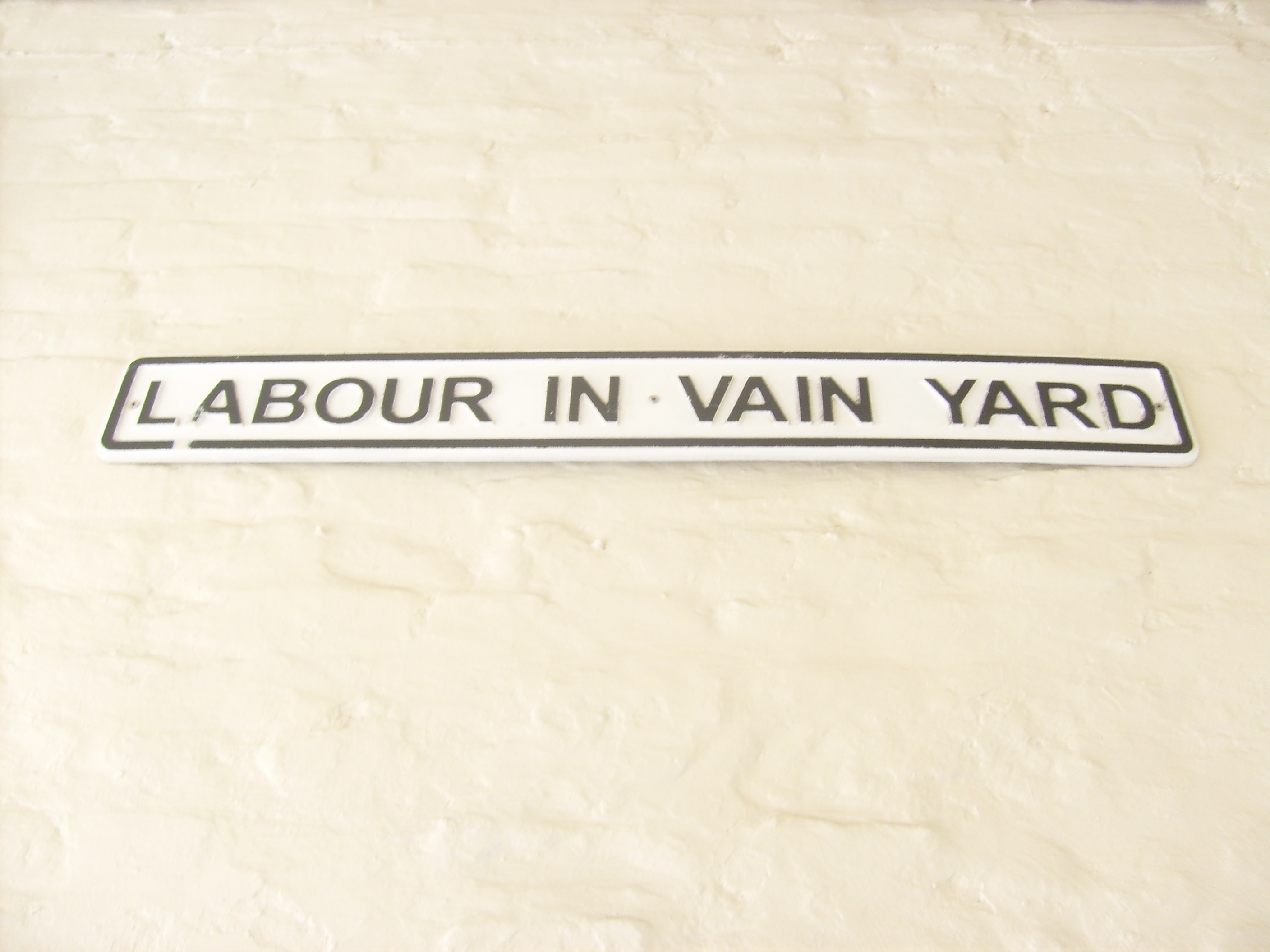
Name of a ‘yard’ in Norwich. The capital of East Anglia has the most surprising monikers for streets, including: ‘Tombland’, ‘Queen of Hungary Yard’, Rampant Horse Street’ and Unthank road. All would sit well in amazing first lines….

Your first line is probably the most important in your work. It should surprise and intrigue your reader and somehow give a taste of what is to come. Ideally, it should be unusual or uncanny and most importantly, it should encourage your reader to read on…

‘”Damn,” said the Duchess.” is a first line attributed to Agatha Christie. “Damn” was a pretty raw word in 1920 or so, rarely uttered in front of ladies, not to mind say by one, and then one of high social standing. So, an opening line such as this was written to shock, to intrigue, to grab the readers’ attention and it is a good idea to find one with a similar punch in the modern age.

Thereafter, follow your first line with a pacy set of three chapters. These are also the showpiece you’ll be sending off to agents and publishers, so make sure they’re written to hook.

Some writers write their last chapter first, so they can figure out their plot, and then leave writing those all-important first few pages until last. In fact, the very last piece of writing they might do is the first line. Therefore, don’t fret over your opening, get the rest of your work down and come back to it later if necessary.

And, take note that just as your first line should reach out and grab your reader – your final line should linger with your reader for sometime afterwards…


Can you guess which works gave us the following opening lines? Answers below


1) ‘It is a truth universally acknowledged, that a single man in possession of a good fortune, must be in want of a wife.’


2) ‘I’m writing this sitting in the kitchen sink.’


3) ‘It was the best of times, it was the worst of times.’


4)It was a bright cold day in April, and the clocks were striking thirteen.’


5) ‘If you really want to hear about it, the first thing you’ll probably want to know is where I was born, and what my lousy childhood was like, and how my parents were occupied and all before they had me, and all that David Copperfield kind of crap, but I don’t feel like going into it, if you want to know the truth.’

6) ‘Stately, plump Buck Mulligan came from the stairhead, bearing a bowl of lather on which a mirror and a razor lay crossed.’


7) ‘Mother died today.’


8 ) ‘It was the day my grandmother exploded.’


9) ‘The past is a foreign country; they do things differently there.’


10) ‘He – for there could be no doubt of his sex, though the fashion of the time did something to disguise it – was in the act of slicing at the head of a Moor which swung from the rafters.’

 __________________________________________________________

1)      Pride and Prejudice, Jane Austen.

2)      I Capture the Castle, Dodie Smith

3)      A Tale of Two Cities, Charles Dickens

4)      1984, George Orwell

5)      Catcher in the Rye, J.D. Salinger

6)      Ulysses, James Joyce

7)      The Stranger, Albert Camus

8 )      The Crow Road, Iain Banks

9)      The Go-Between, L.P. Hartley

10)   Orlando, Virginia Woolf


Let the Show Flow

Showing or Telling? Post box, Norwich, England


Telling: “Close the door,” she said nervously.

Showing: Her cigarette trembled in her hand: “Close the door.”

Telling: Peter was a fussy, neat sort of man.

Showing: Every Monday, Peter ironed and folded his towels into perfect squares and stacked them in the airing press, according to size and colour.

“Showing” your reader what your protagonist is thinking/doing, encourages your reader to engage more with your book/story/play, to interpret and picture what is going on. Showing also allows for more atmosphere and lends insight into character. Conversely, “telling” tends to deliver all the information neatly wrapped and can deny the reader all the fun of involvement and imagining. Therefore, rather than telling the reader, ‘Bob was depressed,’ you might describe what Bob was doing and saying and the reader will also get a greater sense of ‘Bob’ if you do so.

Having said that, if the writer “shows” every inch of their novel it may bore the reader and slow the pace. There are times, for the sake of speed and economy, the writer needs to “tell”, so they can quickly move on to the next stage of the story.

If I could suggest a rule of thumb, it would be “show” the most important parts/events of the story and “tell” the minor linking passages. It’s your judgement call as to when and where to show or tell, but do give it thought. Finally, please bear in mind the general consensus is that you always avoid telling via adverbs in speech attribution: “he said arrogantly”, “she shouted defiantly”, “we mumbled apologetically”. Instead, try to think of ways you could show this arrogance, defiance or apology.