Category Archives: Uncategorized

Basic Instinct

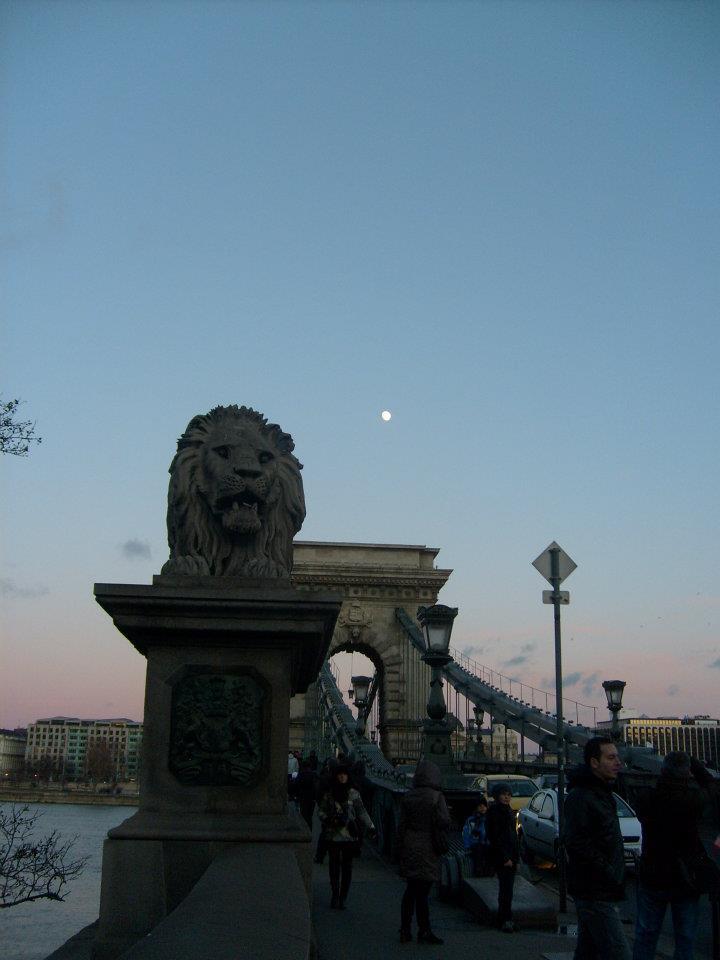
Budapest chain bridge lion and moon

My gut has never lied to me. I might ignore my instinct (often do). But I know I shouldn’t, and time and time again, it shows me it knows what it is talking about. I’m in Budapest this weekend, in a farce – which I should have known better than to get myself entangled – my instinct had me well warned. But that’s what you get for not listening to your gut. Nevermind, at least I get to see my Budapest people, the greatest friends that ever walked the earth.

Instinct. Writers tap into something akin to instinct when we write. We usually do so via a freewriting exercise. Freewriting is what you write when there’s no one looking. Freewriting is instinct in control, sending words all the way down to the tips of your fingers. Freewriting is where you’ll find the most brilliant story ideas, if you look hard enough.

To freewrite, just write. Write the first word that comes to mind and then follow it with another. Set an alarm if you can. Don’t worry about grammar, structure, character development – just write. And when you’re done, stand back and take a look. Is there anything in there you can use. I’ll say there is!

Here’s an example:

‘Right now I’m sitting at my computer and the coffee cup is on the edge of my desk. It looks a little like an iceberg, as it is white and chipped and cold because the coffee has been in it since the morning as I didn’t do the washing up last night and the sink is full of plates and saucers. All those plates look surreal sitting unwashed in the sink like that. All at different angles like a Picasso painting with ketchup instead of paint dribbled over the plates. I wonder if Picasso got his ideas from waking up one morning and seeing his jumble of washing up in the sink I wonder if all the museums in the world actually have pictures of Picasso’s washing up and not his mistresses and Guernica and does that mean the joke is on us?’

The above freewrite might seem silly but it’s also an example of how freewriting could, potentially, inspire a proper piece of writing. This daft thought about Picasso’s washing up could easily be worked into a comedy radio play where a hung-over Pablo Picasso and Henri Matisse wake up after a night out on the town and dare each other to paint a picture of the mess of washing up in the sink. Thus, the modern art movement is accidentally launched. Another possibility you could take from this freewrite is the concept that something generally considered ugly and in need of repair or attention (washing up) can lead to tremendous artistic inspiration – and this idea could form the kernel of a short story or a poem.

Here, chose one of the prompts below and let it lead you into a three minute freewrite.

I wish I had said….

It was no use pretending….

A long time ago…

For the first time ever….

It was the day the pumpkin appeared on the chair…


Streets Ahead

The Oldest Street in England, Wells, Somerset.

I received a phonecall during the week to tell me that I’d been short-listed for the Wells Literary Festival Short Story Award. I was shortlisted for the same last year, and though I didn’t win, I had a very groovy time down in Wells. Definitely worth a detour if you ever get the chance.

I’m often asked what ‘kind’ of writer I am. The truth is, I don’t see myself as a ‘novelist’ or a ‘short story writer’, ‘playwright’ or a ‘poet’. I see myself as a writer and believe that a writer should be able to (at least) try all written forms.

I write and enter short story competitions for the following reasons and it is good for me to have this list at hand – in case I ever question myself.

a) Being shortlisted encourages and motivates – when such stuff is difficult to come by in the writer’s life.

b) I can get published in literary magazines.

c) Money, if I win.

d) It keeps me on my toes and hones and polishes my craft.

e) By writing stories I build up a portfolio – ready to go in case I’m ever offered a collection.

f) It gives me an edge when applying for bursaries, residencies, funding etc..

g) It might bring  the attention of publishers.

h) Short stories are something I can work on when time is limited.

i) An agent once told me that it is important to build up your writing ‘credits’.

j) Agents are human and sometimes don’t trust their own judgement, so wins and commendations give you that ‘seal of approval’/credibility.

k) Short story writing is a better displacement activity than making a cup of tea.

M) Having good writing credits help when applying for writing jobs.

p) Writing short stories reminds me that I’m a writer.


Wild Things

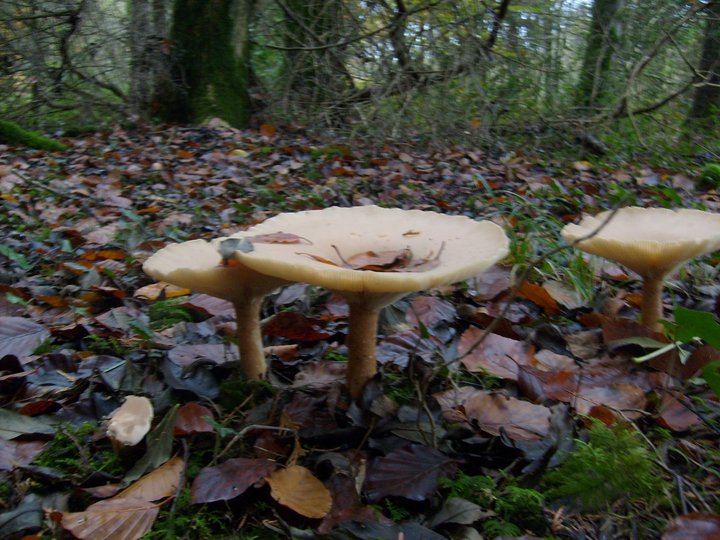
Fun fungus

I’ve been on a bit of a foraging binge lately. I came across a recipe book for wild food – ie berries, mushrooms etc… and have spent the past while subjecting my housemates to experiments in nettle soup, nettle lasagne, dandelion bhajis, elderberry syrup and blackberry crumble, fool and ice cream…

I live in an eccentric house share in an old mansion which has four acres of wilderness attached (there are even deer in them thar woods) – so there are plenty of the aforementioned weeds. Most of my housemates are adventurous, creative types, so are willing to try new culinary experiences and thankfully these have not yet been death by poison…

I’ve been having fun. And while I was out foraging today, it struck me how scanning the hedgerows for fruit, was rather like trying to find a story idea in the tangle of my mind.

I’ll often start writing by putting anything down on the page – “hggahgoidihgogha” will do, just get something down, break that white, crack that ice. Enjoy the sensation of the pen flowing over your paper or the tap of your finger tips on the keyboard and don’t think too hard about what you’re writing. Let it flow. Try just writing the “The quick brown fox jumped over the lazy dogs…”  a few times. Then continue on with the story. Where does the fox go next? Why is the dog feeling lazy? Where are they? What does the air smell like? What sounds can you/they hear? Is it hot or cold? Wet or dry? How does the dog feel when the fox jumps over him? Does he plan revenge? Once you’ve done a paragraph or two, you’ll probably find that the creative juices are flowing and there be some berries to collect in what you’ve written.

Happy foraging!


Sent to Coventry

Yes, I know this is not Coventry… but it is a signpost, and all I had. 🙂 Taken on Newport Beach, Orange County, California, 2010


Autumn has blown in, kids are back at school and my own schedule has gone into overdrive. A harvest of work opportunities (from workshops to drama productions) have cropped up in the past fortnight and I’m facing a season of travel for the same. I’m just back from five days in the motherland (Dublin and Kildare) and will soon be off to Coventry, Budapest, London, Ireland, Paris – and that’s only over the next eight weeks! It’s good to see things taking off and the interest (and funding) finally breaking through -and a clearer picture emerging of the road forward. It feels as though all the pieces of the jigsaw have fallen into place whilst I wasn’t looking – a case of life is what happens when you’re busy making other plans!

So as I’m gearing up to hit the road, I’m also doing my best to recover from a recent operation, which took more out of me than I thought it ought.  Rather naively, I suspected a general anaesthetic would have no more impact on me than a local… but it sort of knocked me sideways and I ended up taking two days off work spaced out and lying in bed,. Thankfully,  I had an angel of a Portuguese housemate to look after me, and a landlord who was on hand to cook and provide hot water bottles and tea and sympathy and the like. Times like that you realise who your friends are, and I’ve got some good ones. Thanks to the many here who dropped in to wish me well – you don’t know how much your messages meant – and it is reassuring to think that people read these posts. I rather write them thinking that I’m talking to myself  – so it is good to know some people take the time.

Finally, apologies to the good people of Coventry for the clichéd title to this piece… I’m sure you get so sick of it. I can’t wait to get to know your town, and come up with something more fitting.


All Cut Up

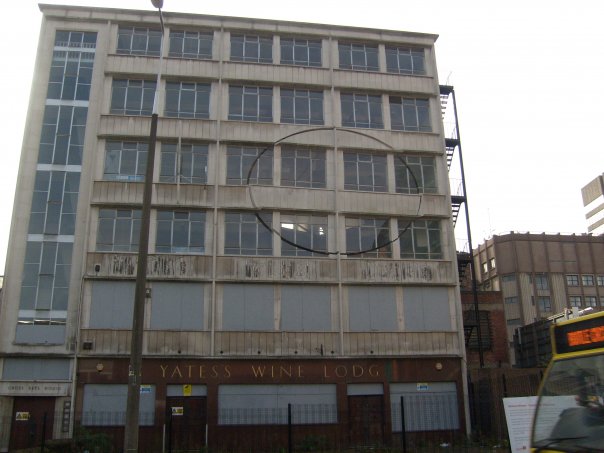
Hole cut in Liverpool building. Now you see it…

I’m going under the knife today. Nothing too serious, a day procedure, though it does involve a general anaesthetic. To be honest, the most stressful part is trying to figure a to-fro from the hospital, being alone and carless in this country as I am. And I’ve got a lot of work to do when (and however) I get back from the op – with a re-write due on a play, a funding application pending deadline and a rake of bills and repairs due on my Budapest flats as well as organising for a dinner party tomorrow (yes, I know it’s dumb timing but it’s the first time in my four years in Norwich that I’ll have my aunt and uncle in town for the night so don’t want to miss the opportunity of having family around).

Coincidentally, it was this same aunt who once told me that if you put a red circle round a date on a calendar it attracts other happenings like flies. And these stressful moments often make me think about the career I’ve chosen. And the sacrifices I’ve made for it (see alone and carless mentioned above).

I have made a lot of sacrifices, that of a family for instance, and the chance of financial security (considering I have no independent wealth or spousal support, nor do I stand to inherit anything at any stage in my life). So, yeah, at moments like this, especially when facing a surgeon’s knife, one does start to ask one’s self why one does what one does…

I do it for rather selfish reasons, rather than the altruism of contributing to society. I do it because writing gets me happy and, to some extent, keeps me sane. And my writing is the only thing that never lets me down. People will disappoint, I’ll let myself down sometimes, but my art is there and constant and always offers solace, comfort and a new trip with every project.  And not having family, my stories and plays are my kids, they’re me passing it on to you. Such reasoning will probably not make sense to most, but it will to fellow artists. We do it because that is what we do and who we are, and we want to do it well and because in the end, our art is always worth it.

Now you don’t…


The Good, The Bad, The Ugly

Me at breakfast, Ireland, September 2012. Am I good or bad?


Probably the most common question a writer gets asked is ‘Where do you get your story ideas from?’ Well, from everywhere. From newspapers, from life, from events that upset, move you or fill you with passion, or anger. You can get a lot of good material from bad situations.

As a writer you have a built in advantage over non-writers in that you can put bad events in life to good use. A broken heart can (with some distance from the event) give plot and substance to a short story – as they say, no tears in the writer, no tears in the story. Ditto a betrayal or some such extreme circumstance.

These difficult personal experiences, often awful, also lend opportunity to observe human behaviour in its rawest form – a crucial study for any writer. Take note re who behaves in an altruistic manner (and does that even exist) in the circumstance? Who looks for the easy option? What type of person sticks their head in the sand and hides behind others? Who makes a stand despite risks of personal loss? The answers are often surprising. The meekest are often the bravest, the erstwhile idealistic often less so when faced with a truth that is inconvenient to their own life and circumstance. Bad situations make for rich people study material.

Alternatively, another story prompter is to use the ‘what if’ question. The ‘what if’ question prompts you to consider alternative endings to a real situation. A good example of this question is Stephen Fry’s Making History, in which he explores a world where Hitler was killed in WWI but an even more dastardly figure comes to prominence, and wins. Apply the ‘what if’ scenario to your personal difficulty and see where it takes you storywise…


Time Out

A beach hut in Southwold, Suffolk, England – peculiarly named after a village in south Co. Kilkenny, Ireland. ‘Mooncoin’.

There are times when home life just gets too much. It may be the pram in the hall, or the lodger on the drums or just, well, stuff. I’m having one of those periods and have decided to run away for a while with my laptop and think about, well, stuff and the future and the present, and hey, the past too while I’m at it. One needs these respites from life and as an artist, retreating can be an fertile and focusing time. And, in all honesty, sometimes one senses that people need a break from you too : )

I’m Irish, so I know most about the residencies and retreats in my country – and there are a disproportionately large number in Ireland, a land noted for its writers. Surprisingly, there are far fewer over in the UK, even though they have a much larger population. America is where the writers’ colony was born however, and it still provides the best, the most prestigious and the most difficult colonies to get into.

Yes, “get into”. Therein lies the difference between a “residency” and a “retreat”. Residencies are institutions to which you must apply and demonstrate your professionalism as an artist via a portfolio, and perhaps references and a CV that shows you are considered by your peers to be a practicing artist. Residencies are often funded by an arts and/or educational body and can mean you must also provide a service such as creative writing classes in the locality. Residencies can last from two weeks to a year.  In Ireland, prestigious residencies include The Tyrone Guthrie Centre, Cill Rialaig and the Heinrich Boll Cottage, Even if accepted, you may have to pay for your stay. However, attending one of these establishments is an impressive addition to your C.V. and you may come into contact with some top tier “names” during a stay.
Then you get retreats. These are institutions that sometimes offer courses – the UK’s ‘Arvon Foundaction’ is a good example which has three properties around England and holds intensive writing courses throughout the year. Other retreats just offer room and board to writers for a fee, somewhat like a hotel but with an emphasis on creativity and productivity during your stay. Anam Cara and the Molly Keane house are Irish examples. They’re not as prestigious residencies, so you won’t find yourself having dinner with Seamus Heaney etc… but you might meet some interesting people and the surrounds are usually very picturesque and perhaps inspiring. Retreats are good for novice or emerging writers who are not yet at the stage in their career where they might gain acceptance on a “residency”. I’ve been lucky enough to bag a month at Aras Eanna on Inis Oirr in January – as artist in residence, which I’m greatly looking forward to.

A sample (and by no means exhaustive) list:

Ireland

Residencies

http://www.araseanna.ie/

http://heinrichboellcottage.com/html/Residency.html
http://emergingwriter.blogspot.com/2009/04/cill-rialaig-residency.html
http://www.dlrcoco.ie/arts/pp.html

http://www.tyroneguthrie.ie/

Retreats:

http://www.anamcararetreat.com/

http://www.dinglewritingcourses.ie/

http://www.mollykeanewritersretreats.com/

France

Residencies:

http://www.chateau-lanapoule.com/residencies/index.html

http://www.centreculturelirlandais.com/modules/movie/scenes/home/index.php?fuseAction=residences

Retreats:

http://www.lamuseinn.com/

UK

Residencies:

http://www.writersservices.com/agent/bur/Hawthornden_Castle.htm

http://covepark.org/apply-or-book

Retreats

http://www.arvonfoundation.org/p1.html

urbanwritersretreat.co.uk

USA

Residencies:

www.andersoncenter.org

www.atlanticcenterforthearts.org

www.calderaarts.org

www.coloradoartranch.org

www.saltonstall.org

www.djerassi.org

www.dorlandartscolony.org

http://www.exeter.edu/about_us/about_us_537.aspx

www.albeefoundation.org

www.hambidge.org

www.headlands.org

www.hedgebrook.org

www.jentelarts.org

kerouacproject.org/application-page

www.khncenterforthearts.org

www.artomi.org

www.montanaartistsrefuge.org

http://www.macdowellcolony.org/

http://www.millaycolony.org/

springcreek.oregonstate.edu

http://www.kfw.org/grants.html

www.kulcher.org

http://www.lynchburg.edu/thornton.xml

www.nmwcolony.org

http://montalvoarts.org/programs/residency/

www.onewritersplace.com

http://www.radcliffe.edu/fellowships/apply.aspx

www.red-cinder.com

www.soapstone.org

http://www.stanford.edu/group/creativewriting/stegner.html

www.poetrycenter.arizona.edu

www.vcca.com

http://www.ucrossfoundation.org/residency_program/

http://www.vermontstudiocenter.org/

www.writersdojo.org/residency

http://www.woodstockguild.org/artist_in_residence/index.html

http://www.wurlitzerfoundation.org/

http://www.yaddo.org

Retreats:

http://www.myretreat.net/

http://thompsonpeakretreat.com/

http://wildacres.org/about/residency.html

http://www.creativeledgestudio.com/

http://espyfoundation.org/

http://www.astudiointhewoods.org/sitw/?page_id=72

http://artcroft.org/eligibility.htm

http://www.montanaartistsrefuge.org/residencies.html

http://www.nisda.org/air.htm

http://www.ragdale.org/residency

http://www.nps.gov/romo/supportyourpark/artist_in_residence.htm

http://www.ozarkcreativewriters.org/

Canada

http://www.skwriter.com/?s=skwritercolonies&p=colonyguidelines

Australia

http://www.tasmanianwriters.org/self-funded-residencies

If you know of more, please feel free to post!


Try and Try Again

Watching the horizon, Brighton Beach, U.K.


I when I was 22, I wrote seven short stories. They were bad, really pretentious, crammed with adjectives and adverbs and with no theme or character development or point to any of them at all but I thought they were pure genius. I sent them off to every magazine I could find in the bookstore. And waited. And waited. And waited… until I became convinced that they had all been lost in the post. It was the only explanation, surely, as any editor would recognize my genius immediately, no? A couple of months later, I received a single rejection letter. And the truth dawned. No one else even bothered replying. It was 100% rejection. I was floored. I burned the stories I was working on and I didn’t send anything else off for another ten years.

That was very stupid of me. I should have brushed myself off and tried again. I would be in a much better position and be a better writer now if I had. But I wasn’t strong or  mature enough to know that then. Ah, well. During my first year on my MA at UEA, I sent out another batch of stories. I’d had a few shorts published at this stage and was confident that I’d now win every competition going and it would pay my MA tuition. And, again I got nowhere. I was pretty down but I recalled how I’d let rejection defeat me before and vowed it wouldn’t happen again. I sent out more stuff, and then more stuff. And after six months, I won the Mary and Ted O’Regan Award, and then the Annaghmakerrig award and the Molly Keane Award, the HISSAC and the Sussex Playwrights’ and this year I’ve been shortlisted for an international award, published in two anthologies and it looks quite likely that a lot is about to bloom on the drama front for me (though I don’t want to jinx that by talking too soon).

Anyway, the moral is don’t give up – look at how you can improve your rejected story and send it out again. Remember, much depends on what the magazine or the competition judge is looking for at that particular time, it may not be a comment on your writing skills. Do a bit of research, try to find a suitable home and try and try again. You will get there in the end.


Wonderwall

My Wonderwall for ‘Sheila-na-Gig’

I recently blogged about feeling blocked. I had lost my productivity and inspiration and the realisation spun me into a six-week panic attack which was pretty horrible. Nonetheless, I got through it and a lot of pent up creativity burst through with me – coz, Reader, I’m creatin’.

It’s hard to say what pulled me through that scary time. There were a few ‘angels’ around me , but certainly one of the triggers was putting together  a ‘ Wonderwall’. My wonderwall is based on an exercise passed to me by a fellow artist who works in performance and uses the wall method to structure, hone and shape his thoughts when devising a new piece. The Wonderwall (my label, not his) is akin to a spidergram, but poster size, allowing you to lay out your thoughts visually, using text, images, colour, shape and form. The Wonderwall particularly appealed to me, coming as I do from an fine art background.

I began my own Wonderwall by pasting up names of characters, themes, titles and phrases and also sketching images that I felt were somehow intrinsic to a play I wanted to write. With these words and images before my eyes, rather than in my head, I began to see structure and connection where I had not seen any previously. I also noticed recurrent themes in my work that I had not deduced before and I realised I was most frequently writing about the role of women, belief systems, chance, and this knowledge  helped to clarify and solidify the main pull through themes in my new piece.

So, for those of you feeling a little blocked right now, I’d highly recommend this approach because…. after all….  you’re my wonderwaaallll… : )

PS: The house is being renovated at the moment, meaning there are builders in and out of my room every day – I can’t help musing re what they think on my ‘Wonderwall’ – I’m sure they’ve got me pegged as some sort of paranoid conspiracy theorist with a scary ‘thing’ for naked people with goats’ heads…. ah well…


Rule’s for You’s


Norwich Market, which Alan Partridge famously referred to as the ‘home of unnecessary apostrophes’ ie “Apple’s £1.50 a bag”…


Warning: You enter this grammar post at your own risk.

Once you’ve had your feedback and have chopped, pruned, rewritten and reshaped your work, you’re ready to go, right? Wrong. Next, you need to don your pernickety gloves and work on grammar, spelling and punctuation. This type of revision is called a proofread and it is separate from the critique your friends gave re characters, story, POV, tone and structure.

A proofread regards layout and correct use of language. A proofread is the final polish. Never hand in a submission blighted by incorrect or inconsistent punctuation, bad grammar and misspelled words – thinking the story will shine through. They (the slush pile readers) will be turned off by your sloppy copy and will probably never read on into your story, so it won’t get that chance to shine through. If you’ve spent a year writing a novel, respect your work enough to spend another couple of weeks proofreading. It’s only common sense.

As you’ve probably read your own work countless times, you may be blind to copy mistakes. A keen eyed friend is invaluable here. Also you could cut a line-sized gap in a blank page and place it over your text to check every sentence individually, with the rest of the text blanked out. This may sound painstaking but it is a very good focusing tool.

Many emerging writers are concerned about grammar, unsure of their own knowledge and application. I’ve been an English (as a foreign language) teacher for fifteen years and can recommend the following grammar self-study book (known in the TEFL world as ‘the grammar bible’): Raymond Murphy Grammar in Use. You’ll be able to pick up a cheap copy on Amazon. Spend a night or two doing the exercises, it’ll stand to you. Also, I could wax lyrical about whether to use double or single quotes for dialogue (or to use any at all) and the difference between US and UK conventions regarding the same. However, I think the best is for you to take ten novels down from your shelf and see how the majority of them format dialogue and then apply the same convention to your work. Whichever you choose, ensure it is then consistent throughout your text.

Finally, here are some of the most common problems:

****Are you using the right “Its”? “It’s” (with an apostrophe) is short for “it is”. “Its” (no apostrophe) is possessive (ie: the dog lost its bone).

NOTE: somewhat confusingly, when you want to use the possessive elsewhere, you do use an apostrophe: “Mary’s coat”, “John’s golf club”, “the dog’s bone.”

****Same sound, different spelling (homophones). “They’re”, “Their” and “There”. They’re (they are) sitting the car. They’re listening to their (possessive) music, they’ll be fine there (preposition of place) for a while yet.

****Using “done” instead of “did” and vice versa. “Done” is the past participle of “do” and is normally used with the auxiliary verb “have”. “Did” is the past simple of “do”. (And if you have no idea what any of that means, you really do need to order that book). So, you say either “I have done my homework” or “I did my homework” – and never “I done my homework,” or “he done his homework.”

****Saying “could of” rather than “could have” when using the second conditional tense or “could” as a modal verb in the perfect tense (yeah, see that grammar book). “He could of gone to the shop,” is wrong. “He could have gone to the shop,” is correct.

And please accept sincerest apologies for sending any of you off into a coma of boredom with this grammary post – believe me, it hurt me more than it hurt you.