Keep on Keepin’ on


It’s not over ‘til the fat lady sings at midnight December 31st, however I’m already reviewing my log for 2014. Writing-wise, I’ve had a middling-to-good year. As seems to be the norm, about a third of the ‘ships’ I sent out, returned to port carrying some form of booty, be it publication, acceptance, broadcast, recognition or short-listing. Veterans of this blog will know that when I refer to ‘ships’ I’m talking about all the short-stories, stage/screenplays, radio dramas, training/workshops, residencies etc… which I’ve sent out on spec re publication, staging or broadcast or whatever. Over two thirds of my ‘ships’ sank without trace. For a writer, that’s actually a good hit. That’s how hard this profession can be and how utterly important it is to be able to deal with relentless rejection.

So, these are the stats: .last year I sent out a total of 45 ships. Some 16 returned to port, 26 never made it and three are still out there bobbing on the waves of publisher/broadcaster whim. It was a pretty similar story in 2013 when I sent out 56 ships, 17 returned to port and 39 went nowhere. The highlights of 2014 were my three broadcast radio plays and beginning my PhD on New Writing at The Royal Court Theatre (and the move to London that entailed). I’ve also been selected to go to Italy (Assisi) to an artists’ residency in 2015 and a number of short-stories of mine have recently been selected for publication in anthologies – meaning a total of nine stories of mine have now been published, along with four broadcast radio plays. But, believe me, for every one of those ups, there have been at least two disappointments.

Rejection is part and parcel of the writer’s lot and learning how to handle it is one of the most important (and difficult) challenges writer faces. I’ve seen terrifically talented writers fail because they couldn’t hack the relentless disappointment. Equally, I’ve seen mediocre writers break through due to their tenacity and self-belief.

Don’t give up – look at how you can improve your rejected story/script/novel/play and send it out again. And, much depends on what the magazine or the competition judge is looking for at that particular time, it may not be a comment on your writing skills. It’s all about not giving up, and sending out more and more ships… Now, get back to work.


A Matter of Size

An English elephant in Norwich, at the Norwich Body Art Festival

One of the questions most frequently asked in creative writing classes is “how long is a novel/play/short story/screenplay?” And, as is often the case in creative writing, the answer is that there are no rules but… there kind of are.

There is not an official cut off word count for any of the above literary forms but the publishing industry has generally accepted average lengths. Be alive to the fact that just because your word count has hit the “magic number”, it does not follow that you are finished. Apart from the fact you’ll be lobbing off at least a third in edits, you also need be sure that you have brought all the strands of your story to satisfactory conclusion, have made your point and your character has undergone some sort of change / journey / learning arc in the process. Otherwise, to paraphrase Truman Capote, your’re just typing.

What follows is a rough guide/ballpark figure for each literary form:

 Novel

The average commercial novel is 78,000 words in length; this roughly amounts to 300 A4 pages in double spaced twelve-point font. However, a novel can be anything from 45,000 words onwards. A book between 20,000 – 45,000 is usually marketed as a “novella”.

 Short Story

Traditionally, a short story is meant to be read in one sitting. Normally, this narrative form is quite pointed in its message, involves a single setting and few characters. A short story can be anything from 1,000-20,000 words.Writing short stories is a good way of building up your story telling skills, honing your craft as a writer and amassing a writing portfolio. Also, the short story is the literary form favoured by writing competitions. Such competitions usually look for stories in the 2,000-5,000 word bracket.

Flash Fiction

This is the short story’s kid brother. Somewhat akin to the Haiku, a flash fiction story often aims to capture a fleeting moment. It can be any thing between 100-1,000 words. Flash fiction is becoming very popular in competitions these days. Personally, I think this may be to save reading time for judges.

Screenplay

The standard “Hollywood” screenplay is 90 minutes long. Given the rule of thumb that one page equals one minute of movie, you should be aiming for a90-page long screen play. Obviously, this is an approximation.

 TV/Play

Likewise, the page per minute rule applies here too. Bear in mind the slot your are aiming for. commercial TV and radio stations will include advert breaks in their schedule – so a half hour comedy show might in fact be only 22 minutes long etc… If you have a slot in mind, time the duration of the actual show (excluding theme music and commercial breaks.)

 Stageplay

The page per minute rule can roughly be applied to stage plays too. If a stage play were to last an hour and a half, it should be 20,000 words long and span 90 pages.

 Poem

A poem can be as short or as long as you like. A  haiku is traditionally 17 syllables over three line. The Iliad is 25,000 lines long. For the try outs, however, you might aim for two or three verses.


Kind mention from Dea Brovig in IRISH TIMES interview

Dea Brovig: ‘Books bridge gaps; they allow readers to cross borders’.

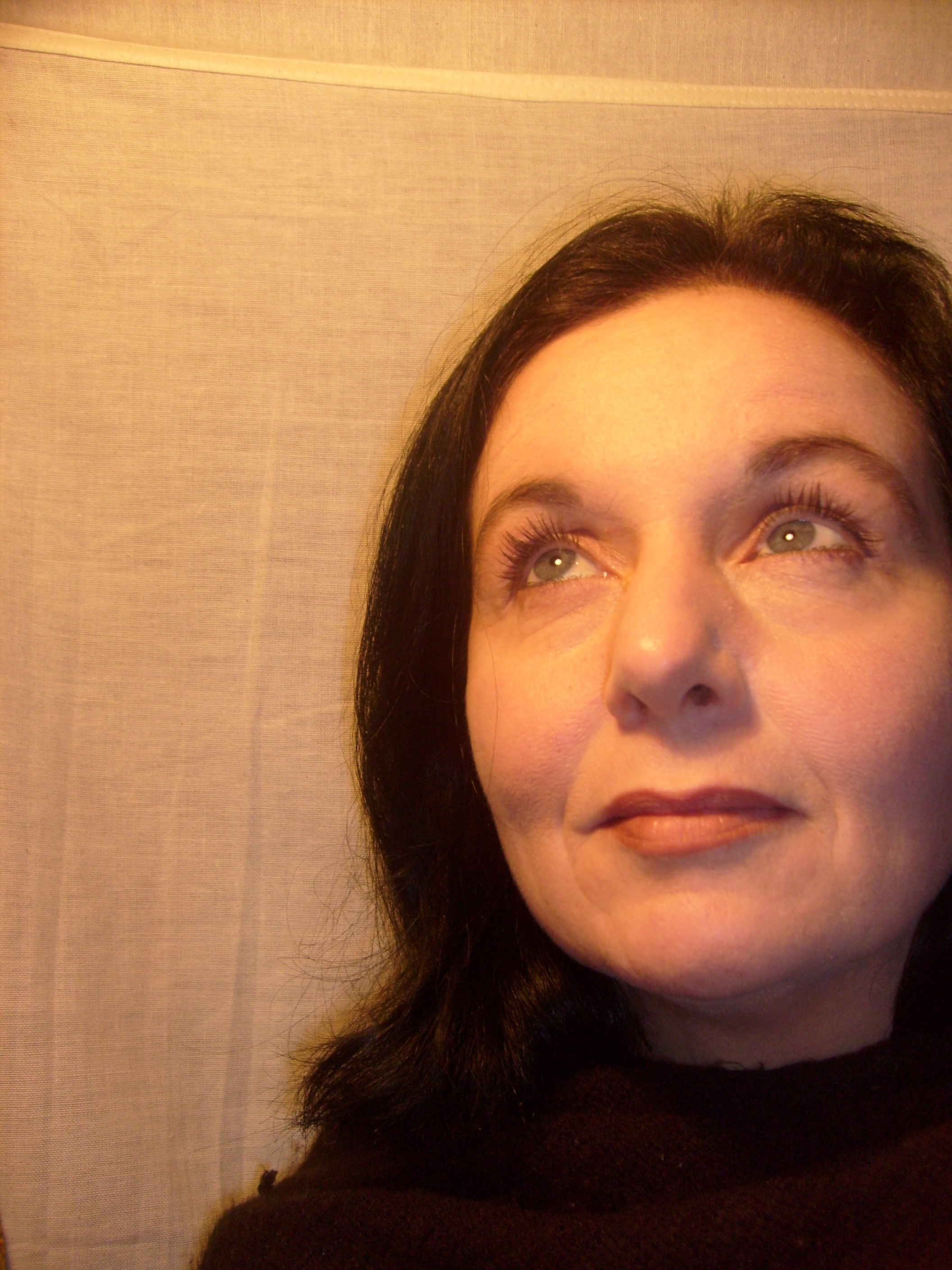
Dea


New Chapter

London calling

Sorry for my poor blogging this summer – I’ve been traveling. In July, I left behind my life in Norwich, England. I’ve enjoyed living in Norwich, a quiet, unassuming yet seductive city in Eastern England. I came to the ‘Fine City’ to take an MA at UEA and was then offered a job teaching creative writing at the local prison whilst I built up writing career – and somehow that slipped into six years. I met a lot of great people who’ve helped and influenced my writing during that period and have benefited enormously from the support of the Writers’ Centre Norwich. The time has now come to take that experience and move my writing on to the next level. I’m off to London to start a PhD.

My time in Norwich has seen me win a number of prestigious writing awards and bursaries. Also, I’ve found an agent, have a novel on submission, had four radio plays produced and broadcast (and a couple more in the works). More recently, I’ve been awarded a Doctoral scholarship with Lincoln University (LSPA) for a performing arts PhD on New Playwriting at the Royal Court Theatre in London. So, following a summer of traveling and writing and catching up with friends in Holland, Belgium, Croatia, Hungary, Scotland, England and Ireland – I’m moving to Central London in September and starting a new chapter in my life. I look forward to sharing my new adventures with you all, I appreciate your interest in my blog and hope you’ll all continue to support my plays, shorts stories and novels.


Knowing When to Stop


I’m coming to the end of quite a few significant chapters in my life this month and this fact has me thinking of endings in general. Whatever you are writing, it is important to know when you are done.

The following check list might help you decide if your cake is baked:

1) Have you read through your piece a number of times, each revision focusing on different aspects (character, theme, structure, tone, language, punctuation, grammar etc…)?

2) Have you shown your piece to at least one person and received informed and HONEST feedback, and have you then addressed any issues that have been highlighted?

3) Are you now re-reading your work, doing nothing but shifting around commas (and back again)?

If the answer to the above is ‘Yes’, then you’re done and the only reason you’re hesitating sending it off to the agent/publisher/magazine/competition, is that you’re scared of rejection.

Get over that. If you’re going to be a published writer, you’re going to have to suck up a lot of rejection. Be brave. Take the leap. And good luck!


Your Lasagne

Image

An established poet once told me that art was his way of getting even with the world. A woman who’d dumped him was immortalized by a verse of his that ended with the line: ” I never liked you lasagne, it was always too dry.” The poem is interestingly layered as on one hand it criticizes his ex, on the other, it sends up his own love sickness.

Using art to score a personal goal is a negative approach, nonetheless, it does make me think about why I write. There is something godlike about creating a world where you decide the destinies of each character within. A lot of writers admit to liking this level of control, however imaginary. Bad writers are notorious for having a ‘Mary Sue protagonist’ (an idealized version of themselves) who is set upon by nasty characters who bear resemblance to real people whom the writer dislikes. However, such writing is usually very bad – and more often than not, immature.

It is better, and more interesting (and perhaps more therapeutic) to conjure more rounded characters. You may choose to write about something that happened to you, but try to do so from the point of view (and a sympathetic one) of your nemesis in the situation. You’ll be surprised at what comes up and how your world view may even change as a result. Or, as in the the case of my poet friend’s lasagne poem, turn your story so your art is also gently chiding yourself for your own love-sickness, anger, jealousy, disappointment, greed etc…I feel that art used as a weapon in a personal vendetta will only ever be cheese. Cheesey lasgane, in fact.


Word up! Rulz No.1

More by using Less: Dump your Darlings

There aren’t any rules in creative writing but…. there kind of are.

At least, if you’re a newbie, unpublished, unpractised writer, then you ought to learn the ‘unwritten’ laws of the craft. Once you are up and running, then respected and published and lauded, you can break every rule in the book (so long as you are doing so for a reason). For now, learn your craft.

Lets look first at the “rookie mistakes” – probably the most common is to cram sentences with adjectives and adverbs. A new writer will often fall in love with words and phrases and become over-enthusiastic in their application. However, overly verbose writing deadens the impact of the sentence – which defeats its purpose. By all means, use adjectives but go easy and be clear. An example of an adjective/adverb heavy sentence:

A dark grey, crinkled brow of solemn cloud crept sluggishly over the majestic hills that were patchily bruised with a blackish purple moss and randomly spiked with prickly yellow furze.’

There is too much going on in this sentence. Each individual image is in competition for the readers’ attention. The result is a boring blur. Think about what is necessary here. Everyone knows furze is yellow and prickly, so do you need to inform the reader of these facts? “Majestic” doesn’t really do anything here – except communicate that the hill is big, which one would assume. I would pare the sentence to the following:

‘A cloud slugged over the hills.’

I hope you can see how ‘less is more’ here. The image is much stronger without shoehorning in all those adjectives/adverbs.

A note on adverbs:

Adverbs have a bad reputation in the literary world. Many writers avoid them completely (there’s one right there). I would suggest you use them with caution and very, very sparingly (see, another one) and never, ever with speech attribution (“she said nervously”).

Adverbs like “suddenly” or “immediately” are thought of as cliché traffic lights. If something happens unexpectedly in a story, you don’t need to “flag it” to make the reader aware that this was a “sudden” action – it should be obvious. So, don’t use them.

Over reliance on adjectives and adverbs is a typical, and some would say necessary, phase for those beginning their writing journey. So, don’t worry if you recognize your own writing here. As “mistakes” go, the over use of adjectives and adverbs is a useful one, as it serves to build your vocabulary. All good writers should have this phase. Just keep calm, carry on, edit down the adjectives and remove the adverbs – and you’re on your way.


Veritably Verbose


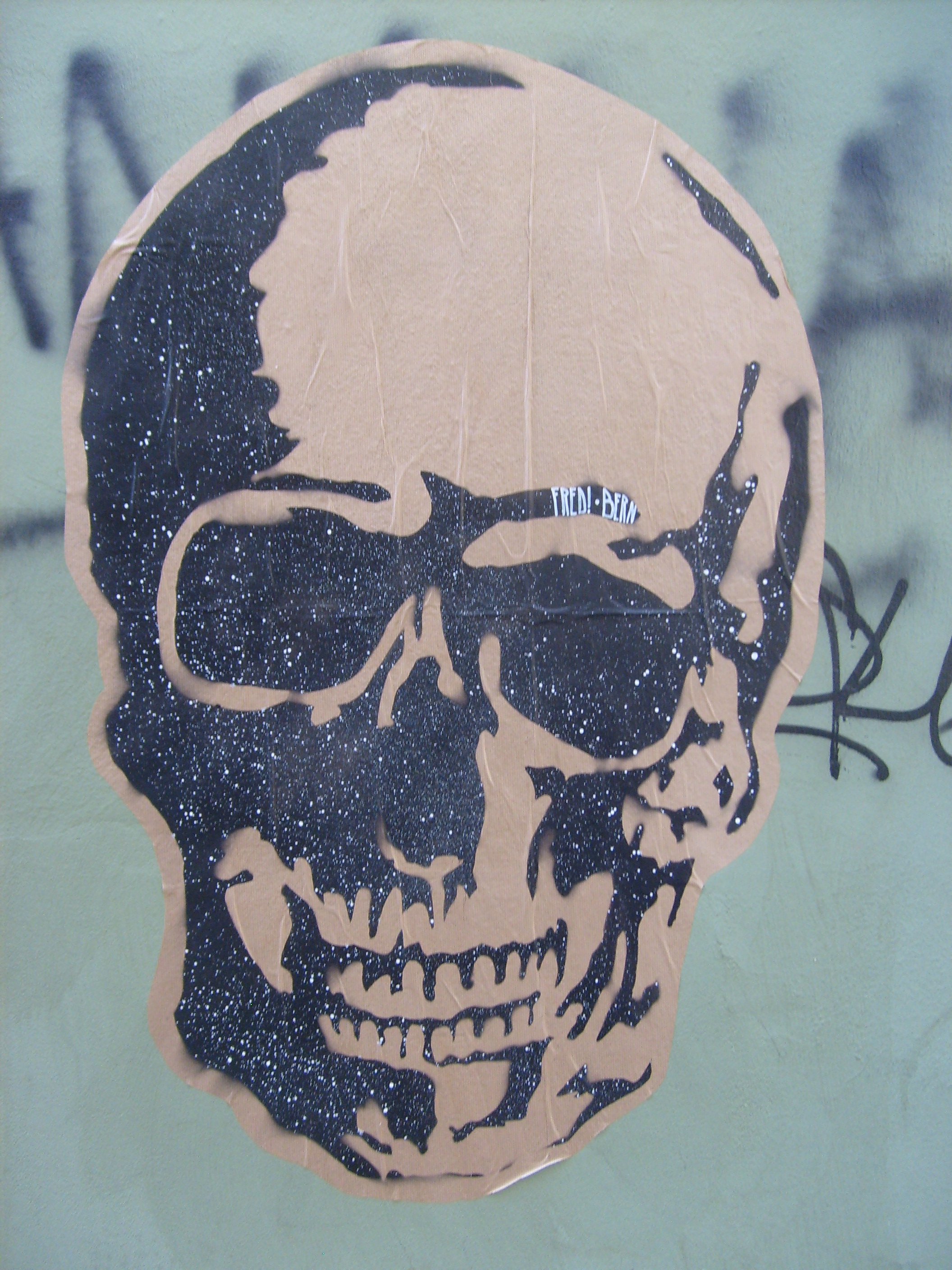
Street Graffiti, Norwich, March 2014


I speak English, Hungarian, French and Irish and I write, ergo  I love words. However, as a teacher of creative writing, I know that the mis/over use of words, particularly adjectives and adverbs, is the most common ‘fault’ you’ll find in the work of novice writers. Lack of confidence in writing skills will have new writers shoehorn as many descriptive words as they can get into a sentence – resulting in a lot of bling and little substance. The advanced writer will ‘show’ an emotion/atmosphere/interpretation in a pared down manner.

It’s hard to ween yourself off adjectives and adverbs. Part of the problem is that there are so many descriptive words in the English language, a tongue with more word-families than any other language. This fact is rooted in the English language’s parentage:  French and German, and also the English language’s absorption of words from a multitude of other tongues.  Thus, there  are many English words that describe quite similarly (ie “loving” is from German and “amorous” is from French), so it is easy to get carried away and over do it, with such a lavish spread on offer. But in order to improve, you need to exercise restraint.

That is not to say you can’t enjoy words. Most of my favourite words are loan words and include: “pyjama” and “shampoo” which come from India (though I’m not sure of the specific languages), “Hacienda” and “siesta” which are Spanish. “Itsy-bitsy”, “paprika”, “coach”, “goulash”, “hussar” and “biro” which are Hungarian. “Smithereen”, “galore”, “banshee”, “slew”, “brogue”, “kibosh”, “hobo”, “gansey” and “shanty” which come from Irish. I enjoy writing them, I love saying them – I’ve just got to be careful about stuffing my prose with too many descriptive and exotic words. Less is usually more. I like to use the painter’s palette analogy – if you add blue to yellow, you get green. If you add blue, yellow, red, green, gray, you get mud. Too many descriptive words, as lovely as they are on their own, will muddy the picture you are trying to create.

Words are fun, go ahead and celebrate words – but do so in moderation…


On Your Time

Image

Evening on the Danube, Budapest.

It is said that the closer the brain is to the sleeping state, the more creative it is. For this reason, many writers keep their notepad by their beds and make sure that the very first thing they do when they open their eyes each morning, is write.

The resultant notes are called “morning pages”. Morning pages might contain what a writer remembers of their dreams or perhaps the writer will simply jot down the very first words that come to mind that day. Some writers say that this exercise helps them ‘slip’ more easily into what writers’ call the “rapture” when a writer feels ideas are pouring into their mind from elsewhere.

Just as the waking moments are a bridge from the sleeping state into sober reality – the hour before you go to bed is often a creative time with the brain slipping into that semi conscious state.  Hence there are plenty of writers who write late at night.

And just to show that there are no rules, there are other writers who find their most productive hours are in the middle of the day when all of life’s busyness is in full swing (the Harry Potter author, J.K. Rowling is a good example. She wrote her first book in a busy Edinburgh café).

So, I guess the point is that different times of the day work for different people and it is really of no consequence whether you are a morning, day or night writer. What is important is that you write and that you find your ideal writing time. Experiment. Find what works for you and then set an hour aside each day at that time and write. Likewise, writers have very personal tastes regarding an environment conducive to writing. There are those who like music or TV buzz in the background and those who can only write in silence. Find whatever works for you.g


Them Writin’ Irish!

Image

You don’t have to be Irish to be a great writer, but it helps. An oft debated point is the essential ingredient that has given the Irish the edge re the written word ever since the Book of Kells. There are many takes on the matter. Some say it’s because although most Irish writers write in English, they use the syntax, structure and playfulness of the Irish language which gives a mastery and an unusual manner of wielding English that results in, well, pure poetry.

Others suggest it is our tradition of story telling, living on in our sizzling and stinging pub banter. Some put it down to our sad history, allowing for a depth and pain to infuse our written word.

However, I’m with the crowd that says its simply because we’re a race of geniuses. Happy St. Patrick’s Day!

Go mbeirimid beo ar an am seo arís…

Famous Irish writers: Sebastian Barry, Samuel Beckett, Elizabeth Bowen, John Banville, Brendan Behan, Dion Boucicault, Roddy Doyle, Emma Donoghue, Maria Edgeworth, Brian Friel, Oliver Goldsmith, Neil Jordan, John B. Keane, Colum McCann, John McGahern, Iris Murdoch, C.S. Lewis, Edna O’Brien, Jennifer Johnston, Iris Murdoch, James Joyce, Patrick Kavanagh, Molly Keane, Hugh Leonard, Martin McDonagh, Frank McGuinness, Sean O’Casey, Joseph O’Connor, George Bernard Shaw, John Millington Synge, Colm Toibin, Oscar Wilde, WB Yates, Bram Stoker, Jonathan Swift… to name but a few.