Tag Archives: writing

Word up

Bang!

As a linguist and a writer, I love words. However, as a teacher of creative writing, I know that the mis/over use of words, particularly adjectives and adverbs, is the most common ‘fault’ you’ll find in the work of novice writers.Insecurity will have new writers shoehorn as many descriptive words as they can get into a sentence – with the result akin to an over ‘bling-ed’ Christmas tree. The advanced writer will ‘show’ an emotion/atmosphere/interpretation without  resorting to a heavy-handed sprinkling of descriptive words.

It’s hard to ween yourself off adjectives and adverbs. Part of the problem is that there are so many words in the English language, a tongue with more word-families than any other language. This fact is rooted English having sprung from French and German, so there are English words that describe quite similarly (ie “loving” is from German and “amorous” is from French). And with such a lavish spread on offer, it is hard for the newbie writer to exercise restraint. Oh but, to improve, you must.

That is not to say you can’t enjoy words. English has magpied extensively from many languages. Most of my favourite words are ‘borrowed’ words and include: “pyjama” and “shampoo” which come from India (though I’m not sure of the specific languages), “Hacienda” and “siesta” which are Spanish. “Itsy-bitsy”, “paprika”, “coach”, “goulash”, “hussar” and “biro” which are Hungarian. “Smithereen”, “galore”, “banshee”, “slew”, “brogue”, “kibosh”, ‘hobo’ and “shanty” which come from Irish. I enjoy writing them, I love saying them – to paraphrase Frank McCourt, it feels like having jewels in your mouth. I’ve just got to be careful about over using ‘exotic’ words in my prose. It can look pretentious.

And you don’t only construct literary art from words but they also set the tone of the piece and there are certain words and phrases that are closely associated with particular genres of writing. Romance type novels I associate with “tawny” and “chiselled”. SciFi writers invent words to name their machines, planets and creatures such as “Klingons” and “Zogathons”.

Words are fun, go ahead and celebrate words – but do so in moderation…


Tweet Thing

Me, when I was at the vanguard of all technology (age 17)

I’m middle aged. I’m 42. And this side of ‘40’ has thus far resulted in reading glasses, having to wash the grey from my hair more frequently and more trips to the doctor in the past year than I’ve had in the past 20 years. Once I’ve finally got my head together, it’s my body that goes all Pete Tong.

Recently, however, I’ve become aware of another symptom of middle age – I’m no longer a product of the world in which I reside. The world of my youth is gone, a distant age symbolised by long dead VCRs, Pac-Mans and Walkmans, smoking in pubs, dial landline telephones, typewriters and cassettes. The new world, feels strange, disconnected from me. I do not want it to be this way. I want to be part of this world. I try.  Look at me, typing on my laptop, texting on my phone, updating my blog, uploading photos, linking stories to YouTube, TED and my Facebook page. Me.

Yes me, who was, I’ll have you know, the first journalist in my hometown of Waterford to report on this new-fangled phenomenon called the ‘Internet’ way back in 1994. I’d been to New York and had seen it in action, me myself, personally like – came home and spread the word via my column in a local paper. So, I’m no Luddite, I’m all for the new. I just resent its alien nature, and wish it was as natural to me as, say, satellite TV was to my generation. Which is a very long winded way of announcing that only thanks to a younger, hipper and more plugged in colleague, I’ve returned to Twitter.

I joined Twitter yonks ago, but could never see the point in it – unless you were a celebrity and (sad) people were actually interested in what you were having for breakfast. So, I sort of gave up and linked my Twitter account to my blog and never checked it, nor tweeted. My colleague, Dan, has cajoled me into giving it another go, to tweet daily and make contact with cyber people, cyber readers and writers and publisher and agents and reviewers and people who might help my career (is mentioning that you’re doing this for networking reasons breaking some sort of etiquette?). So, I’ve updated my Twitter profile et al and I’ll give it a go. I’ll not be growing old gracefully, dammit!


The Divil in Displacement

Interesting displacement activity…


Sit at computer, bring up blank page, make a cup of tea. Sit at computer, look at blank page, do the washing up. Duration: 1 hour. Word count: 0

If this sounds like your typical writing pattern, you’ve got plenty of company. The sudden urge to do housework, rearrange books, check your bank statement- when you really ought to be writing is known as ‘Displacement activity’.

Displacement activity is the bane of a writer’s life. It’s the phrase writers have for all the stuff you do that is not the stuff you are SUPPOSED to be doing. Avoidance is probably a more readily understood term, but doesn’t sound half as writerly. What happens is a little ‘displacement monkey’ in your mind distracts you from the task at hand, by urging you to ‘make another cup of tea/check the TV guide/your bank account/ebay/post on this blog : ) rather than crack on with that difficult piece of dialogue you’re trying to get down.

I don’t believe displacement activities are wholly bad. I feel they sometimes happen for a reason. Perhaps what you’re working on needs time to settle, or percolate in your mind and after you’ve bought those gloves on ebay, it will all come together. However, I admit, I think I’d get a lot more writing done if I didn’t have an Internet connection in my office… I know a few writers who keep their displacement activity on hand – as another creative hobby such as painting, and they believe one such activity complements and feeds the other. So, they may start painting and then half way through THAT activity they’ll turn back to their writing as a displacement activity for their painting and so on…

As with everything in writing, if you find your displacement activity works for you, then go knock yourself out with it. If it is a hindrance, then find a way to stop it distracting you such as getting a room with no internet connection…


I won!

Flying high

If you’ll indulge me… a quick boast post…

This week, my story ‘Grapefruit’ placed first in the Meridian Autumn Competition, and another ‘Two Trees’ was shortlisted for the Wells Literary Festival Prize. And…. another radio drama I co-wrote, ‘Berlin to Balaton’,  has been shortlisted by the BBC… so all in all, it’s been a pretty full on, flying high week. They don’t come around that often, so I’m sure as hell going to enjoy this floaty feeling while I can… : )


Basic Instinct

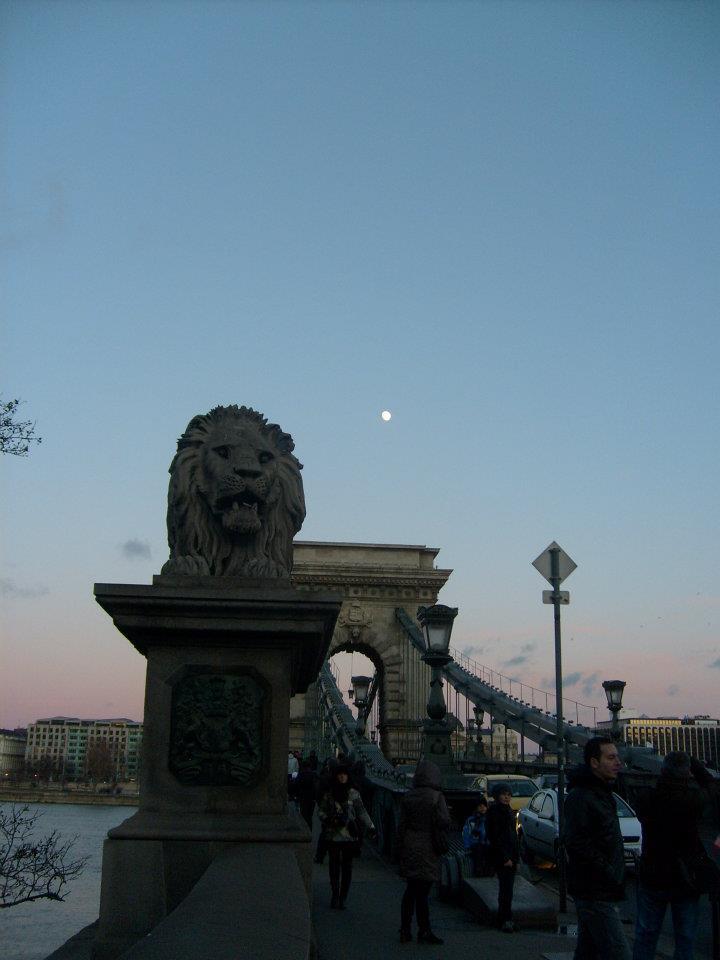
Budapest chain bridge lion and moon

My gut has never lied to me. I might ignore my instinct (often do). But I know I shouldn’t, and time and time again, it shows me it knows what it is talking about. I’m in Budapest this weekend, in a farce – which I should have known better than to get myself entangled – my instinct had me well warned. But that’s what you get for not listening to your gut. Nevermind, at least I get to see my Budapest people, the greatest friends that ever walked the earth.

Instinct. Writers tap into something akin to instinct when we write. We usually do so via a freewriting exercise. Freewriting is what you write when there’s no one looking. Freewriting is instinct in control, sending words all the way down to the tips of your fingers. Freewriting is where you’ll find the most brilliant story ideas, if you look hard enough.

To freewrite, just write. Write the first word that comes to mind and then follow it with another. Set an alarm if you can. Don’t worry about grammar, structure, character development – just write. And when you’re done, stand back and take a look. Is there anything in there you can use. I’ll say there is!

Here’s an example:

‘Right now I’m sitting at my computer and the coffee cup is on the edge of my desk. It looks a little like an iceberg, as it is white and chipped and cold because the coffee has been in it since the morning as I didn’t do the washing up last night and the sink is full of plates and saucers. All those plates look surreal sitting unwashed in the sink like that. All at different angles like a Picasso painting with ketchup instead of paint dribbled over the plates. I wonder if Picasso got his ideas from waking up one morning and seeing his jumble of washing up in the sink I wonder if all the museums in the world actually have pictures of Picasso’s washing up and not his mistresses and Guernica and does that mean the joke is on us?’

The above freewrite might seem silly but it’s also an example of how freewriting could, potentially, inspire a proper piece of writing. This daft thought about Picasso’s washing up could easily be worked into a comedy radio play where a hung-over Pablo Picasso and Henri Matisse wake up after a night out on the town and dare each other to paint a picture of the mess of washing up in the sink. Thus, the modern art movement is accidentally launched. Another possibility you could take from this freewrite is the concept that something generally considered ugly and in need of repair or attention (washing up) can lead to tremendous artistic inspiration – and this idea could form the kernel of a short story or a poem.

Here, chose one of the prompts below and let it lead you into a three minute freewrite.

I wish I had said….

It was no use pretending….

A long time ago…

For the first time ever….

It was the day the pumpkin appeared on the chair…


Wild Things

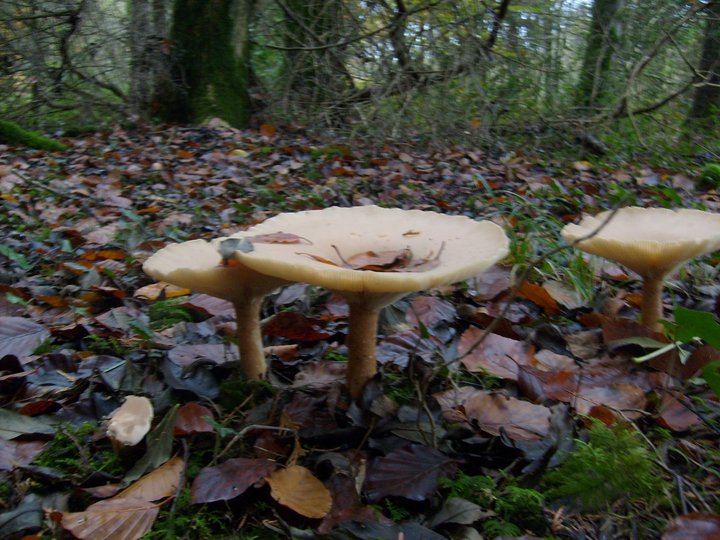
Fun fungus

I’ve been on a bit of a foraging binge lately. I came across a recipe book for wild food – ie berries, mushrooms etc… and have spent the past while subjecting my housemates to experiments in nettle soup, nettle lasagne, dandelion bhajis, elderberry syrup and blackberry crumble, fool and ice cream…

I live in an eccentric house share in an old mansion which has four acres of wilderness attached (there are even deer in them thar woods) – so there are plenty of the aforementioned weeds. Most of my housemates are adventurous, creative types, so are willing to try new culinary experiences and thankfully these have not yet been death by poison…

I’ve been having fun. And while I was out foraging today, it struck me how scanning the hedgerows for fruit, was rather like trying to find a story idea in the tangle of my mind.

I’ll often start writing by putting anything down on the page – “hggahgoidihgogha” will do, just get something down, break that white, crack that ice. Enjoy the sensation of the pen flowing over your paper or the tap of your finger tips on the keyboard and don’t think too hard about what you’re writing. Let it flow. Try just writing the “The quick brown fox jumped over the lazy dogs…”  a few times. Then continue on with the story. Where does the fox go next? Why is the dog feeling lazy? Where are they? What does the air smell like? What sounds can you/they hear? Is it hot or cold? Wet or dry? How does the dog feel when the fox jumps over him? Does he plan revenge? Once you’ve done a paragraph or two, you’ll probably find that the creative juices are flowing and there be some berries to collect in what you’ve written.

Happy foraging!


The Good, The Bad, The Ugly

Me at breakfast, Ireland, September 2012. Am I good or bad?


Probably the most common question a writer gets asked is ‘Where do you get your story ideas from?’ Well, from everywhere. From newspapers, from life, from events that upset, move you or fill you with passion, or anger. You can get a lot of good material from bad situations.

As a writer you have a built in advantage over non-writers in that you can put bad events in life to good use. A broken heart can (with some distance from the event) give plot and substance to a short story – as they say, no tears in the writer, no tears in the story. Ditto a betrayal or some such extreme circumstance.

These difficult personal experiences, often awful, also lend opportunity to observe human behaviour in its rawest form – a crucial study for any writer. Take note re who behaves in an altruistic manner (and does that even exist) in the circumstance? Who looks for the easy option? What type of person sticks their head in the sand and hides behind others? Who makes a stand despite risks of personal loss? The answers are often surprising. The meekest are often the bravest, the erstwhile idealistic often less so when faced with a truth that is inconvenient to their own life and circumstance. Bad situations make for rich people study material.

Alternatively, another story prompter is to use the ‘what if’ question. The ‘what if’ question prompts you to consider alternative endings to a real situation. A good example of this question is Stephen Fry’s Making History, in which he explores a world where Hitler was killed in WWI but an even more dastardly figure comes to prominence, and wins. Apply the ‘what if’ scenario to your personal difficulty and see where it takes you storywise…


Try and Try Again

Watching the horizon, Brighton Beach, U.K.


I when I was 22, I wrote seven short stories. They were bad, really pretentious, crammed with adjectives and adverbs and with no theme or character development or point to any of them at all but I thought they were pure genius. I sent them off to every magazine I could find in the bookstore. And waited. And waited. And waited… until I became convinced that they had all been lost in the post. It was the only explanation, surely, as any editor would recognize my genius immediately, no? A couple of months later, I received a single rejection letter. And the truth dawned. No one else even bothered replying. It was 100% rejection. I was floored. I burned the stories I was working on and I didn’t send anything else off for another ten years.

That was very stupid of me. I should have brushed myself off and tried again. I would be in a much better position and be a better writer now if I had. But I wasn’t strong or  mature enough to know that then. Ah, well. During my first year on my MA at UEA, I sent out another batch of stories. I’d had a few shorts published at this stage and was confident that I’d now win every competition going and it would pay my MA tuition. And, again I got nowhere. I was pretty down but I recalled how I’d let rejection defeat me before and vowed it wouldn’t happen again. I sent out more stuff, and then more stuff. And after six months, I won the Mary and Ted O’Regan Award, and then the Annaghmakerrig award and the Molly Keane Award, the HISSAC and the Sussex Playwrights’ and this year I’ve been shortlisted for an international award, published in two anthologies and it looks quite likely that a lot is about to bloom on the drama front for me (though I don’t want to jinx that by talking too soon).

Anyway, the moral is don’t give up – look at how you can improve your rejected story and send it out again. Remember, much depends on what the magazine or the competition judge is looking for at that particular time, it may not be a comment on your writing skills. Do a bit of research, try to find a suitable home and try and try again. You will get there in the end.


Wonderwall

My Wonderwall for ‘Sheila-na-Gig’

I recently blogged about feeling blocked. I had lost my productivity and inspiration and the realisation spun me into a six-week panic attack which was pretty horrible. Nonetheless, I got through it and a lot of pent up creativity burst through with me – coz, Reader, I’m creatin’.

It’s hard to say what pulled me through that scary time. There were a few ‘angels’ around me , but certainly one of the triggers was putting together  a ‘ Wonderwall’. My wonderwall is based on an exercise passed to me by a fellow artist who works in performance and uses the wall method to structure, hone and shape his thoughts when devising a new piece. The Wonderwall (my label, not his) is akin to a spidergram, but poster size, allowing you to lay out your thoughts visually, using text, images, colour, shape and form. The Wonderwall particularly appealed to me, coming as I do from an fine art background.

I began my own Wonderwall by pasting up names of characters, themes, titles and phrases and also sketching images that I felt were somehow intrinsic to a play I wanted to write. With these words and images before my eyes, rather than in my head, I began to see structure and connection where I had not seen any previously. I also noticed recurrent themes in my work that I had not deduced before and I realised I was most frequently writing about the role of women, belief systems, chance, and this knowledge  helped to clarify and solidify the main pull through themes in my new piece.

So, for those of you feeling a little blocked right now, I’d highly recommend this approach because…. after all….  you’re my wonderwaaallll… : )

PS: The house is being renovated at the moment, meaning there are builders in and out of my room every day – I can’t help musing re what they think on my ‘Wonderwall’ – I’m sure they’ve got me pegged as some sort of paranoid conspiracy theorist with a scary ‘thing’ for naked people with goats’ heads…. ah well…


Silver Linings on a Dark Cloud

Norwich sun on River Yare.


Artists are often asked about gateways to creativity. The answer given will depend on where the artists believe ‘the muse’ doth dwell. Broadly speaking, there are two schools of thought – one holds that creativity is within the artist. The other says art exists outside the creator – in another dimension/world/state.

By now, I have lived and seen too much to say one belief is right or wrong – to do so would be both naive and arrogant. I will state, however, that both philosophies hold that creativity is available to everyone – and access to a heightened creative state can be achieved through various exercises many of which we’ve looked at here before – exercises such as freewrites, morning pages, ‘what ifs’, character studies and even physical exercise and displacement activities. There is another oft- referenced portal to creativity which remains controversial – although it doubtless works for some and that is ‘the black dog’, melancholia, depression.

Our culture is ridden with images of the tortured artistic soul sitting in his garret, slicing his ear off with one hand and producing master pieces with the other. We expect our creative minds to be troubled ones. I would like to write that this is a nonsense, that people can create just as good art in the happy state as they can in depression., but if I am to refer to my personal experience of the creative process, I have to admit that when I’m down I’m at my most creative and productive. And I so wish this were not the case.

Take this year, from January to June of 2012, I felt elated. There were many reasons for this feeling, amongst them a record previous year in terms of writing success, a move from a negative to a positive domestic set up, a new and better job, more free time and an expanding social life. And during this blissful period, I wrote one rather ropey short story.

In the first week of June, my mood fell down the plug hole. Again, there were a number of factors involved including health issues and some financial pressure and perhaps my impending birthday (July 24th) has something to do with it… But ironically, I also went down because I wasn’t writing/producing/moving forward as a writer. Dark thoughts began to wake me in the wee hours, spinning round my head until it is time to get up and face another day soaked in despondency and fear, feeling like I can’t go on.

I’ve in this funk for six weeks now, and during this short time, I’ve written three new short stories and the first draft of a full length stage play. I’ve contacted and set up meetings with directors in three countries re staging or broadcasting an award winning play. I’ve collated and edited all my short stories into a collection and I restarted entering short story competitions. I’m doing this because art is the only thing that doesn’t let me down when I feel wretched.

Art is my friend. I don’t currently have people around me in whom I can truly talk to, or lean on. It is not their fault. Living in Norwich, England, neither city nor country to which I have any ties, I am away from any people with whom I have history, deep friendships and connections. While I’ve made some friends here, one resists leaning on people you know for a relatively short period of time. So, I’m lonely and my feelings are going into my art.

I can’t say if melancholia allows a more direct route to the creativity inside you, or it brings the mind to a near trancelike state where the ‘other world’ can come rolling in. I don’t know. I do know however, that I wish it were not so. And given the choice of living in a positive state or producing art, I’d opt of the happy former everytime. I just wish I knew how to have both. I’m sure it is possible.

Meanwhile, I need to keep writing myself back to happiness…