Tag Archives: writing

Voice of an Angel Says: ‘Don’t Bother Praying’

There are all kinds of writers from poets thru playwrights, novelists thru short-story writers. And, all types of writers are influenced in turn by other forms of artistic expression, be it painting, film, dance, music and song. However, it is the marriage of word and music that creates the most immediate effect of any art form.

A couple of notes in a particular key wedded to carefully selected lyrics, can reach in and squeeze your heart, roil you memory, pump your tear ducts.

And to prove the point here is my cousin Fiona Flavin – who has one of the finest voices in Ireland –singing her own composition, a soul-blues number, ‘Don’t Bother Praying’. Enjoy!


Knowing When to Stop


I’m coming to the end of quite a few significant chapters in my life this month and this fact has me thinking of endings in general. Whatever you are writing, it is important to know when you are done.

The following check list might help you decide if your cake is baked:

1) Have you read through your piece a number of times, each revision focusing on different aspects (character, theme, structure, tone, language, punctuation, grammar etc…)?

2) Have you shown your piece to at least one person and received informed and HONEST feedback, and have you then addressed any issues that have been highlighted?

3) Are you now re-reading your work, doing nothing but shifting around commas (and back again)?

If the answer to the above is ‘Yes’, then you’re done and the only reason you’re hesitating sending it off to the agent/publisher/magazine/competition, is that you’re scared of rejection.

Get over that. If you’re going to be a published writer, you’re going to have to suck up a lot of rejection. Be brave. Take the leap. And good luck!


Word up! Rulz No.1

More by using Less: Dump your Darlings

There aren’t any rules in creative writing but…. there kind of are.

At least, if you’re a newbie, unpublished, unpractised writer, then you ought to learn the ‘unwritten’ laws of the craft. Once you are up and running, then respected and published and lauded, you can break every rule in the book (so long as you are doing so for a reason). For now, learn your craft.

Lets look first at the “rookie mistakes” – probably the most common is to cram sentences with adjectives and adverbs. A new writer will often fall in love with words and phrases and become over-enthusiastic in their application. However, overly verbose writing deadens the impact of the sentence – which defeats its purpose. By all means, use adjectives but go easy and be clear. An example of an adjective/adverb heavy sentence:

A dark grey, crinkled brow of solemn cloud crept sluggishly over the majestic hills that were patchily bruised with a blackish purple moss and randomly spiked with prickly yellow furze.’

There is too much going on in this sentence. Each individual image is in competition for the readers’ attention. The result is a boring blur. Think about what is necessary here. Everyone knows furze is yellow and prickly, so do you need to inform the reader of these facts? “Majestic” doesn’t really do anything here – except communicate that the hill is big, which one would assume. I would pare the sentence to the following:

‘A cloud slugged over the hills.’

I hope you can see how ‘less is more’ here. The image is much stronger without shoehorning in all those adjectives/adverbs.

A note on adverbs:

Adverbs have a bad reputation in the literary world. Many writers avoid them completely (there’s one right there). I would suggest you use them with caution and very, very sparingly (see, another one) and never, ever with speech attribution (“she said nervously”).

Adverbs like “suddenly” or “immediately” are thought of as cliché traffic lights. If something happens unexpectedly in a story, you don’t need to “flag it” to make the reader aware that this was a “sudden” action – it should be obvious. So, don’t use them.

Over reliance on adjectives and adverbs is a typical, and some would say necessary, phase for those beginning their writing journey. So, don’t worry if you recognize your own writing here. As “mistakes” go, the over use of adjectives and adverbs is a useful one, as it serves to build your vocabulary. All good writers should have this phase. Just keep calm, carry on, edit down the adjectives and remove the adverbs – and you’re on your way.


Veritably Verbose


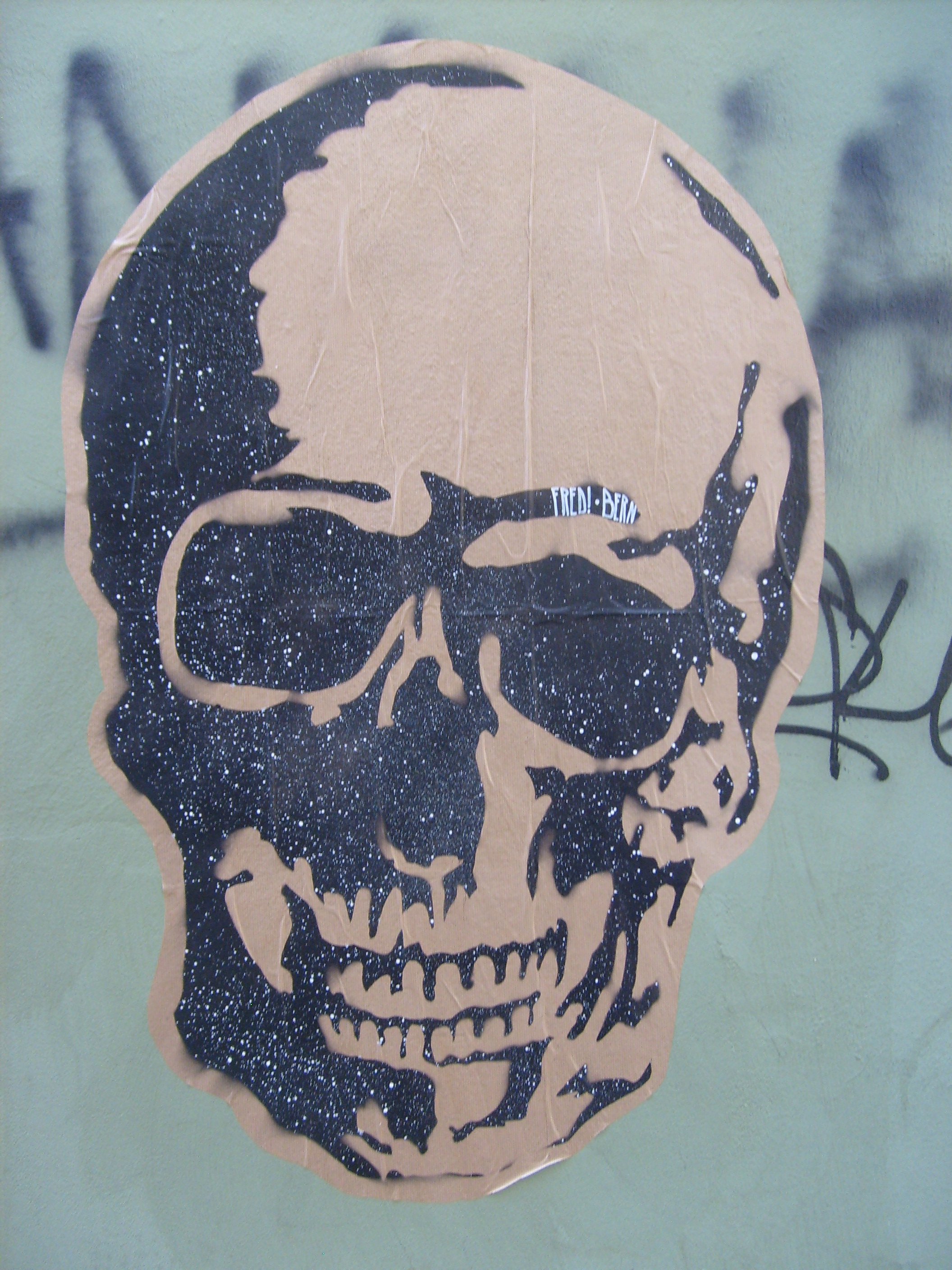
Street Graffiti, Norwich, March 2014


I speak English, Hungarian, French and Irish and I write, ergo  I love words. However, as a teacher of creative writing, I know that the mis/over use of words, particularly adjectives and adverbs, is the most common ‘fault’ you’ll find in the work of novice writers. Lack of confidence in writing skills will have new writers shoehorn as many descriptive words as they can get into a sentence – resulting in a lot of bling and little substance. The advanced writer will ‘show’ an emotion/atmosphere/interpretation in a pared down manner.

It’s hard to ween yourself off adjectives and adverbs. Part of the problem is that there are so many descriptive words in the English language, a tongue with more word-families than any other language. This fact is rooted in the English language’s parentage:  French and German, and also the English language’s absorption of words from a multitude of other tongues.  Thus, there  are many English words that describe quite similarly (ie “loving” is from German and “amorous” is from French), so it is easy to get carried away and over do it, with such a lavish spread on offer. But in order to improve, you need to exercise restraint.

That is not to say you can’t enjoy words. Most of my favourite words are loan words and include: “pyjama” and “shampoo” which come from India (though I’m not sure of the specific languages), “Hacienda” and “siesta” which are Spanish. “Itsy-bitsy”, “paprika”, “coach”, “goulash”, “hussar” and “biro” which are Hungarian. “Smithereen”, “galore”, “banshee”, “slew”, “brogue”, “kibosh”, “hobo”, “gansey” and “shanty” which come from Irish. I enjoy writing them, I love saying them – I’ve just got to be careful about stuffing my prose with too many descriptive and exotic words. Less is usually more. I like to use the painter’s palette analogy – if you add blue to yellow, you get green. If you add blue, yellow, red, green, gray, you get mud. Too many descriptive words, as lovely as they are on their own, will muddy the picture you are trying to create.

Words are fun, go ahead and celebrate words – but do so in moderation…


On Your Time

Image

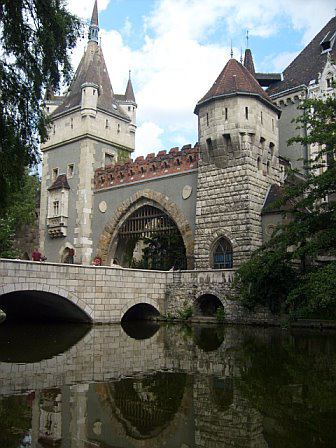
Evening on the Danube, Budapest.

It is said that the closer the brain is to the sleeping state, the more creative it is. For this reason, many writers keep their notepad by their beds and make sure that the very first thing they do when they open their eyes each morning, is write.

The resultant notes are called “morning pages”. Morning pages might contain what a writer remembers of their dreams or perhaps the writer will simply jot down the very first words that come to mind that day. Some writers say that this exercise helps them ‘slip’ more easily into what writers’ call the “rapture” when a writer feels ideas are pouring into their mind from elsewhere.

Just as the waking moments are a bridge from the sleeping state into sober reality – the hour before you go to bed is often a creative time with the brain slipping into that semi conscious state.  Hence there are plenty of writers who write late at night.

And just to show that there are no rules, there are other writers who find their most productive hours are in the middle of the day when all of life’s busyness is in full swing (the Harry Potter author, J.K. Rowling is a good example. She wrote her first book in a busy Edinburgh café).

So, I guess the point is that different times of the day work for different people and it is really of no consequence whether you are a morning, day or night writer. What is important is that you write and that you find your ideal writing time. Experiment. Find what works for you and then set an hour aside each day at that time and write. Likewise, writers have very personal tastes regarding an environment conducive to writing. There are those who like music or TV buzz in the background and those who can only write in silence. Find whatever works for you.g


Truth Will Set You Free

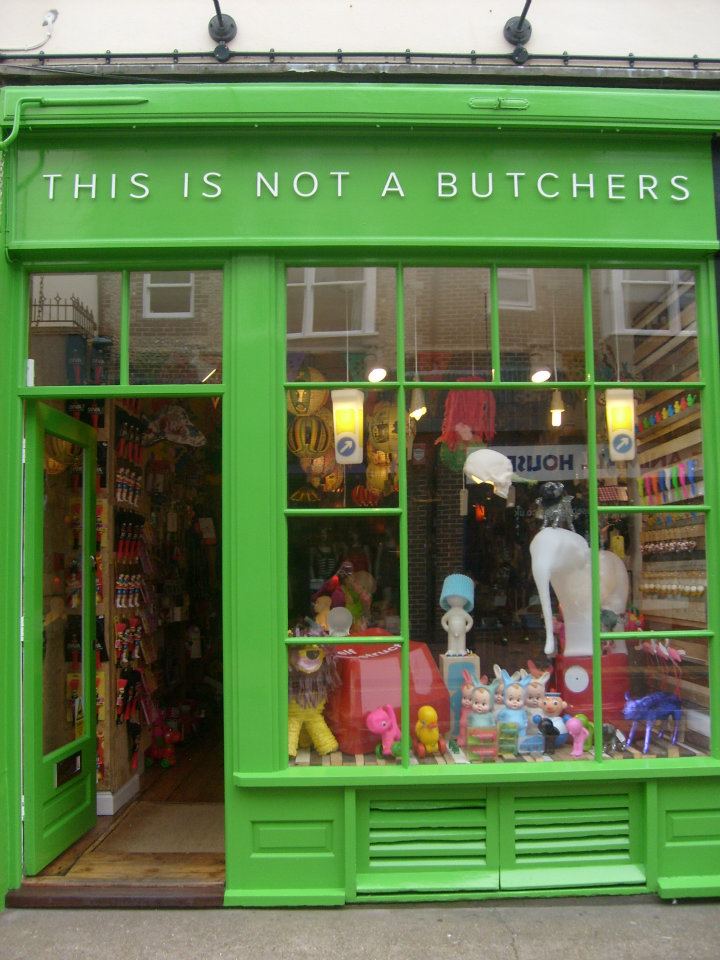
A Truthful Shop, Brighton.

Truth is not fact.  A fact is, well, a fact – something undeniable like ‘the sun rises in the east’. Truth is far less easy to quantify, to prove, to grasp. Truth is more subjective than fact, and depends on the belief system of the beholder.Truth is the reality you feel it to be and the artist’s job is to capture and communicate that truth.

Writing from truth, what you feel passionate about, can lend work real emotion, emotion difficult to conjure otherwise. Tears in a writer will bring tears to a reader. And as an artist, it is often your job to stand naked in front of the world, truth in hand. Truth is writing what you believe.

Writing from fact is reportage, when you write using ‘truth’ you add extra spice and colour to the mixture to make it fiction, more interesting, and more moving.

And remember, an issue with writing from reality is that ironically, fact is often too weird and too unbelievable to work as fiction. Your readers will say, ‘oh, come on, that would never happen.’ And you can’t phone them all up and say, ‘actually, it did. I’m not making it up. I once knew this bloke…’ Instead, you’ve often got to tone down the story to make it more credible. Real-life coincidences can be particularly problematic here.

So, be careful with facts… but always write with truth.


New Year Ships’ Log

It’s 2014 – a year that still sounds to me like the title of a Sci-Fi movie. And I’m hoping the spaceships I encounter over the next twelve months will be of the friendly variety .Veterans of this blog will know that when I refer to ‘ships’ I’m talking about all the texts/scripts which I’ve sent out on spec re publication, staging or broadcast etc… I have always liked the idea of my work as ‘ships’ as it somewhat relieves me of responsibility – once launched, they are out there and I can only hope they return to port in some form, preferably laden with a win or publication.

Last year I sent out a total of 59 ships. Some 17 returned to port, 39 never made it. Rejections/disappointments/ non-runs/PFOs are part and parcel with the writer’s lot and learning how to handle them is one of the most important (and difficult) lessons a novice writer faces.

I when I was 22, I wrote seven short stories. They were bad, really pretentious, decorated with adjectives and adverbs and with no theme or character development or point to any of them at all but I thought they were pure genius. I sent them off to every magazine I could find in the bookstore. And waited. And waited. And waited… until I became convinced that they had all been lost in the post. It was the only explanation, surely, as any editor would recognize my genius immediately, no? A couple of months later, I received a single rejection letter. And the truth dawned. No one else even bothered replying. It was 100% rejection. I was floored. I burned the stories I was working on and I didn’t send anything else off for another ten years.

That was very stupid of me. I should have brushed myself off and tried again. I would be in a much better position and be a better writer now if I had. But I wasn’t strong or  mature enough to know that then. Ah, well. During my first year on my MA at UEA  (2009), I sent out another batch of stories. I’d had a few shorts published at this stage and was confident that I’d now win every competition going and it would pay my MA tuition. And, again I got nowhere. I was pretty down but I recalled how I’d let rejection defeat me before and vowed it wouldn’t happen again. I sent out more, and then more and after six months, I had bagged the Mary and Ted O’Regan Award, and then the Annaghmakerrig award and the Molly Keane Award, the HISSAC, the Sussex Playwrights’, the Meridian, the Escalator Award. I’ve now got two broadcast radio plays under my belt (and am working on a third)  as well as signing with an agent and my novel is currently on submission to publishers. My  short stories have been published in seven anthologies/literary publications. I’ve had staged readings of my work in Norfolk, Brighton and Cornwall. I’ve served as writer in residence on the Aran Islands, lead workshops in creative writing in Ireland and the UK and teach writing for a living. These are all ships that came home to mama over the past five years but believe me, many had to sink before I saw the slightest hint of success.

Don’t give up – look at how you can improve your rejected story/script/novel/play and send it out again. Remember, much depends on what the magazine or the competition judge is looking for at that particular time, it may not be a comment on your writing skills. It’s all about not giving up.

The 2013 stats:

Ships sent out: 56

Wins/acceptance/short-listings/publications:17

Ships sunk: 39

The 2014 stats thus far:

Awaiting news on 13 ships launched

Wins/acceptance/short-listings/publications: 1

Ships sunk: 3


You On Your Rocking Chair, Me On My Bench

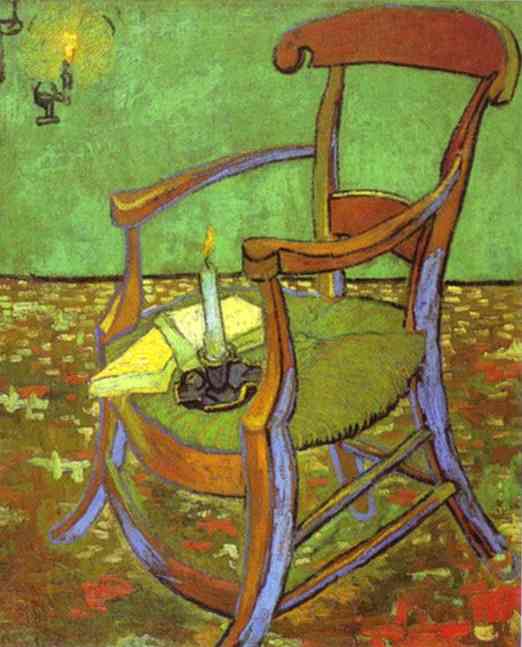
Van Gogh’s Portrait of Gauguin’s Chair

Setting and character description are linked. A man who favours a torn leather armchair filled with cushions is  quite different from a man who rathers sleek minimalist designer furniture. The setting should complement and reflect the character.

It is often effective to draw around the character, sketch them in their absence. What type of chair do they favour? Wallpaper? House? What book is left on their bedside table? Is their office desk obsessively orderly or natty and neat?

I have a background in fine art painting and I find painting is a great way to understand this aspect of character description – the concept of describing your characters by drawing around them rather than delivering a direct portrait of the same. I like to compare these two portraits by Vincent Van Gogh: one a self portrait and the other Van Gogh’s portrait of Paul Gauguin.

What do you think Vincent is communicating regarding his own and Gauguin’s character and personality?

(Bear in mind that Van Gogh and Gauguin were close once but their relationship became strained when they house-shared at Arles – when these portraits were painted.)

And how would you paint these two portraits in words?

Van Gogh’s Chair, Self Portrait


The Agent Secret

Image

There’s a crackle in the air this morning, kids are back at school, autumn is here and it’s time to take stock. I’ve had a high gear year so far. Having won the Escalator Award – a professional development scheme for writers – I was determined to use 2013 finish my novel with the encouragement and direction of my Escalator Mentor, the novelist Tobias Hill. And I have.  The time and investment the scheme afforded me has not only resulted in a completed MS of ‘The Hole in the Moon’, but also a screenplay of the same (and the screenplay has now been selected for further development with the Script Hot House scheme).

Next step for the novel is to find an agent. This is not the easiest step. As an Arts Council funded Escalator Prose Artist and a UEA Creative Writing MA graduate, who is also an award winning writer with a long list of short-stories published, plays broadcast and staged – you might think that I’ve automatically acquired the secret handshake that allows entry into the exclusive world of agented writers. This is not the case. My track record makes it likely that my submission will achieve some attention when submitted, ie I might make it to the top of the slush pile that week, but only the quality of my writing will result in an agent contacting me re representation. 

I’ve been researching the subject of agents over the past week and it makes for sobering reading. Most agencies in London will receive an average of 450 manuscripts a month. From this figure, they might contact 3 or 4 regarding representation. And from those, perhaps one will go on to be published. Yes, it’s that competitive so don’t approach an agent lightly and send them you work only when you feel it is perfect. Tips on approaching agents include the following:

1)      Finish your novel before you contact an agent.

2)      Buy the lastest Writers and Artists Yearbook (if in the UK or Ireland) or the US/Can/Aus equivalent and make a list of agencies/agents who might be interested in your work. Think of an author whose work yours resembles and find out who their agent is (usually mentioned in “acknowledgements” page in a novel.) Research – make sure the agent you contact is interested in the type of book you are proposing. Check the “Yearbook”, if the agency states ‘no Romance’ don’t send them your love story. If they say no email submissions, do not submit by email etc… Make a list of twenty suitable agents.

3)      Most agents (but do check first) should be approached with a cover letter of not more than a page in length, outlining your project and a brief bio. Also attach a one page synopsis and the first three chapters (or first fifty pages) – but as I said, do check with the submissions guidelines on their website.

4)      Be polite and business like. Don’t adopt a grovelling/humorous/aggressive or any sort of extreme tone in your cover letter. Don’t send pictures of your cat or try to be cute.

5)      It has now become acceptable to send out multiple submissions to various agents however, if you are doing so, it is only polite and respectful of agent time to let the agents know you are doing this. You might want to limit this send out to three agents at a time.

6)      Some agents will get back to you within three weeks, others might take up to six months. Some you’ll never hear from at all. I feel that if you’ve not heard back after three months, it’s unlikely they’re digging your manuscript. It is acceptable to send a nudge email at this point to clarify but don’t be terribly surprised if you don’t even get a reply then. This happens, don’t take it personally.

7)      If a number are interested in your work, make a list of your specific needs and choose the agent who might best meet them. However, your choice may all come down to chemistry in the end. Do meet them personally.

8)      If you’re turned down across the board (say 20 or 30 rejections) you might want to rethink your project, put it in a drawer and get started on another. Some agents may have been generous enough to give you feedback re why they didn’t feel the book was right for them. Take note and come back to their comments in a few months when the raw disappointment has eased. If it is any consolation, I don’t know a published author who hasn’t got at least one unpublished novel languishing in a drawer. Put it down as part of your training as a writer and get cracking on your sophomore MS.

I Read the News Today, oh Boy!

Image

Following a brain popping sojourn at the Edinburgh Fringe I had to whoosh to Kent for the wedding of two of my favourite people on earth. A perfect day, finishing a perfectly inspiring couple of weeks. I’m on my way back to Norwich and saw this headline advertised in a railway station and it made me think of how wonderful a source of story ideas newspapers are.

 I worked as a journalist for many years and believe that the paper press is the richest source of inspiration available to writers. For starters, take this headline, and without reading the story what do you think could lie behind it? Or, you could just take an existing story and change the setting/gender etc… to make it your own. Ideas will come to you as you work on it.

Alternatively, you could apply the ‘what if’ question to a story’s possible outcome. The‘what if’ question prompts you to consider alternative endings. A good example of this question is Stephen Fry’s Making History, in which he explores a world where Hitler was killed in WWI but an even more dastardly figure comes to prominence, and wins.

The small ads section can spur the imagination. Hemmingway once said his best work was one he wrote in six words: “For sale: baby shoes, never worn”. It’s clever as there is clearly a heavy back story here but Hemmingway, being Papa, does not spell it out. My point is that you could operate in reverse, search the small ads and then write its back story. Think of the tale behind a novel that ends with that small ad.

Then there are photos. Ignore the captions/related stories. Look at the photos and guess what is going on. Develop an identity for someone in the background of a picture. Give them a problem. Imagine how they are being affected by the main event in the photo. The key is to go for the more obscure shots. Obviously, if it’s a picture of 9/11, the chances are you’re not going to come up with anything too original but if it’s a picture of a man biting a dog, you may be on to something.

Go hunting, Newshound!