Have A Go…

Writing Competitions with a February/March deadline:

Let spring in...

Right, that’s January out of the way – a month where one recovers from Christmas. In fact, I’ve always found it a rather silly month in which to make plans and resolutions, as one doesn’t feel like doing much when it’s brass monkeys outside. February, however, is a different matter. In Ireland, February 1st, St. Bridget’s Day, is the first of spring. There’s not a helluva lot of differnce between winter and spring (or indeed summer) in Ireland – but it is the concept that is important. On February 1st, I get moving again.

And, if I’m moving, I’ve got to enter some comps. So, let’s have a look at competitions with deadlines running up until the end of March. You’ll notice that many of these are Irish competitions, this is partly because, obviously, I’m Irish and these are the comps I know of, but also because the short story and story telling is held in such esteem in Ireland, it’s got to have more writing contests per square foot than any other district of the universe. However, if you have information regarding prizes, contests or awards with a deadline before March 31st, running in your country  – please feel free to add/comment.

Finally, please note that I’m merely collating information posted elsewhere on the Internet. I am not responsible for or affiliated with any of these competitions and have no more information than that on the website listed. Please do not send your entries to me and please do not write to ask about the specifics of individual contests. I won’t know. It’s best to go to the website address provided and inquire there.

And good luck!!!

Writers’ & Artists’ Yearbook Short Story Competition

Prize: £500 plus a place on an Arvon course

Entry Fee: n/a

Deadline: February 14th 2012.

Website: http://www.writersandartists.co.uk


Irish Post/Stena Line Writing Competition

Prize: £500 & free travel to Listowel Writers’ Festival in Co. Kerry.

Entry Fee: £n/a

Deadline: 2nd March 2012

Website: http://www.irishpost.co.uk/index.php?option=com_content&view=article&id=100

NOTE: Only open to Irish/Irish descent resident in Britain (ie the theme concerns the Irish immigrant experience in the UK).

The Bryan MacMahon Short Story Competition

Prize: €2,000

Entry Fee: €10.00

Deadline: 2nd March 2012

Website: http://writersweek.ie/the-bryan-mcmahon-short-story-competition

The Writers’ Week Originals Competition

Prize: €750

Entry Fee: €10.00

Deadline: 2nd March 2012

Website: http://writersweek.ie/writers-week-originals-competition


The Eamon Keane Full Length Play Competition

Prize: €500

Entry Fee: €20.00

Deadline: 2nd March 2012

Website: http://writersweek.ie/eamon-keane-full-length-play


Twisted Stringybark Short Story Award 2012

Prize: $300 AUS plus publication

Entry Fee: $9.75 AUS

Deadline: 4th March 2012

Website: http://www.stringybarkstories.net/The_Stringybark_Short_Story_Award


Cúirt New Writing Prize 2012

Prize: €500

Entry Fee: €10

Deadline: 5th March 2012

Website: http://www.cuirt.ie/component/content/article/3-newsflash/70-cuirt-new-writing-prize-2012


Limnisa / Bluethumbnail SHORT STORY Competition

Prize: One week full board writers’ retreat at LIMNISA

Entry Fee: £6

Deadline: March 15th, 2012

Website: http://www.bluethumbnail.com/Author/competitionpage.html


Mslexia 2012 Women’s Short Story Competiton

Prize: £2,000

Entry Fee: £10

Deadline: 19th March 2012

Website: http://mslexia.co.uk


Molly Keane Memorial Creative Writing Award (I won this last year!)

Prize: €500

Entry Fee: n/a

Deadline: 26th March 2012

Website: http://www.mollykeanewritersretreats.com/2012writingaward.htm


PJ O’Connor Radio Drama Awards

Prize: Professional production of the best three 40-minute plays with 5,000 to Winner

Entry Fee: n/a

Deadline: 30th March 2012

Website: http://www.rte.ie/radio1/pjoconnorawards/


The Bristol Short Story Prize

Prize: £1,000

Entry Fee: £7

Deadline: March 31st 2012.

Website: http://www.bristolprize.co.uk


Plymouth University’s Short Fiction Competition

Prize: £500

Entry Fee: £10

Deadline: March 31st 2012.

Website: http://www.shortfictionjournal.co.uk/


The Moth Short Story Prize

Prize: 1,000

Entry Fee: 8

Deadline: March 31st 2012.

Website: http://www.themothmagazine.com


The Short Fiction Journal Prize

Prize: £500 plus publication

Entry Fee: £10

Deadline: March 31st 2012.

Website: http://www.shortfictionjournal.co.uk/competition.html

And finally… not a competition per se, but a chance to have your work published in leading literary magazine. The Stinging Fly are accepting submissions up until March 31st: http://www.stingingfly.org/about-us/submission-guidelines


Pop that Page

Put some magic on the page


It’s dawn 6am and you’ve risen early just to get those ‘morning pages’ done. And you’re staring at a blank sheet. Writer, you need warm up.

Just as many painters will apply a beige wash to a blank canvas to stop it looking so virgin – you’ll need to put something down on the page – “hggahgoidihgogha” will do, just get something down, break that white, crack that ice. Next, do a non-dominant hand exercise. If you are right-handed, then pick up a pen and start to write with your left. If you’re on a laptop, then type “The quick brown fox…” with your left hand alone. If you’re left-handed, apply vice vearsa.

Enjoy the sensation of the pen flowing over your paper or the tap of your finger tips on the keyboard and don’t think too hard about what you’re writing. Let it flow. When you’ve written out the fox/dog sentence a few times, continue on with the story. Where does the fox go next? Why is the dog feeling lazy? Where are they? What does the air smell like? What sounds can you/they hear? Is it hot or cold? Wet or dry? How does the dog feel when the fox jumps over him? Does he plan revenge? Once you’ve done a paragraph or two, you’ll probably find that the creative juices are flowing enough for you to turn your attention to that story you were working on before – or read over your freewrite, there might be the kernel of something worth working on.

Now, I’m off to take my own advice…


WhywhyWHYwhyWhy?

Why this picture? Whywhywhy?

A fellow graduate of my MA in Creative Writing recently asked why I continued to write short stories, if I see myself as a ‘novelist’. The truth is I don’t see myself as a ‘novelist’ or a ‘short story writer’, ‘playwright’ or a ‘poet’. I see myself as a writer and believe that a writer should be able to (at least) try all written forms.

Truth be known, I write and enter short story competitions for the following reasons and it is good for me to have this list at hand – in case I ever question myself.

a) Being shortlisted encourages and motivates – when such stuff is difficult to come by in the writer’s life.

b) I can get published in literary magazines.

c) Money, if I win.

d) It keeps me on my toes and hones and polishes my craft.

e) By writing stories I build up a portfolio – ready to go in case I’m ever offered a collection.

f) It gives me an edge when applying for bursaries, residencies, funding etc..

g) It might bring  the attention of publishers.

h) Short stories are something I can work on when time is limited.

i) An agent once told me that it is important to build up your writing ‘credits’.

j) Agents are human and sometimes don’t trust their own judgement, so wins and commendations give you that ‘seal of approval’/credibility.

k) Short story writing is a better displacement activity than making a cup of tea.

M) Having good writing credits help when applying for writing jobs.

p) Writing short stories reminds me that I’m a writer.


Newspapers: more than fish n’ chip wrapping

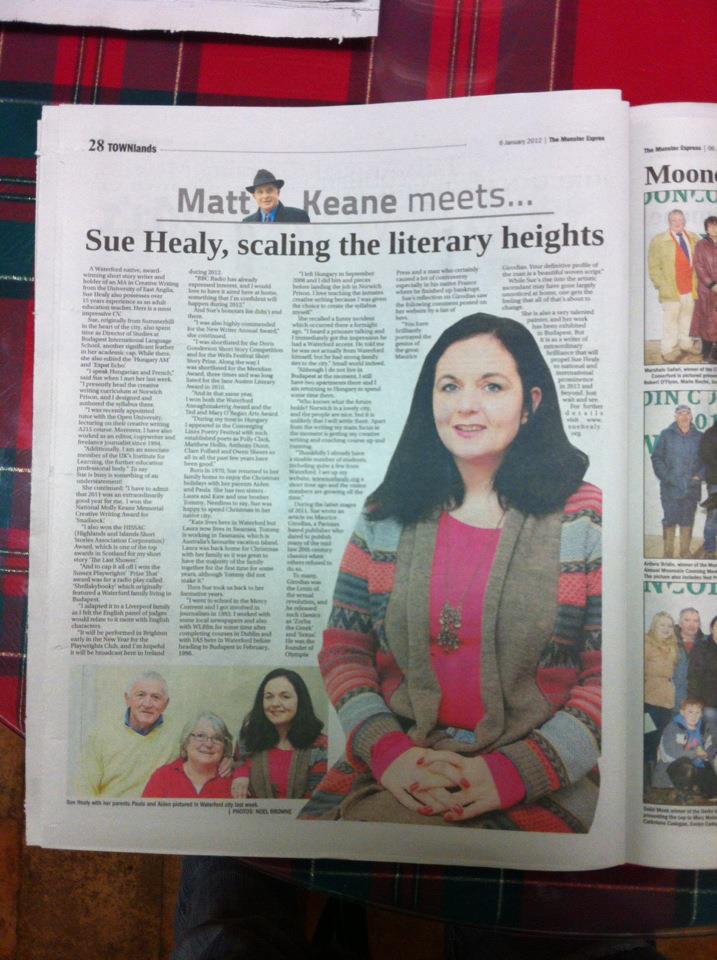
Yup, that's me. Sorry, couldn't resist the 'boast post' - the 'Munster Express, Jan 6th, 2012.

It’s January 14th, I’ve already completed a house move (and all the cleaning, paperwork and furniture selling/dumping that entails), I’ve spent a week in Budapest and prepped for a week of OFSTED inspections. I  hope 2012 will slow it’s pace soon so I can get some headspace and start thinking again. I’ll need conjure la muse… and get some inspiration for new works.

Leonardo di Vinci used to stare at the walls in his studio until the damp patches formed scenes and figures he wanted to paint. If you look closely at some of his works, you can even see how those dark stains suggested the rock formations he conjured. Of course, you don’t so much ‘get’ ideas as you eek them out from within.

Hopefully, you don’t have damp patches around your writer’s garret. You may have yesterday’s newspaper, however. I worked as a journalist for many years and love newspapers and appreciate them as a source of ideas and stories for the creative writer. For starters, you could just take an existing story and change the setting/gender etc… to make it your own. Ideas will come to you as you work on it.

Alternatively, you could apply the ‘what if’ question. The ‘what if’ question prompts you to consider alternative endings. A good example of this question is Stephen Fry’s Making History, in which he explores a world where Hitler was killed in WWI but an even more dastardly figure comes to prominence, and wins.

The small ads section can spur the imagination. Hemmingway once said his best work was one he wrote in six words: “For sale: baby shoes, never worn”. It’s clever as there is clearly a heavy back story here but Hemmingway, being Papa, does not spell it out. My point is that you could operate in reverse, search the small ads and then write its back story. Think of the tale behind a novel that ends with that small ad.

Then there are photos. Ignore the captions/related stories. Look at the photos and guess what is going on. Develop an identity for someone in the background of a picture. Give them a problem. Imagine how they are being affected by the main event in the photo. The key is to go for the more obscure shots. Obviously, if it’s a picture of 9/11, the chances are you’re not going to come up with anything too original but if it’s a picture of a man biting a dog, you may be on to something.

Go hunting, Newshound!


Welcome 2012 And Resolution Writing Course

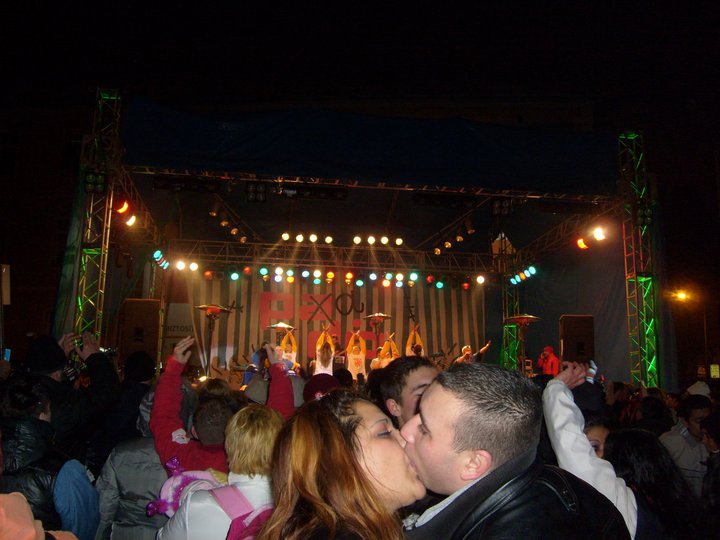
Revellers bring in the New Year, Hungarian style

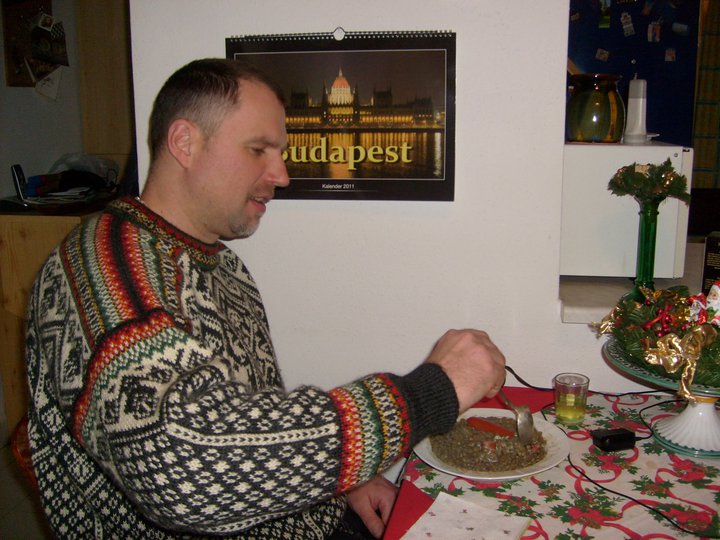
Here in Budapest, tradition states one must eat a bowl of lentil soup on New Year’s Eve/Day to attract luck and fortune in the year to come. Last year, my friend Joska invited me to lunch on Jan 1st. He’d cooked a barrel load of the stuff and it was so cold outside we rather overdosed on the bean. Lo and behold, 2011 turned out to be a year of great fortune re my writing. I won three awards, was shortlisted for even more, had quite a few shorts published. Moreover, I set up this website and my online writing course – both of which I’m enjoying immensely and I’ve resolved to make the course my focus for the coming year.

My course, ‘Creative Writing: A Toolbox’ is a six week online one-on-one creative writing introduction. With it, I aim to help you realize your dreams of writing creatively, or improve the practice of those already writing. The course regards the tools of the craft and provides online support for your work via feedback and guidance in relation to editing, submission and markets. Each course is adapted to suit the individual needs of the specific student. There is also the option of retaining my services as a mentor/critic/coach after the course ends.

Creative Writing: A Toolbox’ is supported by written material, exercise, assignments and a weekly 45 minute one-on-one online tutorial to guide the student through the six step, six week writing course. This tutorial is usually given via Skype, though some students prefer to use email alone – that is for the student to decide.  Over the six sessions, the student is introduced to the know-how, ‘tricks’ and skills of the writer and can work on their own project, such as a short story or part of a novel – whilst, receiving online coaching, instruction, feedback and guidance from Sue.

Throughout the course,  students will receive a full professional critique of their work from Sue.

All inclusive price: €150 (introductory offer)

For more information, please contact me on : bpapartment at gmail dot com

In the meantime, if you’d like to make your own Hungarian lentil soup check here: http://allrecipes.com/recipe/lentil-soup-2/

Joska eating lentil soup on New Year's Day

Wishing you all the best for 2012 – may your ships come in with your dreams onboard.

Sue xo


The Lenin of the Sexual Revolution

An article I submitted this month to Live Encounters, on Maurice Girodias, the “Lenin of the sexual revolution” –  a Paris based publisher who dared to first publish many of the mid-late 20th century classics.

http://liveencounters.net/?p=454


What Kind of Beast is This?

What sort of beast is this?

One of the questions most frequently asked in creative writing classes is “how long is a novel/play/short story/screenplay?” And, as is often the case in creative writing, the answer is that there are no rules but… there kind of are.

There is not an official cut off word count for any of the above literary forms but the publishing industry has generally accepted average lengths. Be alive to the fact that just because your word count has hit the “magic number”, it does not follow that you are finished. Apart from the fact you’ll be lobbing off at least a third in edits, you also need be sure that you have brought all the strands of your story to satisfactory conclusion, have made your point and your character has undergone some sort of change / journey / learning arc in the process. Otherwise, to paraphrase Truman Capote, your’re just typing.

What follows is a rough guide/ballpark figure for each literary form:

 Novel

The average commercial novel is 78,000 words in length; this roughly amounts to 300 A4 pages in double spaced twelve-point font. However, a novel can be anything from 45,000 words onwards. A book between 20,000 – 45,000 is usually marketed as a “novella”.

 Short Story

Traditionally, a short story is meant to be read in one sitting. Normally, this narrative form is quite pointed in its message, involves a single setting and few characters. A short story can be anything from 1,000-20,000 words.Writing short stories is a good way of building up your story telling skills, honing your craft as a writer and amassing a writing portfolio. Also, the short story is the literary form favoured by writing competitions. Such competitions usually look for stories in the 2,000-5,000 word bracket.

Flash Fiction

This is the short story’s kid brother. Somewhat akin to the Haiku, a flash fiction story often aims to capture a fleeting moment. It can be any thing between 100-1,000 words. Flash fiction is becoming very popular in competitions these days. Personally, I think this may be to save reading time for judges.

Screenplay

The standard “Hollywood” screenplay is 90 minutes long. Given the rule of thumb that one page equals one minute of movie, you should be aiming for a90-page long screen play. Obviously, this is an approximation.

 TV/Play

Likewise, the page per minute rule applies here too. Bear in mind the slot your are aiming for. commercial TV and radio stations will include advert breaks in their schedule – so a half hour comedy show might in fact be only 22 minutes long etc… If you have a slot in mind, time the duration of the actual show (excluding theme music and commercial breaks.)

 Stageplay

The page per minute rule can roughly be applied to stage plays too. If a stage play were to last an hour and a half, it should be 20,000 words long and span 90 pages.

 Poem

A poem can be as short or as long as you like. A  haiku is traditionally 17 syllables over three line. The Iliad is 25,000 lines long. For the try outs, however, you might aim for two or three verses.


grama rulz OK, innit!

Grammar - Giving your work the final hose down

Warning: You enter this grammar post at your own risk.

Once you’ve had your feedback and have chopped, pruned, rewritten and reshaped your work, you’re ready to go, right? Wrong. Next, you need to don your pernickety gloves and work on grammar, spelling and punctuation.

This type of revision is called a proofread and it is separate from the critique your friends gave re characters, story, POV, tone and structure. A proofread regards layout and correct use of language. A proofread is the final polish.

Never hand in a submission blighted by incorrect or inconsistent punctuation, bad grammar and misspelled words – thinking the story will shine through. They (the slush pile readers) will be turned off by your sloppy copy and will probably never read on into your story, so it won’t get that chance to shine through. If you’ve spent a year writing a novel, respect your work enough to spend another couple of weeks proofreading. It’s only common sense.

As you’ve probably read your own work countless times, you may be blind to copy mistakes. A keen eyed friend is invaluable here. Also you could cut a sentence sized gap in a blank page and place it over your text to check every sentence individually, with the rest of the text blanked out. This may sound painstaking but it is a very good focusing tool.

Many emerging writers are concerned about grammar, unsure of their own knowledge and application. I’ve been an English (as a foreign language) teacher for fifteen years and can recommend the following grammar self-study book (known in the TEFL world as ‘the grammar bible’): Raymond Murphy Grammar in Use. You’ll be able to pick up a cheap copy on Amazon. Spend a night or two doing the exercises, it’ll stand to you.

Also, I could wax lyrical about whether to use double or single quotes for dialogue (or to use any at all) and the difference between US and UK conventions regarding the same. However, I think the best is for you to take ten novels down from your shelf and see how the majority of them format dialogue and then apply the same convention to your work. Whichever you choose, ensure it is then consistent throughout your text.

Finally, here are some of the most common problems:

****Are you using the right “Its”?

“It’s” (with an apostrophe) is short for “it is”.

Its” (no apostrophe) is possessive (ie: the dog lost its bone).

NOTE: somewhat confusingly, when you want to use the possessive elsewhere, you do use an apostrophe: “Mary’s coat”, “John’s golf club”, “the dog’s bone.”

****Same sound, different spelling (homophones).

“They’re”, “Their” and “There”.

They’re (they are) sitting the car. They’re listening to their (possessive) music, they’ll be fine there (preposition of place) for a while yet.

****Using “done” instead of “did” and vice versa.

“Done” is the past participle of “do” and is normally used with the auxiliary verb “have”.  “Did” is the past simple of “do”.

(And if you have no idea what any of that means, you really do need to order that book).

So, you say either “I have done my homework” or “I did my homework” – and never “I done my homework,” or “he done his homework.”

****Saying “could of” rather than “could have” when using the second conditional tense or “could” as a modal verb in the perfect tense (yeah, see that grammar book).

“He could of gone to the shop,” is wrong.

“He could have gone to the shop,” is correct.

And please accept sincerest apologies for sending any of you off into a coma of boredom with this grammary post – believe me, it hurt me more than it hurt you.


RIP George Whitman

I’ve just read that George Whitman, the Paris-based American owner of Shakespeare and Co, has died aged 98.

I  met George when I was 18 and a recently arrived backpacker in the city in the late 80s. It was 10:30am, he gave me a glass of whiskey and told me about knowing Henry Miller back in the day, and Samuel Beckett – who was still alive. It was my first taste of the expat bohemian life – and I shall always be in his debt for this introduction.

The shop has been run by his daughter, Sylvia, for some years and still reflects George’s generous and bohemian spirit. If you are in Paris, be sure to call in.

Thanks for the moment, GW! Shine on above the Seine.


Shellakybooky First Past the Post!!!!

My Radio Play Wins First Prize
Yeeessss! My radio play, ‘Shellkybooky’ has won first prize in the Annual Sussex Playwright’s competition – a national comp run from Brighton. A nice cheque and presentation of play is on the way… : ) Whatever else, 2011 has been a bumper year for my writing! BTW ‘shellakybooky’ is a Waterford word for a snail… and the play centres round a Liverpudlian Irish family of expats in Budapest Hungary and their son’s secret life as a graffiti enthusiast…