There You Are

Image

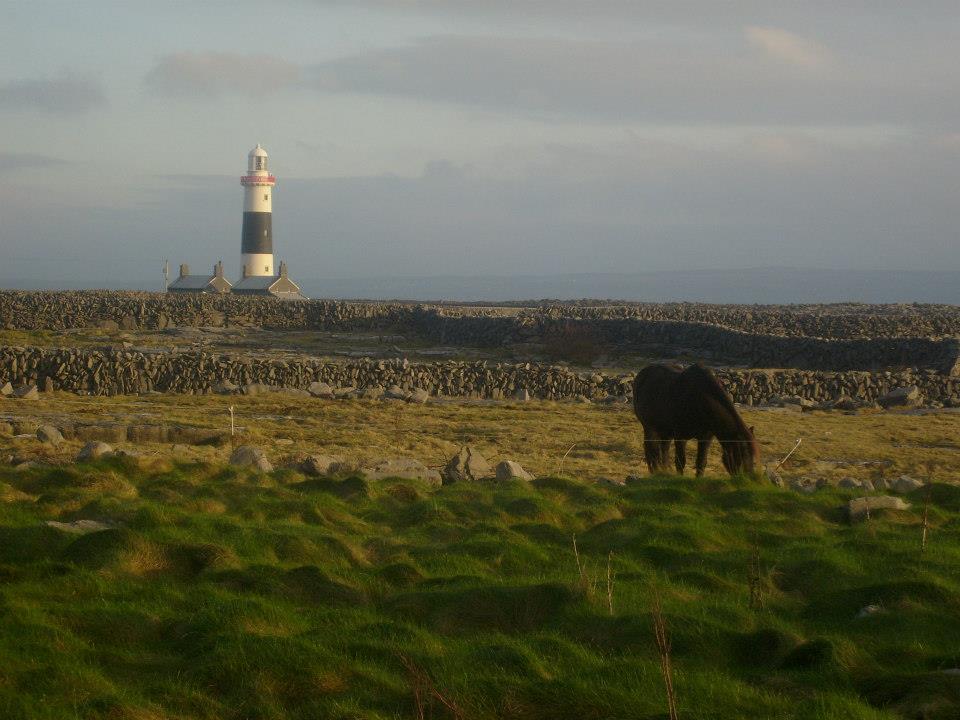
I recently spent a month as artist-in-residence on Inis Oirr, one of the Aran Islands off the west coast of Ireland. It has a bleak beauty and I was struck by how ‘man-made’ the place is. A rock in the Atlantic, all top soil has been built up over the centuries by islanders hauling up to the hinterland seaweed, sand and clay scraped from crevices. Stone walls then divide this carpet of top soil into a patchwork of fields.

Image

Agriculture and the labour of men no longer drive this ‘man-made’ island however, today it is the women of the islands who are spinning, weaving, potting, knitting and sewing craftware for tourists and this sector is what currently supplies the main source of income. The semi-disenfranchisement of the men and the industry of the women which has the succeeded male labour, has given me an idea for a play which I’m hoping to take to the Edinburgh Fringe. My stay on the island has also allowed me to explore how important environments are for inspiration. So much so, that I am now mulling an offer I had this week to return to the island for six months next year.

Image

Writing what you know

It is often said you should “write what you know”. A sensible approach, especially for the new writer. By placing your characters in scenes and situations with which you are familiar, you are more likely to invest a sense of realism in the story. Also, practically speaking, writing about familiar territory will save on research you might otherwise have to do on a subject/setting.

Some writers resist writing what they know as they feel their own environments are not “glamorous” or “extraordinary” enough to merit such attention. This is nonsense. Whatever you do and whoever you are, your life will seem exotic to someone else. The fact that you grew up on a council estate/project developent in Bolton/Kalamazoo is interesting to someone living on a farm in Siberia. Remember, the life of an immigrant taxi-driver would quite likely fascinate the Queen of England.
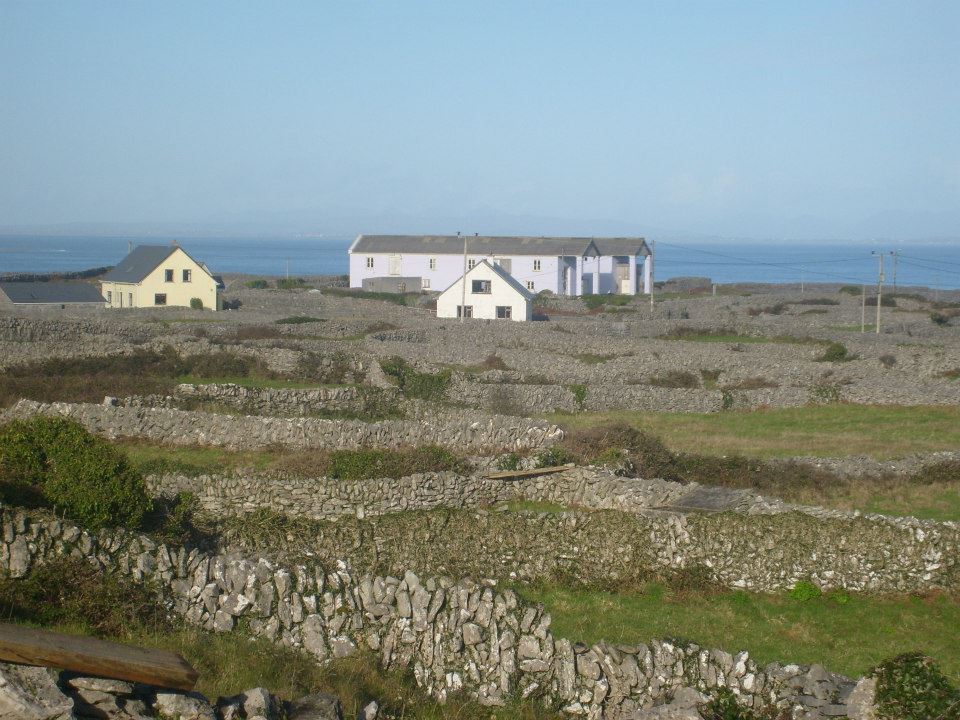
inisoirraraseanna

Also, you don’t necessarily have to set your story in your street or your workplace. Think of your Saturday morning football team, your chool, the nightclubs you frequent, a hospital you’ve spent time in or a prison. All are equally valuable settings for a short story, novel, play, film script or even poem or song. Your environment is your gold, mine it.

But I don’t want to write about my environment…

That’s fine too. There is also case for “writing what you don’t know”. Fantasy writers, for example, are (usually) not elves living in Middle Earth. Historical fiction writers have not lived in Tudor England. Yet, Fantasy/SciFi/Historical novels are written and enjoyed every year. For Fantasy/SciFi you need a familiarity with the genre and a vivid imagination. For historical fiction you need to like research. For all the above you’ll require the ability to convincingly create an unfamiliar world.

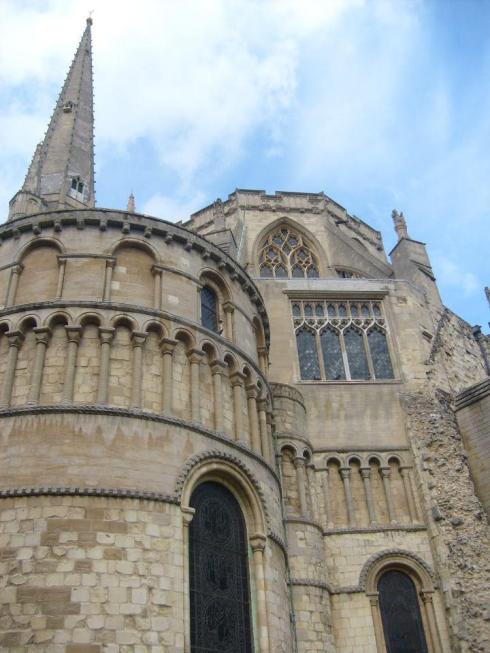
inisoirrchurch

Bear in mind, however, that while a Fantasy writer won’t get complaints from angry elves about his misinformed stereotypes. A novelist who sets a story in a modern French monastery, and knows nothing about France or monks – is asking for trouble. Firstly, their prose may be riddled with (skewed) perceptions of France and the French, monks/Catholicism/wine-making etc… And not only is there danger of rehashing clichés, their writing might lack the detailed realism a reader finds so reassuring and intriguing.

So, if you want to write about banditos in the mountains of Sardinia, and you can’t go and live there for a year – then research, research, research. Read as much as you can on the topic, as well as any other fiction that has used the same environment as a setting.


Snakes and Ladders

Image

No, they’re not snakes. It’s drying seaweed. I was in Ireland. Everyone knows there are no snakes in Ireland…

I asked a Chinese friend of mine yesterday if the Year of the Black Snake was a good or bad one (let’s face it, it doesn’t sound like a carnival, does it?) Chen tells me it’s good and bad. So, snakes and ladders – or a regular year, then, with all its ups and downs, triumphs and rejections.

Triumph in any form is marvellous, and for a writer, so used to rejection letters, a small success can propel one to the moon. What I find difficult is to keep an even keel, not to go under when the rejections roll in (and roll in they do) and not to lose the run of myself when I win an award or get a story published (which thankfully is happening with increasing regularity these days).

I when I was 22, I wrote seven short stories. They were bad, really pretentious, crammed with adjectives and adverbs and with no theme or character development or point to any of them at all but I thought they were pure genius. I sent them off to every magazine I could find in the bookstore. And waited. And waited. And waited… until I became convinced that they had all been lost in the post. It was the only explanation, surely, as any editor would recognize my genius immediately, no? A couple of months later, I received a single rejection letter. And the truth dawned. No one else even bothered replying. It was 100% rejection. I was floored. I burned the stories I was working on and I didn’t send anything else off for a long time.

That was very stupid of me. I should have brushed myself off and tried again. I would be in a much better position and be a better writer now if I had. But I wasn’t strong or  mature enough to know that then. Ah, well. After a few years, I returned to creative writing and during my first year on my MA at UEA, I sent out another batch of stories. I’d had a few shorts published at this stage and was confident that I’d now win every competition going and it would pay my MA tuition. And, again I got nowhere. I was pretty down but I recalled how I’d let rejection defeat me before and vowed it wouldn’t happen again. I sent out more, and then more. And after six months, I won the Mary and Ted O’Regan Award, and then the Annaghmakerrig award and the Molly Keane Award, the HISSAC, the Meridian and the Sussex Playwrights’ and this year I’ve been selected as an Escalator Literature Artist and have just recorded my first radio drama, ‘Cow’.

Anyway, the moral is don’t give up – look at how you can improve your rejected story and send it out again. Remember, much depends on what the magazine or the competition judge is looking for at that particular time, it may not be a comment on your writing skills. Do a bit of research, try to find a suitable home and try and try again. You will get there in the end.


Yes We Can Can

Life Drawing Classes with a Twist, or a Can Can…

Image

Making a living from the arts is testing, in fact survival often demands all our creative attention. And when I meet an artist who meets this challenge with aplomb and business nous, I can only applaud. Natalya Umanska is a Norwich based burlesque dancer, pianist and life model who is combining her talents and love of visual art to open the Dr. Sketchy Anti-Art Class in the East Anglian capital.

Dr Sketchy’s  Anti –Art class is a life-drawing class with a twist, or perhaps that’s  a can-can. Glamorous models from the world of Burlesque model with their feathers and fans while artists, amateur and professional, turn out their best Toulouse Lautrec-esque sketches. And it’s all done in the best possible taste, dahlink, with wine and conviviality on hand.  Such business chutzpah and fun, always deserves a plug. So, if you’re in town come along to the upcoming class on February 27th has an ‘anti-valentine’s’ theme. 7-10pm @ the Unthank Arms, Tickets £10.50 in advance, £12.50 on the door.


Moo!

Image

Here I am. I’ve wrapped ‘Cow’,  a radio play I wrote and produced. It’s now in the nimble hands of Eugene Sully, our editor who’ll be tweaking it over the next week or so and we’re due to broadcast in March. Watch this space for a date and time. It’s been a full on, manic period with a steep cliff of a learning curve and if I wasn’t working with some of the most talented people in the business, actors and director, I would never have made it thus far. A sincere and heartfelt thanks to all of you.

And as ‘Cow’ recedes in the rear-view mirror, my focus now is the Escalator project. At the end of January, I learned that I am one of ten writers from the East of England region who have been awarded the Escalator professional development award which will afford me Arts Council funding and professional mentoring from an established novelist, to bring a novel of mine from early draft stages to completion over a twelve month period. The novel, ‘A Castle Spinning’ concerns the adventures of an alcoholic Irish dwarf who goes to Hungary in search of a woman who seduced him and becomes embroiled in a pornographic cult.

I’ve been putting off knuckling down to focus on a novel for long enough and now there are no further excuses. So, expect to read a lot of posts on the process of writing a novel , over the next twelve months. Onwards and upwards!


It’s The Way You Tell ‘Em

Jokes! Jokes are a great source of plot ideas. An established writer gave me this tip years ago and it has served me well.

Jokes, you see, are plots in miniature. Stories sealed up and ready to go. You’ve got your beginning, middle, end, your conflict, your characters – flaws and all. All you’ve got to do is flesh it out. Expland on it. Change gender and setting if possible. And no, it doesn’t have to be funny because many jokes (indeed, stories) need an element of tragedy to make comedy (and vice vearsa) and you can just crank up the aspect you want to emphasize.

Here’s a joke that gave me an idea for a short story recently shortlisted for a competition:

“It was Ryan’s funeral and the pallbearers were carrying the casket out from the church. When they bumped into a pillar, one of them heard a moan from inside the coffin. They opened the lid and found Ryan alive. He lived for another ten years before he properly died. Another funeral was held for him and, as the pallbearers were carrying out the coffin, Mrs Ryan shouted “Now, watch out for that pillar!”

OK, it’s the way ya tell ‘em… But the point is that they don’t have to be the funniest jokes – just so long as there is a story in there, a universal truth with which your readers will react and engage. Wordplay/puns won’t work so well, go for the story…

Here’s another one you can chew on for a story idea (it goes down well in the creative writing classes I give in an English prison…)

The defendant knew he didn’t have a prayer of beating the murder rap, so he bribed one of the jurors to find him guilty of manslaughter. The jury was out for days before they finally returned a verdict of manslaughter. Afterward the defendant asked, ‘How come it took you so long?’ the juror said, ‘All the others wanted to acquit’.Image


Be Good in 2013

Image

I’m back in Norwich following a stint on Inis Oirr as artist-in-residence, which has (I think) birthed a one man play. It was a significant month spent in a dramatic two mile long theatre edged with thrashing waves, and crossed with stone walls, fields created from seaweed and topped with goats – lots of wild goats. During my time there I learned to felt, started up a writing group with some local scribes – which is continuing on – and thought and walked a lot and came to some decisions about my future and where my writing is going.

I had a few bits of bad news while I was out on the island, some personal stuff that unsettled me, and also I learned that man a grew up with was tragically drowned whilst fishing off the Waterford coast. These incidents coloured my thought processes and made me dwell on some topics that I might otherwise have avoided. And I’m glad I let myself go there. I believe I’ve created good art.

I returned to pick up an award. It hasn’t been officially announced yet,, so more on that later. And my play ‘Cow’ is going into the studio next week so I’m pretty focused on that at the moment. One of my parting gifts from the kind people of Inis Oirr was a big 2013 wall chart (in Irish) which I’m now filling up. 2013 looks like it is going to be a year of change. A year of travel and a year of moving forward.  Right now, I’m ready for action and am lining all my plans up.  Life is too short, make the best of it, surround yourself with good people and do good things.


Oh Happy Daze

Oh happy days. I’m in Budapest for the season with my dearest, most supportive, most loyal friends – in many ways, my family.  And I’ve reason to celebrate. A radio drama I wrote and am producing ‘Cow’,  has won full funding  from the BAI  Sound and Vision  scheme. We will go into the studio, in Kilkenny, Ireland, the first week in February.

The drama is to be directed by renowned Irish director/playwright Jim Nolan. ‘Cow’ will also feature the talents of Waterford actor Michael Power, who recently finished shooting an episode of ‘Game of Thrones’ for HBO, Madeleine Brolly, a veteran of BBC Radio 4 drama and Geraldine Crowley, a Dublin based actor who hails from Barrabehy, Co. Kilkenny. The soundscape will be managed and produced by BBC sound engineer, Eugene Sully. They’re a highly professional and talented team, I’m enormously lucky to have them on board and I’m sure their expertise will enhance my little drama no end.

Catching up with dear friends, Dob utca, 22nd Dec. 2012

And on the same day I got word that ‘Cow’ was successful in the funding bid, I also heard that I’ve been shortlisted for the East of England’s Escalator Award – on a proposal for a novel I’m writing. So, once again, Oh happy days!

Hey, this year has been challenging in many other ways. There have certainly been tough moments. But how lovely to go out on such an up beat note. And, I’m due to enter the New Year with an intense, focused period of writing on Inis Oirr, one of the Aran Islands, where I’m ‘artist-in-residence’ for January.

I’ve got a long list of projects to concentrate on whilst there, and am hoping it proves very fruitful – if I don’t get blown off a cliff. The population is Irish speaking – which will be a challenge, as I haven’t really  spoken Irish since I left school. Ufasach!  If you’ve ever seen ‘Father Ted’, Inis Oirr is actually the island used as ‘Craggy Island’, in the opening credits. Yes, I’ll probably turn up in the Kilkenny studio with a full beard and a grizzly bear in tow. But hey, it’ll be worth it.

Many thanks to you, visitors to my blog, for dropping by this year. I wish you all the best of the season and may you have much success in all your endeavours in 2013!

,,,


Home

Budapest in December

Budapest in December

There are a few schools of thought on where a writer should live. In the 1920s and 1930s, the greats flocked to Paris, the 1960s – London, the 1990s – Prague, and perhaps it was Berlin in the noughites.

However, it should hardly matter where you are, if you are determined and disciplined, you’ll write in a suburban semi in a provincial town, just as well as you will in a garret in Montmartre. One thing the abovementioned cities do have in common is that they were all cheap places to live at the time of their popularity with writers. Writing is not a well paid profession, and it makes sense to nest somewhere where rent and food is affordable, thus lessening that worry every month. Other writers will argue that one should focus on areas where artists are congregating so one can better breathe in the zeitgeist, feed on that cross pollination of ideas. Then there are those who say it is a better idea to reside somewhere in relative proximity to the centre of your chosen industry – and for publishing that would be London/New York/Berlin. Others suggest pitching down in a city which is going through an ‘interesting time’ such as a war or social revolution.

Dunmore East, Co. Waterford, Ireland

Dunmore East, Co. Waterford, Ireland


I’ve come to my own conclusion which I’d like to share today. I’ve spent much of my life wandering (perhaps running away, or was that gathering experiences?) So much so, that it is hard to know where home is now and I’ve spent the past year considering my future quite strongly. I think it is time I surrendered and called somewhere home and I think I’ve found the spot or rather, it has found me.

This Christmas/New Year, I’m spending time in Norwich, UK, Budapest, Hungary and Waterford, Ireland. All of which could lay a claim to being my home – and in some respects, they all are yet none of them are.

Having spent the majority of my adult life abroad, the impact of my experience of exile is thrown in to relief when I return to Ireland. And I don’t like that sense of no longer belonging. Also, Ireland is as complicated, contrary, passionate, stroppy, defensive and temperamental as I am. And therefore, I am not convinced it is the place to live as a writer (although, it does make for excellent material).

Budapest, my adopted home, the city which gave me maturity and launched me as a creative writer – and where the majority of my friends and social circle still reside, is slipping from me. A friend emailed yesterday with some suggestion of cafes I should try out when I’m in Budapest over Christmas. I was mildly affronted. I don’t need ‘where-to-go’ tips for a city I lived in for eleven years. I used to edit a guide to Budapest, forcryingoutloud! But in truth, I didn’t know any of the places my friend suggested. Life has moved on in Budapest, without me. I’m am no long of that beautiful city. Also, Hungary has recently taken some scary steps politically and I don’t want to be there while it continues on that sad path – though I do feel compelled to comment on it from afar.

Norwich, a 'fine' city.

Norwich, a ‘fine’ city.


And then there’s Norwich, England, a city where I came to study for my MA in Creative Writing and have ended up spending much time here over the past four years. Norwich is a pleasant, very English city, which I had to locate on a map the week before I arrived here. All I knew about Norfolk was that Oliver Cromwell came from hereabouts, which to an Irish person, is not a great recommendation.

I’ve since found Norwich to be a ‘goldilocks’ town. It’s not too much of anything, yet it seems to have everything in moderate measure. In short, it is comfortable and pleasant and undemanding and reserved and allows me to sit back and digest the years I spent living in more dramatic, demanding, raw, aggressive, passionate theatres like Hungary and Ireland. In this way, I feel that Norwich is, in its quiet, unassuming way, a city conducive to art – if more so as a catalyst in its facilitation of creativity, rather than a city that inspires great art per se.

Can I dare to say that I’ve found home? I don’t think I’ve quite made that decision yet – but I can venture that it is quite likely that Norwich will be my home in the future.


Unruly Herman

rulz

I was recently given a ‘Herman the German’ chain cake recipe – a German sour dough friendship cake which has a gestation period of ten days after which you add to the mix, divide into four, bake one and give the remaining three goo mixtures away to friends, who do the same and so on and so on.

There were no measurements in the instruction list, simply ‘add egg, add flour’ etc… This is my kind of recipe. I don’t like being dictated to. I like to experiment and break rules when I come across them, to see what happens. I think this is a healthy trait in a writer. However, for the unpractised/unpublished writer – it is important to know the rules first…

Currently (and yes it is subject to fashion and trend) the big ‘no no’ is cramming sentences with adjectives and adverbs. A new writer will often fall in love with words and phrases and become over-enthusiastic in their application. However, overly verbose writing deadens the impact of the sentence – which defeats its purpose. So, the rule is, use adjectives but go easy and be clear.

An example of an adjective/adverb heavy sentence:

‘A dark grey, crinkled brow of solemn cloud crept sluggishly over the majestic hills that were patchily bruised with a blackish purple moss and randomly spiked with prickly yellow furze.’

There is too much going on in this sentence. Each individual image is in competition for the readers’ attention. The result is a boring blur. Think about what is necessary here. Everyone knows furze is yellow and prickly, so do you need to inform the reader of these facts? “Majestic” doesn’t really do anything here – except communicate that the hill is big, which one would assume.

I would pare the sentence to the following: ‘A cloud slugged over the hills.’

I hope you can see how ‘less is more’ here. The image is much stronger without shoehorning in all those adjectives/adverbs.

A note on adverbs:

Adverbs have a bad reputation in the literary world. Many writers avoid them completely (there’s one right there). I would suggest you use them with caution and very, very sparingly (see, another one) and never, ever with speech attribution (“she said nervously”). Adverbs like “suddenly” or “immediately” are thought of as cliché traffic lights. If something happens unexpectedly in a story, you don’t need to “flag it” to make the reader aware that this was a “sudden” action – it should be obvious. So, don’t use them.

Over reliance on adjectives and adverbs is a typical, and some would say necessary, phase for those beginning their writing journey. So, don’t worry if you recognize your own writing here. As “mistakes” go, the over use of adjectives and adverbs is a useful one, as it serves to build your vocabulary. All good writers should have this phase. Just keep calm, carry on, edit down the adjectives and remove the adverbs – and you’re on your way.

Now, I’d best go check on my Herman cake…


Live a Little

light up your life

In order to write, one has to live. However, this can be a problem for us unsupported writers. By unsupported, I mean, those without any funding or independent means who are single and have no one else to pay the bills, shop, cook, clean, organise life etc… and must work to ensure income, plus write to ensure one remains a writer. This equation of needs often  result in lack of, or at least a picaresque dance of, time and money and bill-paying – and there’s often little or no time or funds remain to have a social life.

Recently, however, something odd has happened. I’ve hardly been in any evening this week and am being brought to the Theatre Royal this arvo to see ‘One Man, Two Governors’, yet another party invite this evening, and a lunch tomorrow. I’m beginning to understand why people are so keen on this social life thang they’re always wittering about. Do hope I get spoiled and invited more over this festive season!

This new found social life may result in some material for my writing. It’s all in the name of research…

PS: Just got news that one of my short stories has made the Greenacre shortlist. Humdinger of a weekend, eh?

christmas party