The Terrible Beauty

jimjohnny

2016 marks the centenary of the Easter Rising, the week-long Irish insurrection against British occupation that was ultimately unsuccessful. Although it failed, the Rising is now generally viewed as lost but crucial battle on the road to Irish independence in 1922. The Easter Rising commemorations in  this important anniversary year are ubiquitous and loud in Ireland, and there’s always a smiling politician at hand, often a vising diplomat, much money being poured into events – whilst the country faces serious contemporary  challenges. There are some who might say that the ‘business’ of commemoration now sits in opposition to the ideals upon which the state was founded when independence was proclaimed from the GPO back in 1916.

Considering this contradiction in his new play ‘Johnny I Hardly Knew Ye’, is one of Ireland’s leading playwrights and theatre directors, Jim Nolan. If you happen to be around the Waterford area in March, go see this urgent comment on the business of the Rising.


New Year, Old Friends

I’ve been reconnecting with old friends from various chapters in my life. Today, I spent some time with an old painting tutor of mine in Budapest, the wonderful Zsofi Varga. She showed me her new website, and I was touched to see that it hosts these old pieces I painted some ten years ago (or more!). I really must do more visual art this year.

Art begets art. Whatever form of art you explore, it will inspire other art projects and this can cross forms. A poet can conjure new ideas from a dance; a musician can be moved to compose by a script. I a primarily a writer of  drama and prose fiction but as an Art College alumna – I often meet my muse in the visual arts. Here are some of my old works:

painting3


http://www.varosligetimuterem.hu/hu/


And So This is Christmas

Christmas

Mulled wine wafting, shops rammed, people pushing, choirs jingling, lights jangling… Christmas is all about atmosphere and a good time to think about creating mood.

If you require a spooky setting, you may be inclined to set your story in an environment that most would find unnerving such as a disused factory, an isolated house, a museum at night etc… If your novel is a romance, then perhaps an elegant European hotel on a lake might do the trick.

ALTHOUGH….

Challenging Your Readers’ Preconceptions

…You could think about capturing your reader’s imagination by turning settings on their head. In Alex Garland’s book, The Beach, he took a paradisiacal environment and made it a hellish place, as did William Golding in Lord of the Flies.

Likewise, you could take a grim, poor council estate riddled with crime and drugs and set a love story there. Endear readers by accentuating the positives in the ugly setting (sense of community spirit, humour etc…).

Surprise and challenge your readers’ preconceptions, it will make for a memorable tale. Why not take a suburban house and people it with elves to create a Fantasy novel. What about an action thriller set around the world of chess? Or yoga? Horror often works all the better when set in a mundane, everyday location rather than Dracula’s Castle. Think outside that castle.


The Cat in the Box: episode 5 MONDAY EVENING

A transvestite pub-owner, his emo daughter, 15 missing cats, an asthmatic punk, a keen teen vlogger in an Irish pub:

cat-in-the-box-NEW-TIME

Broadcasts in eight short (5 min.) episodes, on KCLR96fm at 8:15p.m. Mon-Thurs for two weeks from Nov. 30th

Calamity Rain and her cross-dressing father, Feidhlim Phelan, live in a darkened Kilkenny City pub, recently closed down by health and safety officials. They entertain themselves by tormenting unwitting tourists, subjecting them to unpleasant pranks. However, this existence is threatened when Feidhlim beckons an asthmatic middle-aged punk grappling with his own mortality, and Calamity invites along Molly-May Curnihane, a young teen with a vlog dedicated to missing Kilkenny cats. Zany and fast-paced, the series is a surreal comment on contemporary familial relationships and inter-generational dynamics.

The Cat in the Box stars Michael Power (Game of Thrones, Vikings), Michael Quinlan (This is England ’90), Ema Lemon (Garter Lane), Niamh McCann (Waterford Youth Arts).


The Fall

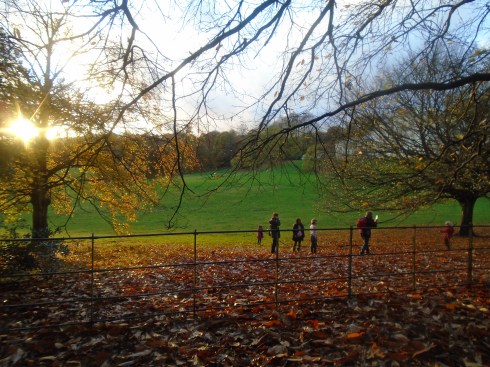
Hamstead Heath in November.

Hamstead Heath in November.

November and the trees are getting naked. The parks are full of kickabout leaves and the landscape is awash with crimson, orange and yellow. It’s a good time to talk about shedding all that is not necessary – in other words, editing.

Murder’ or ‘Kill your darlings’ is an adage attributed to the literary critic Sir Arthur Quiller-Couch, advising writers to cut the words / phrases to which they are most attached, in order to strengthen the work. It is good advice when editing, as often we writers shoehorn in a delicious description which doesn’t do an enormous amount for the piece as a whole. It is simply a bauble. Time to get the gun out.

Editing makes the job of writer a rather schizophrenic affair where one has to don two very different caps. The first cap is that of the creative free thinker who is focused on the big picture and is not too worried about the details. This is the person who comes up with the story, the theme, the basic structure, the person who invents characters and decides on the tone. This artist-writer will draw up the first draft of the story, writing only to please themselves. Finishing a draft wearing this cap is only some of the journey, however…

Next comes the cap of editor-writer. This is when the writer combs through the text, ruthlessly chopping, restructuring and cutting unnecessary/ unsuitable words, characters, scenes, phrases etc… or ‘murdering your darlings’. This is the writer preparing the text for other people. It is a good idea to leave a few weeks between your artist and editor incarnations.

Editing can be painful, and time-consuming. You’ve quite likely become attached to some characters, scenes, words and phrases and are loathe to see them go. Don’t worry, you can store them in your “writer’s bag” for use at a future time in a more suitable context. In the meantime, get pruning…

Chopping advice:

Cut all surplus adjectives and adverbs.

Examine the phrases you’ve shoehorned in just because you liked the sound of them – do they really fit that scene? Be honest. If not, bin them.

Take out all vague words such as “seem/seemingly” and try to do without your “justs”.

Look at all sentences that run for two or three lines. Do they really need to be that long? Can you reduce them or break them up? If you can, do so.

Active forms are better than passive forms, where possible (ie. “John cleaned the flat” rather than, “the flat was cleaned by John”).

Finally, every writer on Earth needs a reader or two – fresh eyeballs to run over your work and give you honest feedback. I suggest using three friends whom you trust will be frank with you. You don’t have to take everything they say on board. Do consider what they say, however, and if all three come back and say a character is not working. The character is not working. Rewrite.


The End

005

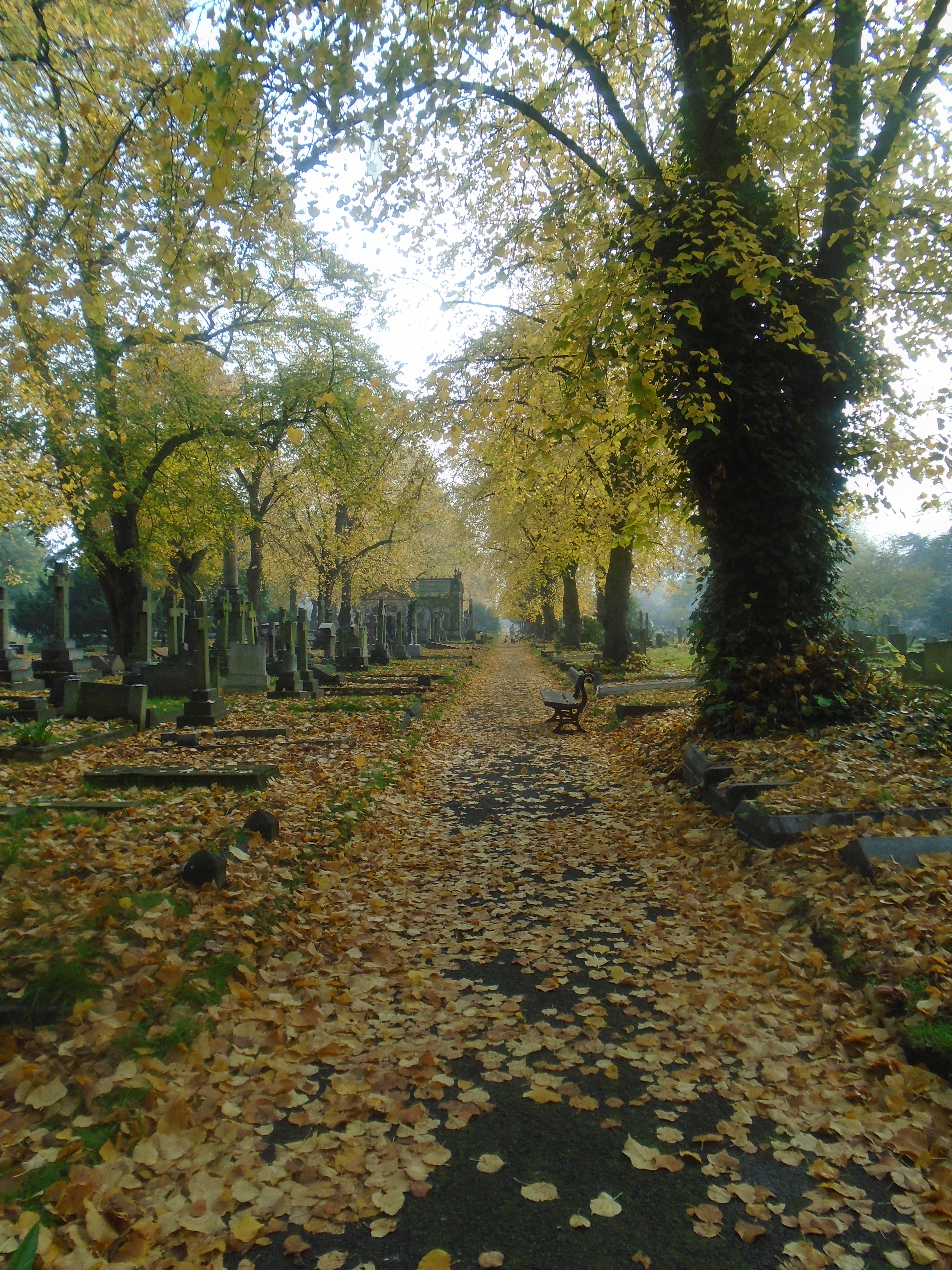
In two of the countries I’ve lived in, Hungary and France, November 1st is the day upon which one visits the graves of parted loved ones… In Ireland, you visit on Nov. 2nd. It’s a time to reflect and remember and to pay respect.

I love cemeteries. Not in any morbid way, I find them inspiring, sobering and oddly calming. They happen to be very beautiful places around this time of year too.. teeming with autumn leaves. They are momento mori, a reminder that our time here is fleeting, and we should use it wisely and well. They also underscore the fact that everything, and everyone, has an end.

Ending a project can be difficult. Sometimes we don’t want to let go… here’s a checklist to see if your bun is done.

1) Have you read through your piece a number of times, each revision focusing on different aspects (character, theme, structure, tone, language, punctuation, grammar etc…)?

2) Have you shown your piece to at least one person and received informed and HONEST feedback, and have you then addressed any issues that have been highlighted?

3) Are you now re-reading your work, doing nothing but shifting around commas (and back again)?

If the answer to the above is ‘Yes’, then you’re done and the only reason you’re hesitating sending it off to the agent/publisher/magazine/competition, is that you’re scared of rejection.

Get over that. If you’re going to be a published writer, you’re going to have to suck up a lot of rejection. Be brave. Take the leap. And good luck!


Listen to ‘Shellakybooky’

Shellakybooky Podcast

shallakybooky-date


Listen to my Radio Dramas

2007-06-16-06-38-13

A number of people have asked me about listening to podcasts of my radio dramas. Six of them are available at the moment, hosted by the radio stations that first broadcast them.. The urls for the podcasts are listed in the column on the right hand side of this page. Please copy and paste the url and it should bring you to the relevant podcast. Two more, The Cat in the Box, and The Blue King of Trafadden will follow shortly.

I hope you enjoy them…


Shellakybooky broadcast

shallakybooky-date

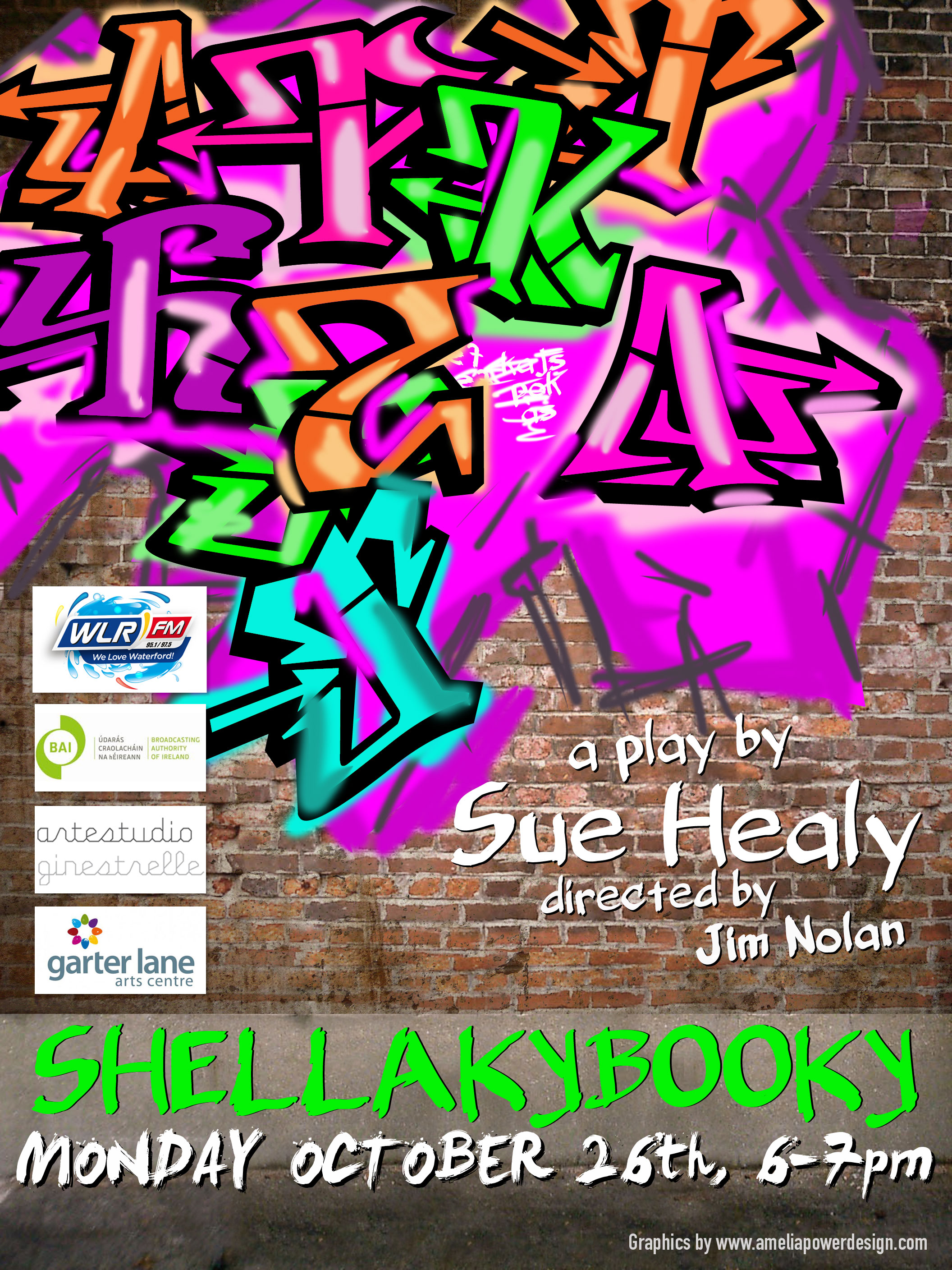
Budapest, Hungary, 2015. Nursing a broken heart, Mar Walsh travels from Waterford to Hungary to stay with her sister Brigette Walsh Cooney and family. Mar is impressed by her sister’s seemingly idyllic expat existence. Brigette simply ‘does not do negativity’ and her days are full of champagne and yoga. All is not how it seems, however, and cracks are soon evident in the Cooney’s perfect veneer. A mistress, a graffiti-obsessed son, an anarchist and a gay minister focused on change, all combine to shake the Cooney’s world and expose its fragility as the country’s political problems arrive on their doorstep in the form of a revolution.

Broadcasting on Monday, October 26th, 6pm-7pm (Irish time) on WLRfm.com


Being Pathetic

015

It was a dark and stormy …

“Pathetic fallacy” is an academic term that refers to the technique of ascribing human emotions to inanimate objects, usually to reflect a character’s mood. For example, say your protagonist falls in love: you might describe flowers laughing and trees waving their branches gleefully. Or perhaps there’s been a death, so the landscape looks bleak and with clouds brewing rain.

“Pathetic fallacy” was very popular with the Victorian novelists – I always think of Thomas Hardy when asked to give an example. Therein, however, lies the problem – “pathetic fallacy” is a little out of fashion nowadays. This demise of its popularity is partly due to the modern attention span. If you’ve ever read novels by the Brontes, Dickens, Elliot or Hardy – you’ll know all about lengthy landscape description and frankly, how dull it can be for modern readers. If you absolutely need to say how each field in the valley looked, then spread your descriptions out over the course of your work. Above all, as Elmore Leonard wrote, “Try to leave out the part that readers tend to skip.”

Another reason “pathetic fallacy” is no longer de rigueur in the literary world, is that it can seem cliché. For example, if your protag is heading home to see his wife and there’s a storm, and then they fight… your foreshadowing’s is derivative, predictable and boring.

Still, “pathetic fallacy” has its place in the literary toolbox. It can provide emphasis for mood. I suggest using it sparingly, with caution and avoid storm/argument, rain/depression, sunny days/falling-in-love clichés.

Personally, I like to turn PF on its head; let the trouble come in sunshine or make a storm a symbol of peace. If you use PF, surprise your reader with it.

Oh, and whatever you do, never open with a “pathetic fallacy” weather report. That’s the biggest cliché in the cliché box, it’s just pathetic …