
Listen to my Radio Dramas
A number of people have asked me about listening to podcasts of my radio dramas. Six of them are available at the moment, hosted by the radio stations that first broadcast them.. The urls for the podcasts are listed in the column on the right hand side of this page. Please copy and paste the url and it should bring you to the relevant podcast. Two more, The Cat in the Box, and The Blue King of Trafadden will follow shortly.
I hope you enjoy them…
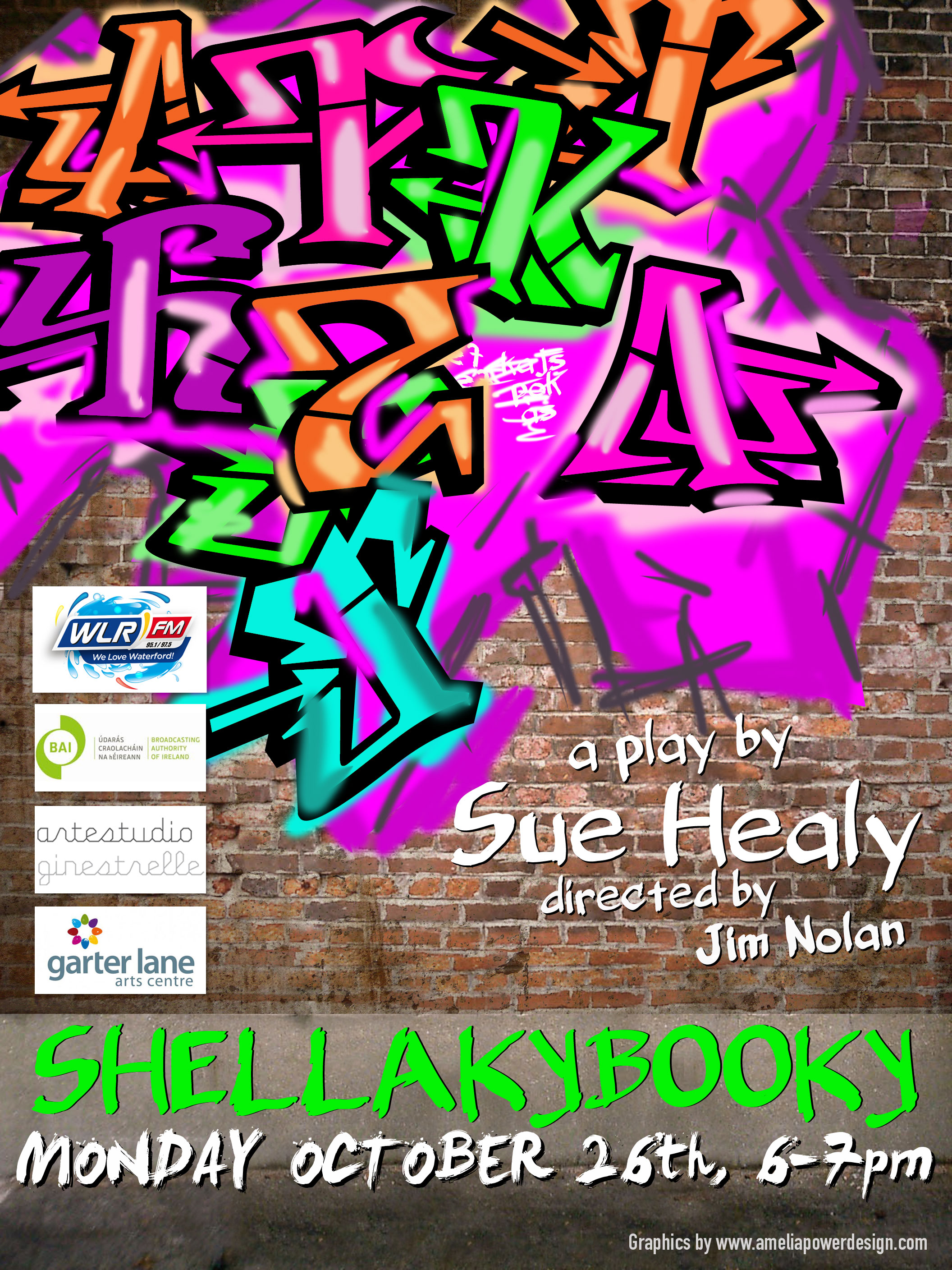
Shellakybooky broadcast
Budapest, Hungary, 2015. Nursing a broken heart, Mar Walsh travels from Waterford to Hungary to stay with her sister Brigette Walsh Cooney and family. Mar is impressed by her sister’s seemingly idyllic expat existence. Brigette simply ‘does not do negativity’ and her days are full of champagne and yoga. All is not how it seems, however, and cracks are soon evident in the Cooney’s perfect veneer. A mistress, a graffiti-obsessed son, an anarchist and a gay minister focused on change, all combine to shake the Cooney’s world and expose its fragility as the country’s political problems arrive on their doorstep in the form of a revolution.
Broadcasting on Monday, October 26th, 6pm-7pm (Irish time) on WLRfm.com
Being Pathetic

It was a dark and stormy …
“Pathetic fallacy” is an academic term that refers to the technique of ascribing human emotions to inanimate objects, usually to reflect a character’s mood. For example, say your protagonist falls in love: you might describe flowers laughing and trees waving their branches gleefully. Or perhaps there’s been a death, so the landscape looks bleak and with clouds brewing rain.
“Pathetic fallacy” was very popular with the Victorian novelists – I always think of Thomas Hardy when asked to give an example. Therein, however, lies the problem – “pathetic fallacy” is a little out of fashion nowadays. This demise of its popularity is partly due to the modern attention span. If you’ve ever read novels by the Brontes, Dickens, Elliot or Hardy – you’ll know all about lengthy landscape description and frankly, how dull it can be for modern readers. If you absolutely need to say how each field in the valley looked, then spread your descriptions out over the course of your work. Above all, as Elmore Leonard wrote, “Try to leave out the part that readers tend to skip.”
Another reason “pathetic fallacy” is no longer de rigueur in the literary world, is that it can seem cliché. For example, if your protag is heading home to see his wife and there’s a storm, and then they fight… your foreshadowing’s is derivative, predictable and boring.
Still, “pathetic fallacy” has its place in the literary toolbox. It can provide emphasis for mood. I suggest using it sparingly, with caution and avoid storm/argument, rain/depression, sunny days/falling-in-love clichés.
Personally, I like to turn PF on its head; let the trouble come in sunshine or make a storm a symbol of peace. If you use PF, surprise your reader with it.
Oh, and whatever you do, never open with a “pathetic fallacy” weather report. That’s the biggest cliché in the cliché box, it’s just pathetic …
Portrait of the Artist
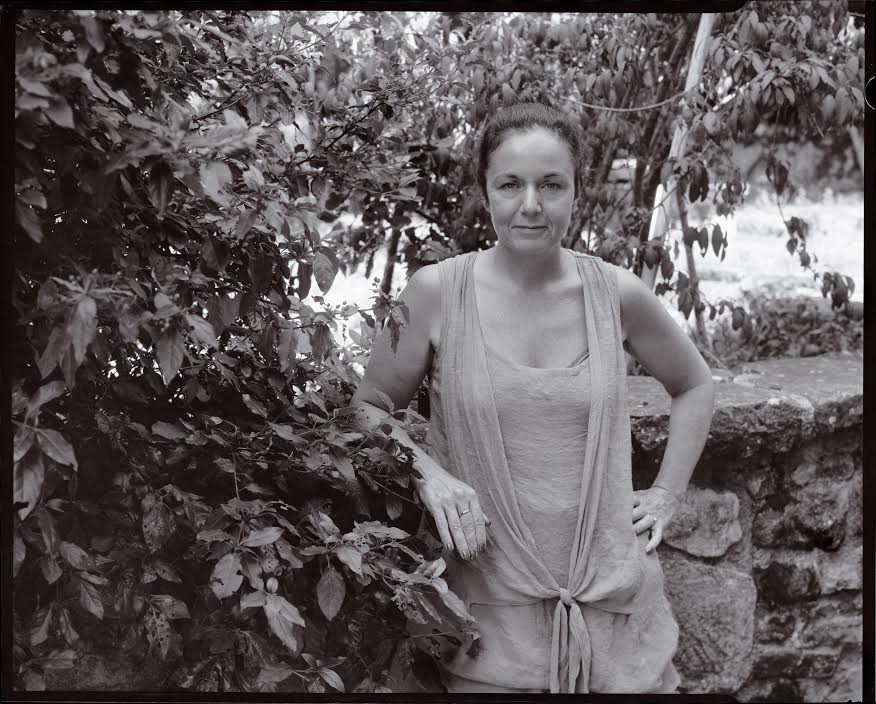
Me in thinking pose
Art begets art. A meeting between like-minded artists often results in a cross pollination of ideas which inspire, progress and crystallise art projects. Such an exchange can be an intended collaboration, or it can be an ego driven ‘anything-you-can-do-I-can-do-better’ brandishing. And it hardly matters which, so long as art ultimately benefits.
Likewise, great inspiration can be found in complementary art forms. A poet can conjure new ideas from a dance; a musician can be moved to compose by a script. I a primarily a writer of prose fiction but as an Art College alumna – when I’m looking for inspiration, I go to an art gallery and meet my muse in the form of the visual arts.
This summer’s sojourn at an Italian artists’ retreat, allowed me to spend time in the company of painters, goldsmiths and photographers, all of whom must have had some serious muse energy considering the amount of work i managed to get done whilst there. I’ve just received this ‘Portrait of the Artist’ from the talented photographer Gwen Walstrand one of my co-retreaters. Thank you Gwen!
Smug Me

Completed the Richmond Half Marathon today and thanks to the generosity of family, friends and strangers alike, raised £491.50 for the mental health charity Mind. Endurance running can teach a lot to a writer about perseverance, and brushing yourself off after a knock.
Running also provides time to think and work through stories.. and, as it turns out, it also lets you help a good cause. It’s win win really. Hence the medal…
D-DAY

Come support me tomorrow, Sept. 6th as I run a half-marathon in Kew Gardens from 09:30, raising money for the mental health charity ‘Mind’. Generous souls amongst you have ensured that I’ve raised over £400 raised for the charity. Nonetheless, ‘Mind’ would certainly benefit from more support, so please feel free to keep on giving, up until I cross that finishing line. There’s bound to be a party atmosphere, so come on down if you’re in London!
To find out more about what I’m doing and why, please click here where you can sponsor me online.
Play Podcast
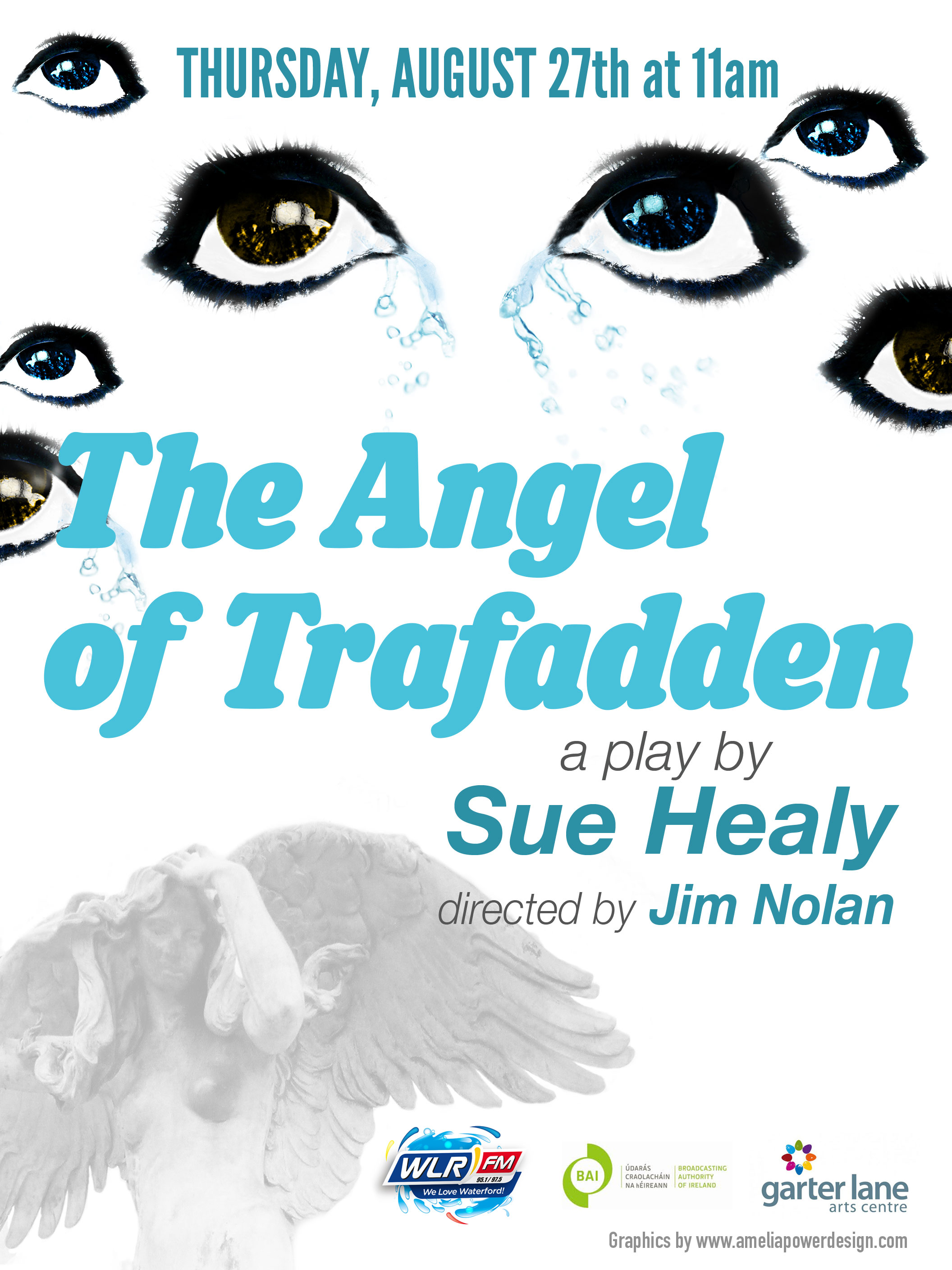
Siobhan, a 38 year old Dublin teacher disenchanted with her dull existence in Portmarnock Primary School opts to chase Internet fame as a vlogger. In this pursuit, she travels to Trafadden Island, Co. Waterford, to vlog the wake of Fabiola, a woman of ill-repute who has apparently died twice. However, Trafadden island’s Mayor Daly is keen to have her focus on his legacy rather than the antics of the rougher elements of the local population. Mayor Daly’s attitude and behaviour at the wake enrages Fabiola’s corpse, chaos ensues and the fable takes a surprising turn…
The Angel of Trafadden is directed by Jim Nolan (director and writer-in-residence at Garter Lane Arts Centre) and stars Michael Power (winner of the Portsmouth International Film Festival Best Actor Award), Jenni Ledwell (Druid, Blue Raincoat, Passion Machine, Red Kettle) and Clodagh Power (Red Kettle, Theatre Royal).
Written and produced by Sue Healy, The Angel of Trafadden was made with the support of the Broadcasting Authority of Ireland with the television licence fee.PODCAST HERE
Proper Job!
A wise writer once said to me that it’s not so much the pram in the hall that’s the impediment to a writing career, but the bills on the door-mat. Money worries are the bane of creativity. And unless independently wealthy, the emerging writer will have to make a living while waiting for that book/film deal (and probably for a while after that fact too). Writers need to work; the question is what kind of jobs are out there?

Many will consider other (more lucrative) forms of writing to bring home the bucks. Journalism is an obvious choice and is still, probably, the most common second career for many creative writers. Moreover, a journalistic background provides marvellous training re editing and brevity of approach. Copy-writing, particularly website copy, is also a popular income booster for writer but both copy-writing and journalism are less satisfying forms of writing for the creative writer and spending all day writing on the day job can make it difficult to come home and do the same at night.
Teaching English and/or creative writing is another common earner for writers. My TEFL training and experience has given me a sound grip of grammar and the intricacies of the English language – all of which is of great practical use to a writer. A TEFL teacher also (usually) travels and such experiences can feed into your work. Teaching creative writing allows you to deconstruct the tools of creative writing, which may benefit your own writing. However, you usually need a track record of publication before you begin to look for work in this area.
It is not uncommon for writers to work a mundane job such as on a factory line or as a manual labourer. Such tasks sit quite well with a writing career as they give the writer time to think, to let ideas bubble and boil ready to write down after the shift has finished. Also, with a job so utterly removed from writing, you will be fresh and eager to sit at your laptop of an evening. The downside of any brain numbing, repetitive work is that it has no status. This fact should not be important but it is because writers are human, so for a writer to stay in a lowly job, s/he needs determination, focus and confidence in their reason for doing this type of work.
Writers, of course, come from all walks of life and all career backgrounds. For those of you who may be considering giving up your job to write full time, you need to remember that you’ll (most likely) still need to make a living. Maybe the job you have is not glamorous or interesting, but these are often the best complementary jobs for writing. So, if you really want to be a writer, the greatest sacrifice you make may be NOT giving up the day job – but staying with it.
...and this is me.
-


