Tag Archives: inspiration
There are writers feel story and character ideas are fed to them from “somewhere else”, a parallel universe perhaps, where these characters and stories truly exist.

My no. 1 flat in Budapest – photo Nannette Vinson
Clearly, that “somewhere else” is a very vague concept and means different things to different scribes. Nonetheless, writers who hold such beliefs say it is very important to allow your mind to be open to receiving these ideas – wherever they come from.
Personally, I’ve had moments when I felt plugged into a conduit, receiving stories, characters and ideas- though I hesitate to say if this was a spiritual event or just the way the brain works in creative mode.
And it is a rare enough event – I can never conjure ‘the writing rapture’ but if I write often it’ll roll around every now and again. And when it does, it’s a magical moment when stories and characters come swimming to me, all done-up, pre-packaged and ready to go.
All we can do is sit down to write every day- most days you’ll get coal but if you keep at it, the diamond muse will show up sooner or later.
15 Comments | tags: freewrite, ideas, inspiration, Narrative voice, narrator, Setting, short story, words, writer, writers, writing, writing exercise | posted in Uncategorized, Writing

Tok Jo! (Hungarian for ‘Pumpkin Good’ or ‘Perfect’) a painting by me, 2003
Freewriting is what you write when there’s no one looking. Freewriting is the madman in your brain taking the controls and sending words all the way down to the tips of your fingers. Freewriting is where you’ll find the most brilliant story ideas, if you look hard enough.
To freewrite, just write. Write the first word that comes to mind and then follow it with another. Set an alarm if you can. Don’t worry about grammar, structure, character development – just write. And when you’re done, stand back and take a look. Is there anything in there you can use. I’ll say there is!
Here’s an example:
‘Right now I’m sitting at my computer and the coffee cup is on the edge of my desk. It looks a little like an iceberg, as it is white and chipped and cold because the coffee has been in it since the morning as I didn’t do the washing up last night and the sink is full of plates and saucers. All those plates look surreal sitting unwashed in the sink like that. All at different angles like a Picasso painting with ketchup instead of paint dribbled over the plates. I wonder if Picasso got his ideas from waking up one morning and seeing his jumble of washing up in the sink I wonder if all the museums in the world actually have pictures of Picasso’s washing up and not his mistresses and Guernica and does that mean the joke is on us?’
The above freewrite might seem silly but it’s also an example of how freewriting could, potentially, inspire a proper piece of writing. This daft thought about Picasso’s washing up could easily be worked into a comedy radio play where a hung-over Pablo Picasso and Henri Matisse wake up after a night out on the town and dare each other to paint a picture of the mess of washing up in the sink. Thus, the modern art movement is accidentally launched. Another possibility you could take from this freewrite is the concept that something generally considered ugly and in need of repair or attention (washing up) can lead to tremendous artistic inspiration – and this idea could form the kernel of a short story or a poem.
Here, chose one of the prompts below and let it lead you into a three minute freewrite.
I wish I had said….
It was no use pretending….
A long time ago…
For the first time ever….
It was the day the pumpkin appeared on the chair…
16 Comments | tags: brainstorm, freewrite, Hungary, ideas, inspiration, painting, paprika, pink chair, pumpkin | posted in Uncategorized, Writing
did you hear the one about....
Jokes! Jokes are a great source of plot ideas. An established writer gave me this tip years ago and it has served me well.
Jokes, you see, are plots in miniature. Stories sealed up and ready to go. You’ve got your beginning, middle, end, your conflict, your characters – flaws and all. All you’ve got to do is flesh it out. Expland on it. Change gender and setting if possible. And no, it doesn’t have to be funny because many jokes (indeed, stories) need an element of tragedy to make comedy (and vice vearsa) and you can just crank up the aspect you want to emphasize.
Here’s a joke that gave me an idea for a short story recently shortlisted for a competition:
“It was Ryan’s funeral and the pallbearers were carrying the casket out from the church. When they bumped into a pillar, one of them heard a moan from inside the coffin. They opened the lid and found Ryan alive. He lived for another ten years before he properly died. Another funeral was held for him and, as the pallbearers were carrying out the coffin, Mrs Ryan shouted “Now, watch out for that pillar!”
OK, it’s the way ya tell ‘em… But the point is that they don’t have to be the funniest jokes – just so long as there is a story in there, a universal truth with which your readers will react and engage. Wordplay/puns won’t work so well, go for the story…
Here’s another one you can chew on for a story idea (it goes down well in the creative writing classes I give in an English prison…)
The defendant knew he didn’t have a prayer of beating the murder rap, so he bribed one of the jurors to find him guilty of manslaughter. The jury was out for days before they finally returned a verdict of manslaughter. Afterward the defendant asked, ‘How come it took you so long?’ the juror said, ‘All the others wanted to acquit’.
11 Comments | tags: inspiration, jokes, novel, plot, short stories, story ideas, structure, writers | posted in Uncategorized, Writing
Put some magic on the page
It’s dawn 6am and you’ve risen early just to get those ‘morning pages’ done. And you’re staring at a blank sheet. Writer, you need warm up.
Just as many painters will apply a beige wash to a blank canvas to stop it looking so virgin – you’ll need to put something down on the page – “hggahgoidihgogha” will do, just get something down, break that white, crack that ice. Next, do a non-dominant hand exercise. If you are right-handed, then pick up a pen and start to write with your left. If you’re on a laptop, then type “The quick brown fox…” with your left hand alone. If you’re left-handed, apply vice vearsa.
Enjoy the sensation of the pen flowing over your paper or the tap of your finger tips on the keyboard and don’t think too hard about what you’re writing. Let it flow. When you’ve written out the fox/dog sentence a few times, continue on with the story. Where does the fox go next? Why is the dog feeling lazy? Where are they? What does the air smell like? What sounds can you/they hear? Is it hot or cold? Wet or dry? How does the dog feel when the fox jumps over him? Does he plan revenge? Once you’ve done a paragraph or two, you’ll probably find that the creative juices are flowing enough for you to turn your attention to that story you were working on before – or read over your freewrite, there might be the kernel of something worth working on.
Now, I’m off to take my own advice…
20 Comments | tags: brain storm, Brain-gym, freewrite, ideas, inspiration, the quick brown fox, write, writing exercises | posted in Uncategorized, Writing
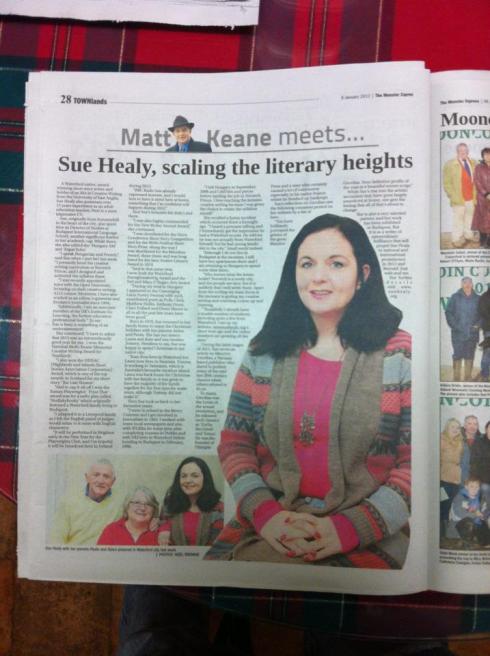
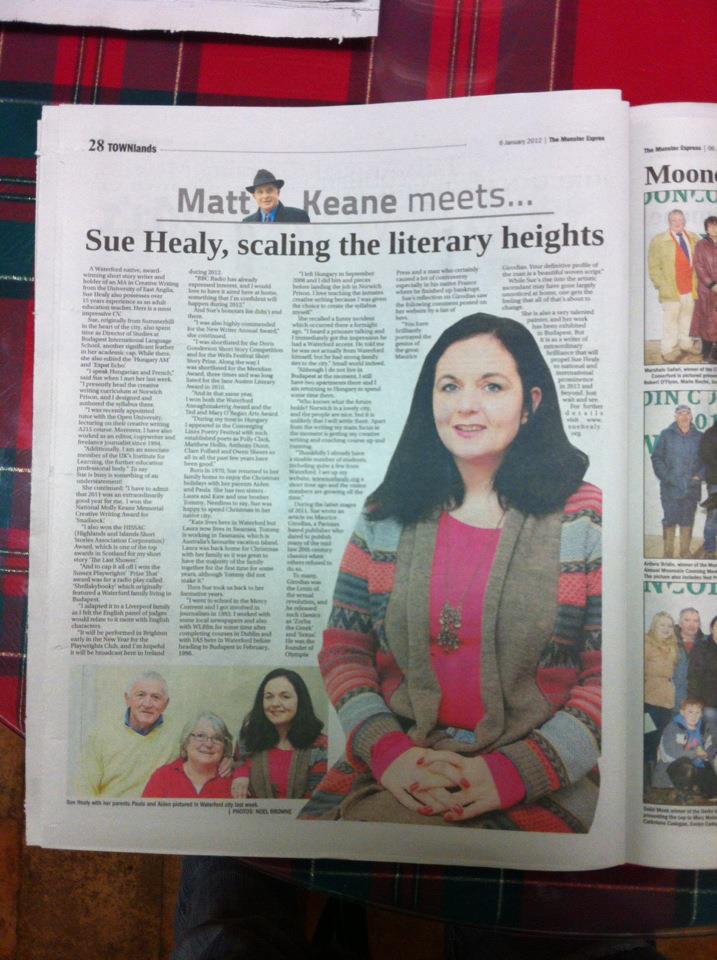
Yup, that's me. Sorry, couldn't resist the 'boast post' - the 'Munster Express, Jan 6th, 2012.
It’s January 14th, I’ve already completed a house move (and all the cleaning, paperwork and furniture selling/dumping that entails), I’ve spent a week in Budapest and prepped for a week of OFSTED inspections. I hope 2012 will slow it’s pace soon so I can get some headspace and start thinking again. I’ll need conjure la muse… and get some inspiration for new works.
Leonardo di Vinci used to stare at the walls in his studio until the damp patches formed scenes and figures he wanted to paint. If you look closely at some of his works, you can even see how those dark stains suggested the rock formations he conjured. Of course, you don’t so much ‘get’ ideas as you eek them out from within.
Hopefully, you don’t have damp patches around your writer’s garret. You may have yesterday’s newspaper, however. I worked as a journalist for many years and love newspapers and appreciate them as a source of ideas and stories for the creative writer. For starters, you could just take an existing story and change the setting/gender etc… to make it your own. Ideas will come to you as you work on it.
Alternatively, you could apply the ‘what if’ question. The ‘what if’ question prompts you to consider alternative endings. A good example of this question is Stephen Fry’s Making History, in which he explores a world where Hitler was killed in WWI but an even more dastardly figure comes to prominence, and wins.
The small ads section can spur the imagination. Hemmingway once said his best work was one he wrote in six words: “For sale: baby shoes, never worn”. It’s clever as there is clearly a heavy back story here but Hemmingway, being Papa, does not spell it out. My point is that you could operate in reverse, search the small ads and then write its back story. Think of the tale behind a novel that ends with that small ad.
Then there are photos. Ignore the captions/related stories. Look at the photos and guess what is going on. Develop an identity for someone in the background of a picture. Give them a problem. Imagine how they are being affected by the main event in the photo. The key is to go for the more obscure shots. Obviously, if it’s a picture of 9/11, the chances are you’re not going to come up with anything too original but if it’s a picture of a man biting a dog, you may be on to something.
Go hunting, Newshound!
25 Comments | tags: 2012, ideas, inspiration, interview, Newspapars, short story, stories, writer | posted in Uncategorized, Writing
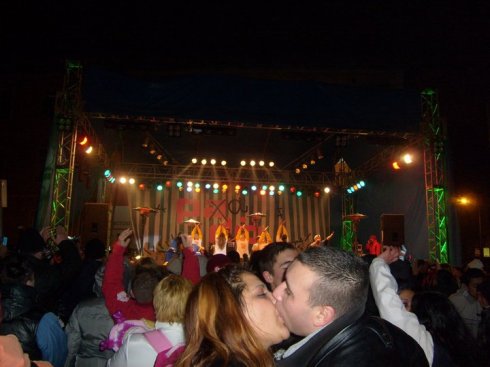
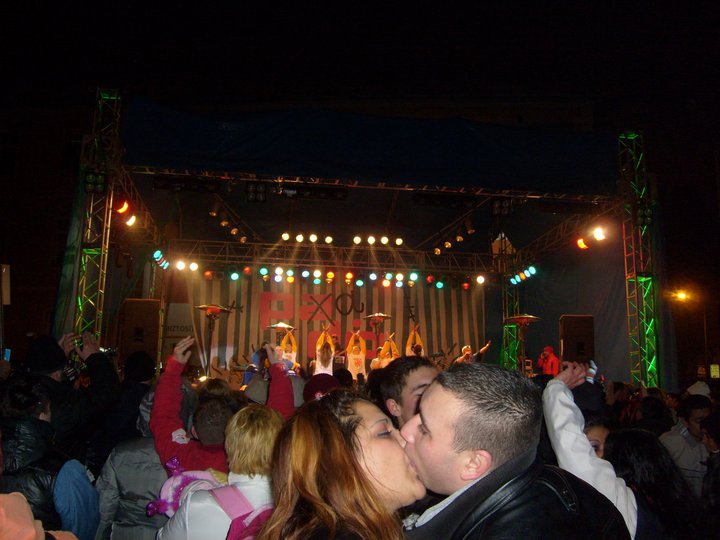
Revellers bring in the New Year, Hungarian style
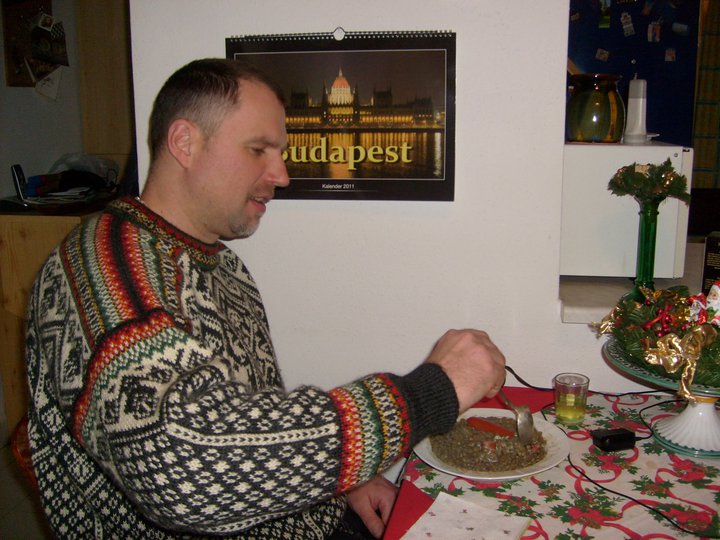
Here in Budapest, tradition states one must eat a bowl of lentil soup on New Year’s Eve/Day to attract luck and fortune in the year to come. Last year, my friend Joska invited me to lunch on Jan 1st. He’d cooked a barrel load of the stuff and it was so cold outside we rather overdosed on the bean. Lo and behold, 2011 turned out to be a year of great fortune re my writing. I won three awards, was shortlisted for even more, had quite a few shorts published. Moreover, I set up this website and my online writing course – both of which I’m enjoying immensely and I’ve resolved to make the course my focus for the coming year.
My course, ‘Creative Writing: A Toolbox’ is a six week online one-on-one creative writing introduction. With it, I aim to help you realize your dreams of writing creatively, or improve the practice of those already writing. The course regards the tools of the craft and provides online support for your work via feedback and guidance in relation to editing, submission and markets. Each course is adapted to suit the individual needs of the specific student. There is also the option of retaining my services as a mentor/critic/coach after the course ends.
‘Creative Writing: A Toolbox’ is supported by written material, exercise, assignments and a weekly 45 minute one-on-one online tutorial to guide the student through the six step, six week writing course. This tutorial is usually given via Skype, though some students prefer to use email alone – that is for the student to decide. Over the six sessions, the student is introduced to the know-how, ‘tricks’ and skills of the writer and can work on their own project, such as a short story or part of a novel – whilst, receiving online coaching, instruction, feedback and guidance from Sue.
Throughout the course, students will receive a full professional critique of their work from Sue.
All inclusive price: €150 (introductory offer)
For more information, please contact me on : bpapartment at gmail dot com
In the meantime, if you’d like to make your own Hungarian lentil soup check here: http://allrecipes.com/recipe/lentil-soup-2/
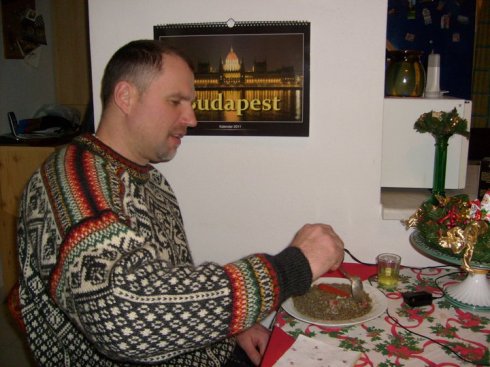
Joska eating lentil soup on New Year's Day
Wishing you all the best for 2012 – may your ships come in with your dreams onboard.
Sue xo
9 Comments | tags: creative writing course, ideas, inspiration, New Year resolution, novel, publish, screenplay, short story, writer, writing course | posted in Uncategorized, Writing
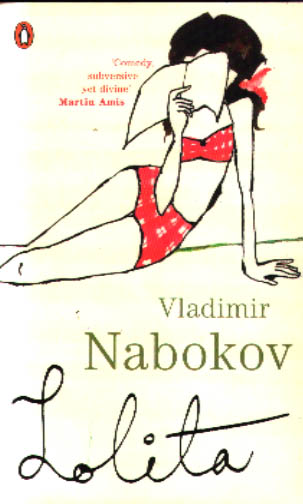
An article I submitted this month to Live Encounters, on Maurice Girodias, the “Lenin of the sexual revolution” – a Paris based publisher who dared to first publish many of the mid-late 20th century classics.
http://liveencounters.net/?p=454
6 Comments | tags: censorship, Character, inspiration, magazine, publish, publisher, structure, words, writers | posted in Uncategorized, Writing
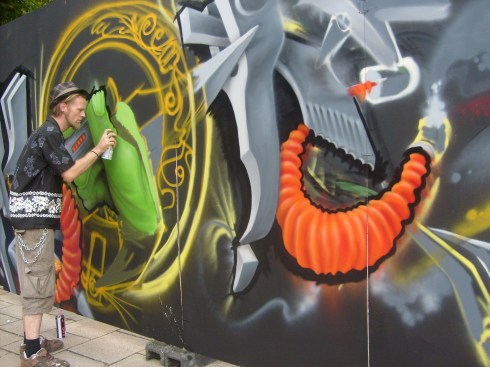
Anyone for graffiti?
Sit at computer, bring up blank page, make a cup of tea. Sit at computer, look at blank page, do the washing up. Duration: 1 hour. Word count: 0
If this sounds like your typical writing pattern, you’ve got plenty of company. The sudden urge to do housework, rearrange books, check your bank statement- when you really ought to be writing is known as ‘Displacement activity’.
Displacement activity is the bane of a writer’s life. It’s the phrase writers have for all the stuff you do that is not the stuff you are SUPPOSED to be doing. Avoidance is probably a more readily understood term, but doesn’t sound half as writerly. What happens is a little ‘displacement monkey’ in your mind distracts you from the task at hand, by urging you to ‘make another cup of tea/check the TV guide/your bank account/ebay/post on this blog : ) rather than crack on with that difficult piece of dialogue you’re trying to get down.
I don’t believe displacement activities are wholly bad. I feel they sometimes happen for a reason. Perhaps what you’re working on needs time to settle, or percolate in your mind and after you’ve bought those gloves on ebay, it will all come together. However, I admit, I think I’d get a lot more writing done if I didn’t have an Internet connection in my office… I know a few writers who keep their displacement activity on hand – as another creative hobby such as painting, and they believe one such activity complements and feeds the other. So, they may start painting and then half way through THAT activity they’ll turn back to their writing as a displacement activity for their painting and so on…
As with everything in writing, if you find your displacement activity works for you, then go knock yourself out with it. If it is a hindrance, then find a way to stop it distracting you such as getting a room with no internet connection…
15 Comments | tags: Art, Atmosphere, freewrite, ideas, inspiration, words, writer, writers, writing, writing exercise | posted in Uncategorized, Writing

Many, many thanks to all you lovely people for your support and inspired suggestions re how I ought to spend my hard earned twenty quid (thirty dollars).
It was a tough call, given some of the rather interesting and tempting suggestions you dangled before me but my newly fortyish head won out and I blew the lot on an upgrade from blog-to-own website.
So, welcome to suehealy.org : )
Ici n’est pas une banane
watch this space xo
7 Comments | tags: competitions, editing, ideas, inspiration, novel, Setting, short story, words, writer, writers | posted in Uncategorized, Writing

Clock feature on Wells Cathedral
It is said that the closer the brain is to the sleeping state, the more creative it is. For this reason, many writers keep their notepad by their beds and make sure that the very first thing they do when they open their eyes each morning, is write.
The resultant notes are called “morning pages”. Morning pages might contain what a writer remembers of their dreams or perhaps the writer will simply jot down the very first words that come to mind that day. Some writers say that this exercise helps them ‘slip’ more easily into what writers’ call the “rapture” when a writer feels ideas are pouring into their mind from elsewhere.
Just as the waking moments are a bridge from the sleeping state into sober reality – the hour before you go to bed is often a creative time with the brain slipping into that semi conscious state. Hence there are plenty of writers who write late at night.
And just to show that there are no rules, there are other writers who find their most productive hours are in the middle of the day when all of life’s busyness is in full swing (the Harry Potter author, J.K. Rowling is a good example. She wrote her first book in a busy Edinburgh café).
So, I guess the point is that different times of the day work for different people and it is really of no consequence whether you are a morning, day or night writer. What is important is that you write and that you find your ideal writing time. Experiment. Find what works for you and then set an hour aside each day at that time and write. Likewise, writers have very personal tastes regarding an environment conducive to writing. There are those who like music or TV buzz in the background and those who can only write in silence. Find whatever works for you.
21 Comments | tags: freewrite, ideas, inspiration, short stories, Short-story competitions, words, writer, writers, writing, writing exercise | posted in Uncategorized, Writing





 suehealy