You Don’t Have to be Irish…

A picture from Ireland - Lismore Castle, Co Waterford. My grandmother's hometown.

You don’t have to be Irish to be a great writer, but it helps. An oft debated point is the essential ingredient that has given the Irish the edge re the written word ever since the Book of Kells. There are many takes on the matter. Some say it’s because although most Irish writers write in English, they use the syntax, structure and playfulness of the Irish language which gives a mastery and an unusual manner of wielding English that results in, well, pure poetry. Others suggest it is our tradition of story telling, living on in sizzling and stinging pub banter. Some put it down to our sad history, allowing for a depth and pain to infuse our written word. However, I’m with the crowd that says its simply because we’re a race of freaking geniuses. Happy St. Patrick’s Day! Go mbeirimid beo ar an am seo arís…

Famous Irish writers: Sebastian Barry, Samuel Beckett, Elizabeth Bowen, John Banville, Brendan Behan, Dion Boucicault, Roddy Doyle, Emma Donoghue, Maria Edgeworth, Brian Friel, Oliver Goldsmith, Neil Jordan, John B. Keane, Colum McCann, John McGahern, Iris Murdoch, C.S. Lewis, Edna O’Brien, Jennifer Johnston, James Joyce, Patrick Kavanagh, Molly Keane, Hugh Leonard, Martin McDonagh, Frank McGuinness, Sean O’Casey, Joseph O’Connor, George Bernard Shaw, John Millington Synge, Colm Toibin, Oscar Wilde, WB Yates, Bram Stoker, Jonathan Swift… to name but a few.


Naked truth

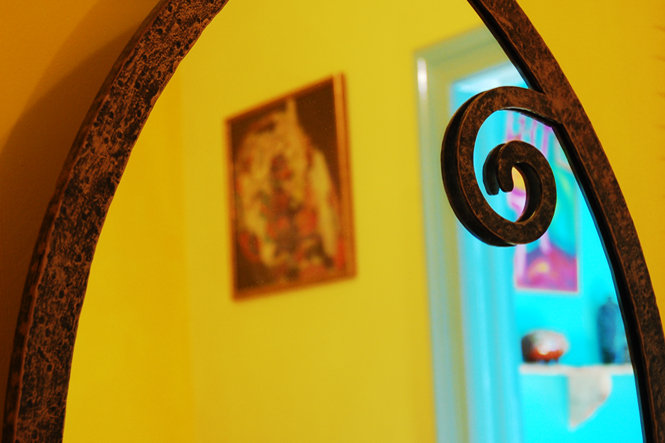
Self portrai in oil pastel, self-portrait in mirror.


Writing from truth, using a real event, can lend work real emotion, emotion difficult to conjure otherwise. Tears in a writer will bring tears to a reader, so they say. And as an artist, it is often your job to stand naked in front of the world.


Writing from fact does have its downside, however. Firstly, a straight account is reportage, not fiction so you must add extra spice and colour to the mixture to make it fiction, and interesting.


It is important to get to the naked crux of what your story is ‘saying’ and make sure your narrative never loses sight of this point and – so, even if when you were all driving to the hospital, Brad told a joke so funny you’ve just got to mention it. No, don’t mention it. Stick to the point of the story – the story is the hospital, remember, not Brad’s unrelated joke.


You may also have to leave out years of backstory if it does not serve to drive your own story on in any way. You may have been brought up by the funniest, most eccentric, most loving or most dysfunctional family in the world, but if they have no role in the story at hand, don’t mention them.


Another issue with writing from real memory is that ironically, fact is often too weird and too unbelievable to work as fiction. Your readers will say, ‘oh, come on, that would never happen.’ And you can’t phone them all up and say, ‘actually, it did. I’m not making it up. I once knew this bloke…’ Instead, you’ve often got to tone down the story to make it more credible. Real-life coincidences can be particularly problematic here.


And remember if you stick too close to the truth, you may be setting yourself up for some legal headaches, especially if you are presenting another person in an unflattering light. It’s best to change names and/or genders, and settings. Once you make those factual changes, most people will fail to recognize themselves in fiction, simply because we don’t see ourselves as we are seen by others….


Through the Looking Glass

There are writers feel story and character ideas are fed to them from “somewhere else”, a parallel universe perhaps, where these characters and stories truly exist.


Image

My no. 1 flat in Budapest – photo Nannette Vinson

Clearly, that “somewhere else” is a very vague concept and means different things to different scribes. Nonetheless, writers who hold such beliefs say it is very important to allow your mind to be open to receiving these ideas – wherever they come from.

Personally, I’ve had moments when I felt plugged into a conduit, receiving stories, characters and ideas- though I hesitate to say if this was a spiritual event or just the  way the brain works in creative mode.

And it is a rare enough event – I can never conjure ‘the writing rapture’ but if I write often it’ll roll around every now and again. And when it does, it’s a  magical moment when stories and characters come swimming to me, all done-up, pre-packaged and ready to go.

All we can do is sit down to write every day- most days you’ll get coal but if you keep at it, the diamond muse will show up sooner or later.


Reel me in!!!!

pick me, pick me, pick me! - Shortlisted for the Fish, 2012

Yay, first shortlisting of 2012! I’ve made the Fish Publishing shortlist. No mean feat from around 1,900 entries,  admittedly however, the shortlist is rather a long one with 145 stories to make it thus far (the long list was 550 apparently). David Mitchell is now judging and the winners will be announced on St. Patrick’s Day (March 17th to the un-Irish amongst you). Oooo I do like a good win…


Artist, get thee to a residency…

Tyrone Guthrie Centre, Annaghmakerrig, Co. Monaghan

My contribution this month to Live Encounter Magazine is on arts residencies, retreats and respites. Pictured above is the Tyrone Guthrie Centre at Annaghmakerrig, Co. Monaghan, Ireland’s oldest and best known residency. I’ve also just been offered the January 2013 residency at Aras Eanna on Inis Oirr. Happy me.

See the article: http://liveencounters.net/?p=589


It was the day the pumpkin appeared on the chair…

Tok Jo! (Hungarian for ‘Pumpkin Good’ or ‘Perfect’) a painting by me, 2003

Freewriting is what you write when there’s no one looking. Freewriting is the madman in your brain taking the controls and sending words all the way down to the tips of your fingers. Freewriting is where you’ll find the most brilliant story ideas, if you look hard enough.

To freewrite, just write. Write the first word that comes to mind and then follow it with another. Set an alarm if you can. Don’t worry about grammar, structure, character development – just write. And when you’re done, stand back and take a look. Is there anything in there you can use. I’ll say there is!

Here’s an example:

‘Right now I’m sitting at my computer and the coffee cup is on the edge of my desk. It looks a little like an iceberg, as it is white and chipped and cold because the coffee has been in it since the morning as I didn’t do the washing up last night and the sink is full of plates and saucers. All those plates look surreal sitting unwashed in the sink like that. All at different angles like a Picasso painting with ketchup instead of paint dribbled over the plates. I wonder if Picasso got his ideas from waking up one morning and seeing his jumble of washing up in the sink I wonder if all the museums in the world actually have pictures of Picasso’s washing up and not his mistresses and Guernica and does that mean the joke is on us?’

The above freewrite might seem silly but it’s also an example of how freewriting could, potentially, inspire a proper piece of writing. This daft thought about Picasso’s washing up could easily be worked into a comedy radio play where a hung-over Pablo Picasso and Henri Matisse wake up after a night out on the town and dare each other to paint a picture of the mess of washing up in the sink. Thus, the modern art movement is accidentally launched. Another possibility you could take from this freewrite is the concept that something generally considered ugly and in need of repair or attention (washing up) can lead to tremendous artistic inspiration – and this idea could form the kernel of a short story or a poem.

Here, chose one of the prompts below and let it lead you into a three minute freewrite.

I wish I had said….

It was no use pretending….

A long time ago…

For the first time ever….

It was the day the pumpkin appeared on the chair…


:)) LOL : )) hahahahahaha : ))))

did you hear the one about....

Jokes! Jokes are a great source of plot ideas. An established writer gave me this tip years ago and it has served me well.

Jokes, you see, are plots in miniature. Stories sealed up and ready to go. You’ve got your beginning, middle, end, your conflict, your characters – flaws and all. All you’ve got to do is flesh it out. Expland on it. Change gender and setting if possible. And no, it doesn’t have to be funny because many jokes (indeed, stories) need an element of tragedy to make comedy (and vice vearsa) and you can just crank up the aspect you want to emphasize.

Here’s a joke that gave me an idea for a short story recently shortlisted for a competition:

“It was Ryan’s funeral and the pallbearers were carrying the casket out from the church. When they bumped into a pillar, one of them heard a moan from inside the coffin. They opened the lid and found Ryan alive. He lived for another ten years before he properly died. Another funeral was held for him and, as the pallbearers were carrying out the coffin, Mrs Ryan shouted “Now, watch out for that pillar!”

OK, it’s the way ya tell ‘em… But the point is that they don’t have to be the funniest jokes – just so long as there is a story in there, a universal truth with which your readers will react and engage. Wordplay/puns won’t work so well, go for the story…

Here’s another one you can chew on for a story idea (it goes down well in the creative writing classes I give in an English prison…)

The defendant knew he didn’t have a prayer of beating the murder rap, so he bribed one of the jurors to find him guilty of manslaughter. The jury was out for days before they finally returned a verdict of manslaughter. Afterward the defendant asked, ‘How come it took you so long?’ the juror said, ‘All the others wanted to acquit’.


Have A Go…

Writing Competitions with a February/March deadline:

Let spring in...

Right, that’s January out of the way – a month where one recovers from Christmas. In fact, I’ve always found it a rather silly month in which to make plans and resolutions, as one doesn’t feel like doing much when it’s brass monkeys outside. February, however, is a different matter. In Ireland, February 1st, St. Bridget’s Day, is the first of spring. There’s not a helluva lot of differnce between winter and spring (or indeed summer) in Ireland – but it is the concept that is important. On February 1st, I get moving again.

And, if I’m moving, I’ve got to enter some comps. So, let’s have a look at competitions with deadlines running up until the end of March. You’ll notice that many of these are Irish competitions, this is partly because, obviously, I’m Irish and these are the comps I know of, but also because the short story and story telling is held in such esteem in Ireland, it’s got to have more writing contests per square foot than any other district of the universe. However, if you have information regarding prizes, contests or awards with a deadline before March 31st, running in your country  – please feel free to add/comment.

Finally, please note that I’m merely collating information posted elsewhere on the Internet. I am not responsible for or affiliated with any of these competitions and have no more information than that on the website listed. Please do not send your entries to me and please do not write to ask about the specifics of individual contests. I won’t know. It’s best to go to the website address provided and inquire there.

And good luck!!!

Writers’ & Artists’ Yearbook Short Story Competition

Prize: £500 plus a place on an Arvon course

Entry Fee: n/a

Deadline: February 14th 2012.

Website: http://www.writersandartists.co.uk


Irish Post/Stena Line Writing Competition

Prize: £500 & free travel to Listowel Writers’ Festival in Co. Kerry.

Entry Fee: £n/a

Deadline: 2nd March 2012

Website: http://www.irishpost.co.uk/index.php?option=com_content&view=article&id=100

NOTE: Only open to Irish/Irish descent resident in Britain (ie the theme concerns the Irish immigrant experience in the UK).

The Bryan MacMahon Short Story Competition

Prize: €2,000

Entry Fee: €10.00

Deadline: 2nd March 2012

Website: http://writersweek.ie/the-bryan-mcmahon-short-story-competition

The Writers’ Week Originals Competition

Prize: €750

Entry Fee: €10.00

Deadline: 2nd March 2012

Website: http://writersweek.ie/writers-week-originals-competition


The Eamon Keane Full Length Play Competition

Prize: €500

Entry Fee: €20.00

Deadline: 2nd March 2012

Website: http://writersweek.ie/eamon-keane-full-length-play


Twisted Stringybark Short Story Award 2012

Prize: $300 AUS plus publication

Entry Fee: $9.75 AUS

Deadline: 4th March 2012

Website: http://www.stringybarkstories.net/The_Stringybark_Short_Story_Award


Cúirt New Writing Prize 2012

Prize: €500

Entry Fee: €10

Deadline: 5th March 2012

Website: http://www.cuirt.ie/component/content/article/3-newsflash/70-cuirt-new-writing-prize-2012


Limnisa / Bluethumbnail SHORT STORY Competition

Prize: One week full board writers’ retreat at LIMNISA

Entry Fee: £6

Deadline: March 15th, 2012

Website: http://www.bluethumbnail.com/Author/competitionpage.html


Mslexia 2012 Women’s Short Story Competiton

Prize: £2,000

Entry Fee: £10

Deadline: 19th March 2012

Website: http://mslexia.co.uk


Molly Keane Memorial Creative Writing Award (I won this last year!)

Prize: €500

Entry Fee: n/a

Deadline: 26th March 2012

Website: http://www.mollykeanewritersretreats.com/2012writingaward.htm


PJ O’Connor Radio Drama Awards

Prize: Professional production of the best three 40-minute plays with 5,000 to Winner

Entry Fee: n/a

Deadline: 30th March 2012

Website: http://www.rte.ie/radio1/pjoconnorawards/


The Bristol Short Story Prize

Prize: £1,000

Entry Fee: £7

Deadline: March 31st 2012.

Website: http://www.bristolprize.co.uk


Plymouth University’s Short Fiction Competition

Prize: £500

Entry Fee: £10

Deadline: March 31st 2012.

Website: http://www.shortfictionjournal.co.uk/


The Moth Short Story Prize

Prize: 1,000

Entry Fee: 8

Deadline: March 31st 2012.

Website: http://www.themothmagazine.com


The Short Fiction Journal Prize

Prize: £500 plus publication

Entry Fee: £10

Deadline: March 31st 2012.

Website: http://www.shortfictionjournal.co.uk/competition.html

And finally… not a competition per se, but a chance to have your work published in leading literary magazine. The Stinging Fly are accepting submissions up until March 31st: http://www.stingingfly.org/about-us/submission-guidelines


Pop that Page

Put some magic on the page


It’s dawn 6am and you’ve risen early just to get those ‘morning pages’ done. And you’re staring at a blank sheet. Writer, you need warm up.

Just as many painters will apply a beige wash to a blank canvas to stop it looking so virgin – you’ll need to put something down on the page – “hggahgoidihgogha” will do, just get something down, break that white, crack that ice. Next, do a non-dominant hand exercise. If you are right-handed, then pick up a pen and start to write with your left. If you’re on a laptop, then type “The quick brown fox…” with your left hand alone. If you’re left-handed, apply vice vearsa.

Enjoy the sensation of the pen flowing over your paper or the tap of your finger tips on the keyboard and don’t think too hard about what you’re writing. Let it flow. When you’ve written out the fox/dog sentence a few times, continue on with the story. Where does the fox go next? Why is the dog feeling lazy? Where are they? What does the air smell like? What sounds can you/they hear? Is it hot or cold? Wet or dry? How does the dog feel when the fox jumps over him? Does he plan revenge? Once you’ve done a paragraph or two, you’ll probably find that the creative juices are flowing enough for you to turn your attention to that story you were working on before – or read over your freewrite, there might be the kernel of something worth working on.

Now, I’m off to take my own advice…


WhywhyWHYwhyWhy?

Why this picture? Whywhywhy?

A fellow graduate of my MA in Creative Writing recently asked why I continued to write short stories, if I see myself as a ‘novelist’. The truth is I don’t see myself as a ‘novelist’ or a ‘short story writer’, ‘playwright’ or a ‘poet’. I see myself as a writer and believe that a writer should be able to (at least) try all written forms.

Truth be known, I write and enter short story competitions for the following reasons and it is good for me to have this list at hand – in case I ever question myself.

a) Being shortlisted encourages and motivates – when such stuff is difficult to come by in the writer’s life.

b) I can get published in literary magazines.

c) Money, if I win.

d) It keeps me on my toes and hones and polishes my craft.

e) By writing stories I build up a portfolio – ready to go in case I’m ever offered a collection.

f) It gives me an edge when applying for bursaries, residencies, funding etc..

g) It might bring  the attention of publishers.

h) Short stories are something I can work on when time is limited.

i) An agent once told me that it is important to build up your writing ‘credits’.

j) Agents are human and sometimes don’t trust their own judgement, so wins and commendations give you that ‘seal of approval’/credibility.

k) Short story writing is a better displacement activity than making a cup of tea.

M) Having good writing credits help when applying for writing jobs.

p) Writing short stories reminds me that I’m a writer.