Gradgrind’s Corner

2016-08-02-11-01-31

Once you’ve had your feedback and have chopped, pruned, rewritten and reshaped your work, you’re ready to go, right? Wrong. Next, you need to don your pernickety gloves and work on grammar, spelling and punctuation.

This type of revision is called a proofread and it is separate from the critique your friends gave re characters, story, POV, tone and structure. A proofread regards layout and correct use of language. A proofread is the final polish.

Never hand in a submission blighted by incorrect or inconsistent punctuation, bad grammar and misspelled words – thinking the story will shine through. They (the slush pile readers) will be turned off by your sloppy copy and will probably never read on into your story, so it won’t get that chance to shine through. If you’ve spent a year writing a novel, respect your work enough to spend another couple of weeks proofreading. It’s only common sense.

As you’ve probably read your own work countless times, you may be blind to copy mistakes. A keen eyed friend is invaluable here. Also you could cut a sentence sized gap in a blank page and place it over your text to check every sentence individually, with the rest of the text blanked out. This may sound painstaking but it is a very good focusing tool.

Many emerging writers are concerned about grammar, unsure of their own knowledge and application. I’ve been an English (as a foreign language) teacher for fifteen years and can recommend the following grammar self-study book (known in the TEFL world as ‘the grammar bible’): Raymond Murphy Grammar in Use. You’ll be able to pick up a cheap copy on Amazon. Spend a night or two doing the exercises, it’ll stand to you.

Also, I could wax lyrical about whether to use double or single quotes for dialogue (or to use any at all) and the difference between US and UK conventions regarding the same. However, I think the best is for you to take ten novels down from your shelf and see how the majority of them format dialogue and then apply the same convention to your work. Whichever you choose, ensure it is then consistent throughout your text.

Finally, here are some of the most common problems:

****Are you using the right “Its”?

“It’s” (with an apostrophe) is short for “it is”.

Its” (no apostrophe) is possessive (ie: the dog lost its bone).

NOTE: somewhat confusingly, when you want to use the possessive elsewhere, you do use an apostrophe: “Mary’s coat”, “John’s golf club”, “the dog’s bone.”


****Same sound, different spelling (homophones).

“They’re”, “Their” and “There”.

They’re (they are) sitting the car. They’re listening to their (possessive) music, they’ll be fine there (preposition of place) for a while yet.


****Using “done” instead of “did” and vice versa.

“Done” is the past participle of “do” and is normally used with the auxiliary verb “have”.  “Did” is the past simple of “do”.

(And if you have no idea what any of that means, you really do need to order that book).

So, you say either “I have done my homework” or “I did my homework” – and never “I done my homework,” or “he done his homework.”


****Saying “could of” rather than “could have” when using the second conditional tense or “could” as a modal verb in the perfect tense (yeah, see that grammar book).

“He could of gone to the shop,” is wrong.

“He could have gone to the shop,” is correct.

And please accept sincerest apologies for sending any of you off into a coma of boredom with this grammary post – believe me, it hurt me more than it hurt you.


The Blue King of Trafadden – Oct. 30th

bluekingamended

An action/adventure radio drama in 45 mins, in English and Irish.

Scéal eachtraíochta, ar raidió, in nGaeilge agus i mBéarla. 

The Blue King of Trafadden is my 9th radio play and concerns a troubled Afro-Caribbean dentist, Henry Ryan, who returns to the birthplace of his ancestors, Trafadden Island, Co. Waterford, with the intention of burying his grandmother’s ashes. Henry lodges with the ferryman Seamus, his partner Eimear and her son, little Óg. Secretly, Henry also hopes to exorcise the curse he is convinced his abandoned grandmother has put on him, a curse he believes has driven him to drug addiction and robbed him of his marriage and career.

Henry is not the only one on the island with a secret. Ferryman Seamus, afraid he is losing Eimear, is determined to make his fortune by developing a plot of land  of historical significance and is worried that the authorities are going to slap a protection order on it. Seamus comes up with  an illegal solution… Meanwhile, nine year old Óg, finds a skull, which he decides must be the head of his father. Eimear  spends her time in earnest, secret Skype conversation with her sister….

The Blue King of Trafadden is funded by the Broadcasting Authority of Ireland with the television licence fee.


Finalist for Nick Darke Award

2016-09-10-08-38-01

When I’m holed up at the Tyrone Guthrie Centre, Annaghmakerrig,  Co. Monaghan,I don’t like to check in with the outside world too much. However, I’m glad I did yesterday as t’Internet brought me some welcome sunny news. My latest stage play, ‘Palimpsest’ is one of seven finalists for the 2016 Nick Darke Award. Submissions topped a thousand, so I’m proud of the achievement. The Award ceremony will take place at the National Theatre, London on November 9th. Excited!

More information and the full shortlist here:


A Writer in Residence

DSC01998

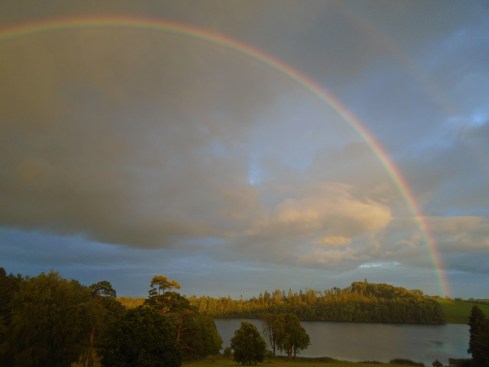
Annaghmakerrig Lake, as seen from The Tyrone Guthrie Centre, Co. Monaghan, Ireland. 


I’ve just returned from a stay at the Tyrone Guthrie Centre, Annaghmakerrig, Co. Monaghan, Ireland. I was awarded two weeks at the residency, thanks to Waterford County Council who’ve been very supportive of my work down the years.

As often happens on these retreats, I didn’t quite get the work done that I had planned, but a tapped a whole new seam, which I feel is going to bear good fruit in the year to come.

The special aspect about the Tyrone Guthrie Centre, for me at least, is the time spent in discussion with other artists. The cross pollination of ideas inspires, challenges and provokes my imagination and I always leave there with something new in hand.

I’ve had residencies at four institutions (and have returned to Tyrone Guthrie five times). They’ve all been great and interesting and why wouldn’t they be, providing time and distance from routine to concentrate on your art alone or in the company of other creatives. Each institution has provided something unique, whether it be conversation with the other artists, inspiration from the environment, tuition or the calm and stillness that lends itself so well to the creative process. For all these reasons, I’d recommend the following: Tyrone Guthrie Centre (Ireland), Aras Eanna (Ireland), The Hurst (UK) and last year Ginestrelle, (Italy). I’ve also rented friends’ holiday homes in low season, which is a way artists can enjoy a focused way to write, without breaking the bank.

DSC01989

I’m going to reblog below, a list of residencies/retreats I drew up some years ago. I haven’t had time recently to check, expand or prune this list, but please feel free to add your own comments/suggestions. And apologies if some of the links are out of date.

Do note that America is where the writers’ colony was born, hence its dominance of the list. The U.S. still provides the best, the most prestigious and the most difficult colonies to get into. Yes, “get into”. Therein lies the difference between a “residency” and a “retreat”  (which I explain below):

Residencies are institutions to which you must apply and demonstrate your professionalism as an artist via a portfolio, and perhaps references and a CV that shows you are considered by your peers to be a practicing artist. Residencies are often funded by an arts and/or educational body and can mean you must also provide a service such as creative writing classes in the locality. Residencies can last from two weeks to a year.  In Ireland, prestigious residencies include The Tyrone Guthrie Centre, Cill Rialaig and the Heinrich Boll Cottage, Even if accepted, you may have to pay for your stay. However, attending one of these establishments is an impressive addition to your C.V. Moreover, you may meet artists of international renown.

Then you get Retreats. These are institutions that sometimes offer courses – the UK’s ‘Arvon Foundation’ is a good example which has three properties around England and holds intensive writing courses throughout the year. Other retreats might just offer room and board to writers for a fee, somewhat like a hotel but with an emphasis on creativity and productivity during your stay. Anam Cara and the Molly Keane house are Irish examples. They’re not as prestigious residencies, although such places tend not to attract those at the peak of their career, you might still meet some interesting creative, supportive people and the surrounds are usually very picturesque and perhaps inspiring. Retreats are good for novice or emerging writers who are not yet at the stage in their career where they might gain acceptance on a “residency”, or if you simply want to try the set up out for a week or so, but can’t commit to a residency.

Finally, if all you want is some peace and quiet, why not rent some respite, a holiday cottage in the wilds of Connemara in autumn, or stay in a B&B on Dartmoor or a shack in the Catskills – you may be able to get a ‘low season deal’ and it may provide the inspiration you seek.

IMG_8767

Chateau Chaumont in the Loire Valley. I recently took a French friend up on an offer to stay in their charming old water mill,  for a week of focused writing, very near here…

A sample (and by no means exhaustive) list:

Ireland

Residencies:

http://www.araseanna.ie/

Cottage


http://emergingwriter.blogspot.com/2009/04/cill-rialaig-residency.html
http://www.dlrcoco.ie/arts/Call_For_Writer_2015.htm

http://www.tyroneguthrie.ie/

Retreats:

http://www.anamcararetreat.com/

http://www.mollykeanewritersretreats.com/

France

Residencies:

http://www.chateau-lanapoule.com/residencies/index.html

http://www.centreculturelirlandais.com/modules/movie/scenes/home/index.php?fuseAction=residences

http://www.aerogrammestudio.com/2015/09/10/brown-foundation-fellows-program/

Retreats:

http://www.lamuseinn.com/

UK

Residencies:

http://www.writersservices.com/agent/bur/Hawthornden_Castle.htm

http://covepark.org/apply-or-book

Retreats

http://www.arvonfoundation.org/p1.html

urbanwritersretreat.co.uk

Italy

Retreats:

ARTE STUDIO GINESTRELLE & WRITING RESIDENCY

USA

Residencies:

www.andersoncenter.org

www.atlanticcenterforthearts.org

www.calderaarts.org

www.coloradoartranch.org

www.saltonstall.org

www.djerassi.org

www.dorlandartscolony.org

http://www.exeter.edu/about_us/about_us_537.aspx

www.albeefoundation.org

www.hambidge.org

www.headlands.org

www.hedgebrook.org

www.jentelarts.org

kerouacproject.org/application-page

www.khncenterforthearts.org

www.artomi.org

www.montanaartistsrefuge.org

http://www.macdowellcolony.org/

http://www.millaycolony.org/

springcreek.oregonstate.edu

http://www.kfw.org/grants.html

www.kulcher.org

http://www.lynchburg.edu/thornton.xml

www.nmwcolony.org

http://montalvoarts.org/programs/residency/

www.onewritersplace.com

http://www.radcliffe.edu/fellowships/apply.aspx

www.red-cinder.com

www.soapstone.org

http://www.stanford.edu/group/creativewriting/stegner.html

www.poetrycenter.arizona.edu

www.vcca.com

http://www.ucrossfoundation.org/residency_program/

http://www.vermontstudiocenter.org/

www.writersdojo.org/residency

http://www.woodstockguild.org/artist_in_residence/index.html

http://www.wurlitzerfoundation.org/

http://www.yaddo.org

Retreats:

http://www.myretreat.net/

http://thompsonpeakretreat.com/

http://wildacres.org/about/residency.html

http://www.creativeledgestudio.com/

http://espyfoundation.org/

http://www.astudiointhewoods.org/sitw/?page_id=72

http://artcroft.org/eligibility.htm

http://www.montanaartistsrefuge.org/residencies.html

http://www.nisda.org/air.htm

http://www.ragdale.org/residency

http://www.nps.gov/romo/supportyourpark/artist_in_residence.htm

http://www.ozarkcreativewriters.org/

Canada

http://www.skwriter.com/?s=skwritercolonies&p=colonyguidelines

Australia

http://www.tasmanianwriters.org/self-funded-residencies

If you know of more, please feel free to post!


Character reference

What’s their favourite pizza?

If you want to hook your readers, you’ll need a character that leaps off the page. A good character is believable and interesting. Firstly, be careful your character is not of music-hall-cliche stock (dumb blonde, greedy banker, uber-organized German, upper class twit etc…) – the problem here is that the reader will have met your character far too many times before to find them interesting now. As usual, turning the cliche on its head can be a good place to start getting ideas (chess-master page three girl, a banker who secretly gives away money etc…)

Also, don’t focus on describing what they look like from head to toe. In fact, their general physical appearance is not so revealing – the key is often in the interesting quirks and blemishes. Moreover, you ought to climb inside your character’s skin, get to know them intimately and let the reader see how they tick. It  is  good if there is something unusual about them. Here’s a sample list of questions you could mull in order to give your character depth:

Rather than describe the colour of their hair and eyes, write instead about their height, posture and walk.

If you first met this character, what would strike you most?

What is their natural scent or preferred perfume or aftershave.

What sort of diet do they have and what has been the physical impact of this regime?

What does their best friend think of them?

What happens when your character gets drunk?

What does your character have in his/her pockets/handbag?

What is your character’s favourite joke?

Also, to make your character particularly memorable, give him/her/it a singular physical attribute your reader will long associate with them. Think of it this way, if you were going to a costume party dressed as Harry Potter, Sherlock Holmes, Miss Havisham or Liesbeth Salander – what would you need? My guesses are, respectively: a lightening bolt scar, a deerhunter hat and pipe, an old wedding dress, and a dragon tattoo. Try to imagine what you’d need to be recognizable as your character.


Hook ’em in…

Your first line is probably the most important in your work. It should surprise and intrigue your reader and somehow give a taste of what is to come. Ideally, it should be unusual or uncanny and most importantly, it should encourage your reader to read on…

A surprise opening in Liverpool…

‘”Damn,” said the Duchess.” is a first line  attributed to Agatha Christie, though I am unable to identify which of her novels is thus launched. Regardless of its provenance, this line is arresting, or was in its day. “Damn” was a pretty raw word in 1920 or so, rarely uttered in front of ladies, not to mind say by one, and then one of high social standing. So, an opening line such as this was written to shock, to intrigue, to grab the readers’ attention and it is a good idea to find one with a similar punch in the modern age.

Thereafter, is often a good idea to follow your first line with a pacy set of three chapters. These are also the showpiece you’ll be sending off to agents and publishers, so make sure they’re written to hook.

Some writers write their last chapter first, so they can figure out their plot, and then leave writing those all-important first few pages until last. In fact, the very last piece of writing they might do is the first line. Therefore, don’t fret over your opening, get the rest of your work down and come back to it later if necessary.

And, take note that just as your first line should reach out and grab your reader – your final line should linger with your reader for sometime afterwards…

 Can you guess which works gave us the following opening lines? Answers below


1) ‘It is a truth universally acknowledged, that a single man in possession of a good fortune, must be in want of a wife.’


2) ‘I’m writing this sitting in the kitchen sink.’


3) ‘It was the best of times, it was the worst of times.’


4)It was a bright cold day in April, and the clocks were striking thirteen.’


5) ‘If you really want to hear about it, the first thing you’ll probably want to know is where I was born, and what my lousy childhood was like, and how my parents were occupied and all before they had me, and all that David Copperfield kind of crap, but I don’t feel like going into it, if you want to know the truth.’

6) ‘Stately, plump Buck Mulligan came from the stairhead, bearing a bowl of lather on which a mirror and a razor lay crossed.’


7) ‘Mother died today.’


8 ) ‘It was the day my grandmother exploded.’


9) ‘The past is a foreign country; they do things differently there.’


10) ‘
He – for there could be no doubt of his sex, though the fashion of the time did something to disguise it – was in the act of slicing at the head of a Moor which swung from the rafters.’

 __________________________________________________________

1)      Pride and Prejudice, Jane Austen.

2)      I Capture the Castle, Dodie Smith

3)      A Tale of Two Cities, Charles Dickens

4)      1984, George Orwell

5)      Catcher in the Rye, J.D. Salinger

6)      Ulysses, James Joyce

7)      The Stranger, Albert Camus

8 )      The Crow Road, Iain Banks

9)      The Go-Between, L.P. Hartley

10)   Orlando, Virginia Woolf


A Little Rejection Tale

MurderedAngel

A professional writer is an amateur who didn’t give up. If you keep going you improve and you’ll break through eventually, but you must keep going.

Some years ago I had a room-mate, lets call him Robert, who was an exceedingly talented writer and a super bright individual. Robert had come from a north of England working class family and had won a scholarship to a top college at Oxford to study law, and then proceeded to get a 1st. In a class ridden society such as England is, this is quite a feat. He then went on to barrister pupilage in London. So far, so successful. He struggled in London however, his working class roots a subtle bar from invitation to the glossiest circles, and he let it get to him. Robert decided to jack the law trade in and devote his time to his hobby, writing prose.

Robert was blessed with a wondrous poetic use of language and could craft very beautiful, visual prose. He also had an instinct for story. Within a year, a short story by Robert, had won a prestigious national prize. The way seemed set for a glittering career as a writer. Robert sent out his first novel manuscript to an agent of his choosing. It was rejected. Robert was speechless and sunk into a depression for a few months. Eventually he rallied round, spent another six months moving commas around pages and plucked up the courage to send it out again. And again it was rejected. This process was repeated a third time, after which Robert hit bottom and decided to never write again – and I learned a valuable lesson by proxy.

Robert’s book was slow-paced and poetic and not to everyone’s taste, but there’s no doubt it was good. It may have even eventually have been published had he persevered and found the right agent/publisher. However, Robert’s issue was that he could not take rejection. Following a lifetime of over-achievement, he had unreal expectations and a sense of privilege and entitlement that often accompanies high success at a young age – yes, even for those from working class backgrounds. If Robert had had the skills to roll with the blows, he would have no doubt become a barrister and a published and acclaimed author – but he did not know how to handle rejection, so he gave up. Dealing with the turn-downs is the most important skill a writer needs.

Robert had three rejections and then stopped writing. It’s July, I’ve had 33 rejection letters since January this year alone, and I’ll have the same number again by December (I’ve had 10 acceptances thus far this year, however, just to give you an idea of the percentages). If you are not willing to take the hits, you need to get out of the writing game. The upside is that if you keep going, keep sending those ships out, keep improving and keep rolling with the punches, you absolutely will break through… eventually.


Geddit geddit?

Jokes! Jokes are a great source of plot ideas. An established writer gave me this tip years ago and it has served me well.

Jokes, you see, are plots in miniature. Stories sealed up and ready to go. You’ve got your beginning, middle, end, your conflict, your characters – flaws and all. All you’ve got to do is flesh it out. Expland on it. Change gender and setting if possible. And no, it doesn’t have to be funny because many jokes (indeed, stories) need an element of tragedy to make comedy (and vice vearsa) and you can just crank up the aspect you want to emphasize.

Here’s a joke that gave me an idea for a radio play I once wrote “The Angel of Trafadden” (see urls to podcasts listed on sidebar)

“It was Ryan’s funeral and the pallbearers were carrying the casket out from the church. When they bumped into a pillar, one of them heard a moan from inside the coffin. They opened the lid and found Ryan alive. He lived for another ten years before he properly died. Another funeral was held for him and, as the pallbearers were carrying out the coffin, Mrs Ryan shouted “Now, watch out for that pillar!”

OK, it’s the way ya tell ‘em… But the point is that they don’t have to be the funniest jokes – just so long as there is a story in there, a universal truth with which your readers will react and engage. Wordplay/puns won’t work so well, go for the story…

Here’s another one you can chew on for a story idea (it used to go down well in the creative writing classes I taught in an English prison…)

The defendant knew he didn’t have a prayer of beating the murder rap, so he bribed one of the jurors to find him guilty of manslaughter. The jury was out for days before they finally returned a verdict of manslaughter. Afterward the defendant asked, ‘How come it took you so long?’ the juror said, ‘All the others wanted to acquit’.


Interesting Times

jbos

My Great-Grandfather Lance Corporal Joseph Bohan-O’Shea, killed 1916, Battle of the Somme. 

It’s been a week. Please forgive the wooziness of this post but I’m lying in bed post-operation and full of pain killers. My surgery followed seven tumultuous days here in the UK, where I’m currently based. The country went to the polls and opted to leave the EU. I’m still reeling from this result. Not that my operation had any relation to the referendum, but it was a suitably crap way to cap a crap week.

As a staunch pro-European I believe Brexit a sad and misguided mis-step, that will eventually deliver to the little Englanders exactly that, a little England. I’ve rarely experienced the anti-Irish prejudice here that was so prevalent during my grandparents’ years in the UK, however it does appear that the monster of intolerance and prejudice is raising its ugly head here again and all of this marks a deeply lamentable sea-change in the consensus in Britain. I am pessimistic for the future.

Of course, the wake of the Brexit vote saw the PM resign and his assassin in turn stabbed in the back, whilst the opposition party Labour imploded. And England were kicked out of the Euros by Iceland. Strange days indeed.

Meanwhile, my country Ireland saw its fans awarded a medal for sportsmanship by the mayor of Paris. There’s a scramble for Irish passports by worried Brits with an Irish grandmother (Irish grandparents turn up in the most surprising and diverse family trees: Margaret Thatcher, Sophie Wessex, Che Guevara, Mohammed Ali… to name but a few). Whilst we worry of the re-emergence of the physical border between Ireland (now the most Western outpost of the EU) and the UK, which does not bode well for the peace process.

And somewhat indicative of the historic ties between the UK and its neighbour, Ireland, this day, July 1st, commemorates the Battle of the Somme, where my great-grandfather was killed 100 years ago, wearing a British uniform. It should be a day upon which we remember why the EU, however imperfect, exists – instead, Britain seems intent on issuing divorce proceedings. It’s all wrong.

http://www.myadoptedsoldier.com/archive/myarchive.php?county=Waterford


May Pay Day

ak1

The Tyrone Guthrie Centre, Monaghan.

Well now, that was a month! You struggle and scrimp and study and scribble for ever and a day and you’re on the cusp of giving up… when, it happens.

May happened for me. Yes, this month I had my first stage production (without decor) in a leading London studio theatre (The King’s Head) which was funded by Arts Council England and played to full houses with very positive feedback. The same play is now a finalist for the 2016 Eamon Keane Full Length Play Award (winner announced next week). Then, yesterday, I was granted the Waterford Council Annaghmakerrig Award for a two week stay at the famed artists’ residency,  the Tyrone Guthrie Centre, Co. Monaghan. And just before the clock says goodbye to May, I receive an email to say my play ‘TreeHouse’ has shortlisted for the Little Pieces of Gold showcase at the Southwark Playhouse. Yes, if you wait around long enough, it happens…

So, keep on writing … there are months like these!