Category Archives: Uncategorized

Scratch That!

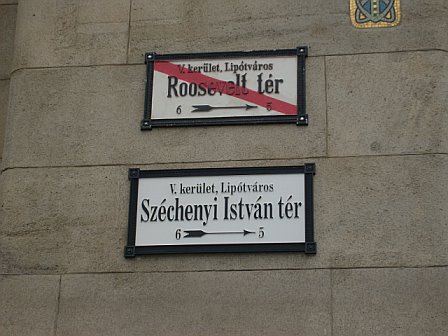
New street name in Budapest.

I’m back in Budapest visiting old friends – and in a much cheerier place. Apologies for the rather depressing last post – and thank you for all your messages and comments.  I was a little melodramatic, having a bad moment, when I wrote the previous post… the sun is out again and I’m still super productive, so scratch that ‘depression is the way’ theory…

Being back in Budapest means I notice changes in the city more than perhaps I did when I lived here. The new government are bent on renaming streets which they feel have perhaps ‘too leftist’ monikers. So Moscow Square has been renamed after a right wing economist and even Elvis Presley has now had a street named after him, in a recent re-~Christening sweep. Budapest has form when it comes to renaming street to reflect the political mood. Oktogon has seen past incarnations as ‘Hitler Square’ and later, ‘Lenin Square’.

And this thought leads perhaps somewhat inelegantly to the writers need to re-work or scrap words when re-drafting.

‘Murder’ or ‘Kill your darlings’ is an adage attributed to the literary critic Sir Arthur Quiller-Couch, advising writers to cut the words / phrases to which they are most attached, in order to strengthen the work. It is good advice when editing, as often we writers shoehorn in a delicious description which doesn’t do an enormous amount for the piece as a whole. It is simply a bauble. Time to get the gun out.

Editing makes the job of writer a rather schizophrenic affair where one has to don two very different caps. The first cap is that of the creative free thinker who is focused on the big picture and is not too worried about the details. This is the person who comes up with the story, the theme, the basic structure, the person who invents characters and decides on the tone. This artist-writer will draw up the first draft of the story, writing only to please themselves. Finishing a draft wearing this cap is only some of the journey, however…

Next comes the cap of editor-writer. This is when the writer combs through the text, ruthlessly chopping, restructuring and cutting unnecessary/ unsuitable words, characters, scenes, phrases etc… or ‘murdering your darlings’. This is the writer preparing the text for other people. It is a good idea to leave a few weeks between your artist and editor incarnations.

Editing can be painful, and time-consuming. You’ve quite likely become attached to some characters, scenes, words and phrases and are loathe to see them go. Don’t worry, you can store them in your “writer’s bag” for use at a future time in a more suitable context. In the meantime, get pruning…

Chopping advice:

Cut all surplus adjectives and adverbs.

Examine the phrases you’ve shoehorned in just because you liked the sound of them – do they really fit that scene? Be honest. If not, bin them.

Take out all vague words such as “seem/seemingly” and try to do without your “justs”.

Look at all sentences that run for two or three lines. Do they really need to be that long? Can you reduce them or break them up? If you can, do so.

Active forms are better than passive forms, where possible (ie. “John cleaned the flat” rather than, “the flat was cleaned by John”).

Finally, every writer on Earth needs a reader or two – fresh eyeballs to run over your work and give you honest feedback. I suggest using three friends whom you trust will be frank with you. You don’t have to take everything they say on board. Do consider what they say, however, and if all three come back and say a character is not working. The character is not working. Rewrite.
Silver Linings on a Dark Cloud

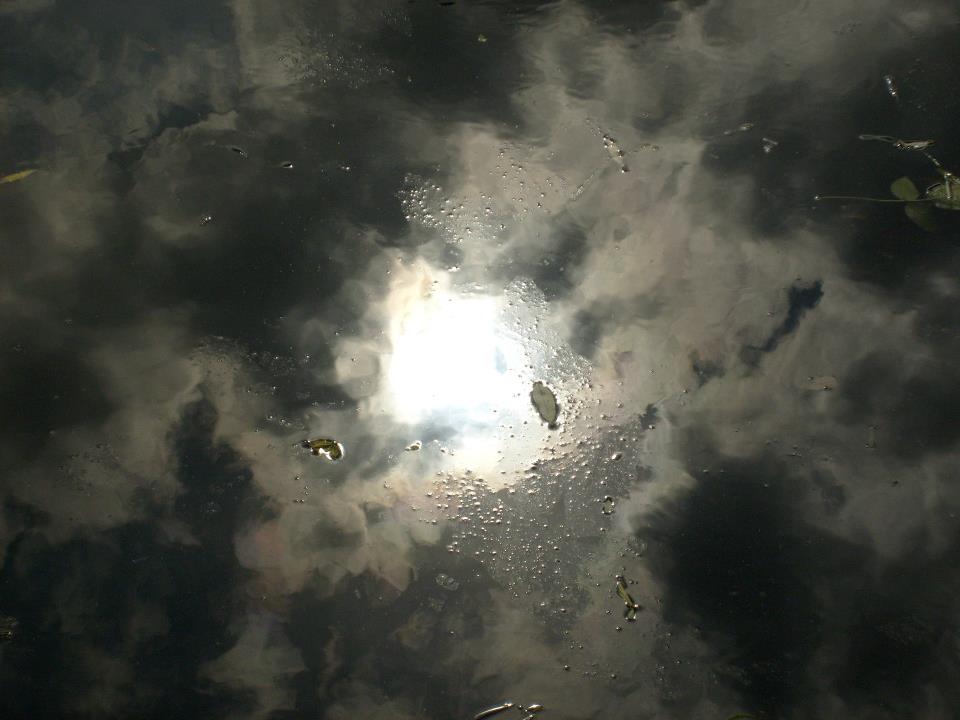
Norwich sun on River Yare.


Artists are often asked about gateways to creativity. The answer given will depend on where the artists believe ‘the muse’ doth dwell. Broadly speaking, there are two schools of thought – one holds that creativity is within the artist. The other says art exists outside the creator – in another dimension/world/state.

By now, I have lived and seen too much to say one belief is right or wrong – to do so would be both naive and arrogant. I will state, however, that both philosophies hold that creativity is available to everyone – and access to a heightened creative state can be achieved through various exercises many of which we’ve looked at here before – exercises such as freewrites, morning pages, ‘what ifs’, character studies and even physical exercise and displacement activities. There is another oft- referenced portal to creativity which remains controversial – although it doubtless works for some and that is ‘the black dog’, melancholia, depression.

Our culture is ridden with images of the tortured artistic soul sitting in his garret, slicing his ear off with one hand and producing master pieces with the other. We expect our creative minds to be troubled ones. I would like to write that this is a nonsense, that people can create just as good art in the happy state as they can in depression., but if I am to refer to my personal experience of the creative process, I have to admit that when I’m down I’m at my most creative and productive. And I so wish this were not the case.

Take this year, from January to June of 2012, I felt elated. There were many reasons for this feeling, amongst them a record previous year in terms of writing success, a move from a negative to a positive domestic set up, a new and better job, more free time and an expanding social life. And during this blissful period, I wrote one rather ropey short story.

In the first week of June, my mood fell down the plug hole. Again, there were a number of factors involved including health issues and some financial pressure and perhaps my impending birthday (July 24th) has something to do with it… But ironically, I also went down because I wasn’t writing/producing/moving forward as a writer. Dark thoughts began to wake me in the wee hours, spinning round my head until it is time to get up and face another day soaked in despondency and fear, feeling like I can’t go on.

I’ve in this funk for six weeks now, and during this short time, I’ve written three new short stories and the first draft of a full length stage play. I’ve contacted and set up meetings with directors in three countries re staging or broadcasting an award winning play. I’ve collated and edited all my short stories into a collection and I restarted entering short story competitions. I’m doing this because art is the only thing that doesn’t let me down when I feel wretched.

Art is my friend. I don’t currently have people around me in whom I can truly talk to, or lean on. It is not their fault. Living in Norwich, England, neither city nor country to which I have any ties, I am away from any people with whom I have history, deep friendships and connections. While I’ve made some friends here, one resists leaning on people you know for a relatively short period of time. So, I’m lonely and my feelings are going into my art.

I can’t say if melancholia allows a more direct route to the creativity inside you, or it brings the mind to a near trancelike state where the ‘other world’ can come rolling in. I don’t know. I do know however, that I wish it were not so. And given the choice of living in a positive state or producing art, I’d opt of the happy former everytime. I just wish I knew how to have both. I’m sure it is possible.

Meanwhile, I need to keep writing myself back to happiness…


Don’t Lose the Plot

I’ll tell you a story about Johnny McGory.

Will I begin it?

That’s all that’s in it.

Irish nursery rhyme.

What’s the story here?


Story trumps all. The toppermost bough of the literary elite tree may disagree and say literature is about language, the perfect sentence, la mot juste. However, for most writers in today’s economic climate – if you don’t have a sound story, you don’t have a publishing deal. Having a well-constructed plot and a good story means you’ll be forgiven all sorts of other failings (blingy adverbs, oddball syntax, clichéd characters). It’s simply today’s reality.


or here?


Firstly, in order to have a story, you have to have some sort of conflict. These conflicts usually fall into one or more of the following categories:

man vs. nature

man vs. man

man vs. the environment

man vs. machines/technology

man vs. the supernatural

man vs. self

man vs. god/religion

Examples of good conflict ridden plots can be found everywhere, in the Bible, Greek mythology, Shakespeare, ethnic folk tales and even jokes.

Structure

A typical story structure might be plotted thus:

Stasis – the status quo. The reader is introduced to the character and setting.

Disturbance. Something occurs which upsets the normal run of things. For example, a stranger arrives in town.

The main character is affected by the disturbance.

The main character decides on a plan of action to rectify or improve matters.

Obstacles stand in the way of the plan of action succeeding.

Complications occur in the guise of choices/new characters/new ideas/discovery.

These lead to a crisis, when the focus of a play comes together in an unavoidable way.

The crisis usually leads to a climax or the major confrontation.

Finally comes the denouement or resolution which results in a new stasis.

The above will often feature a character development arc whereby the protagonist is changed in a fundamental way by the events.


A good exercise in plotting is to take a book or a film you’ve really enjoyed and try to break it down into a series of plot-steps, like the ones I’ve outlined above. Now, change the setting, the gender of the protagonist, the era, the goal and the type of obstacles that stand in the way. Yet, stay true to the plot template. When you’ve finished you’ll find you have a completely new story. Don’t feel as though you’ve stolen another’s plot. In truth, there are no new plots, each is a retelling of an older version. You’ve simply adapted and updated a classic plot line and in the process have created a unique story.

That’s all that’s in it ; )

And a post script here about a book recently written using Johnny as a springboard: http://www.johnnymagory.com


Suprising First Lining

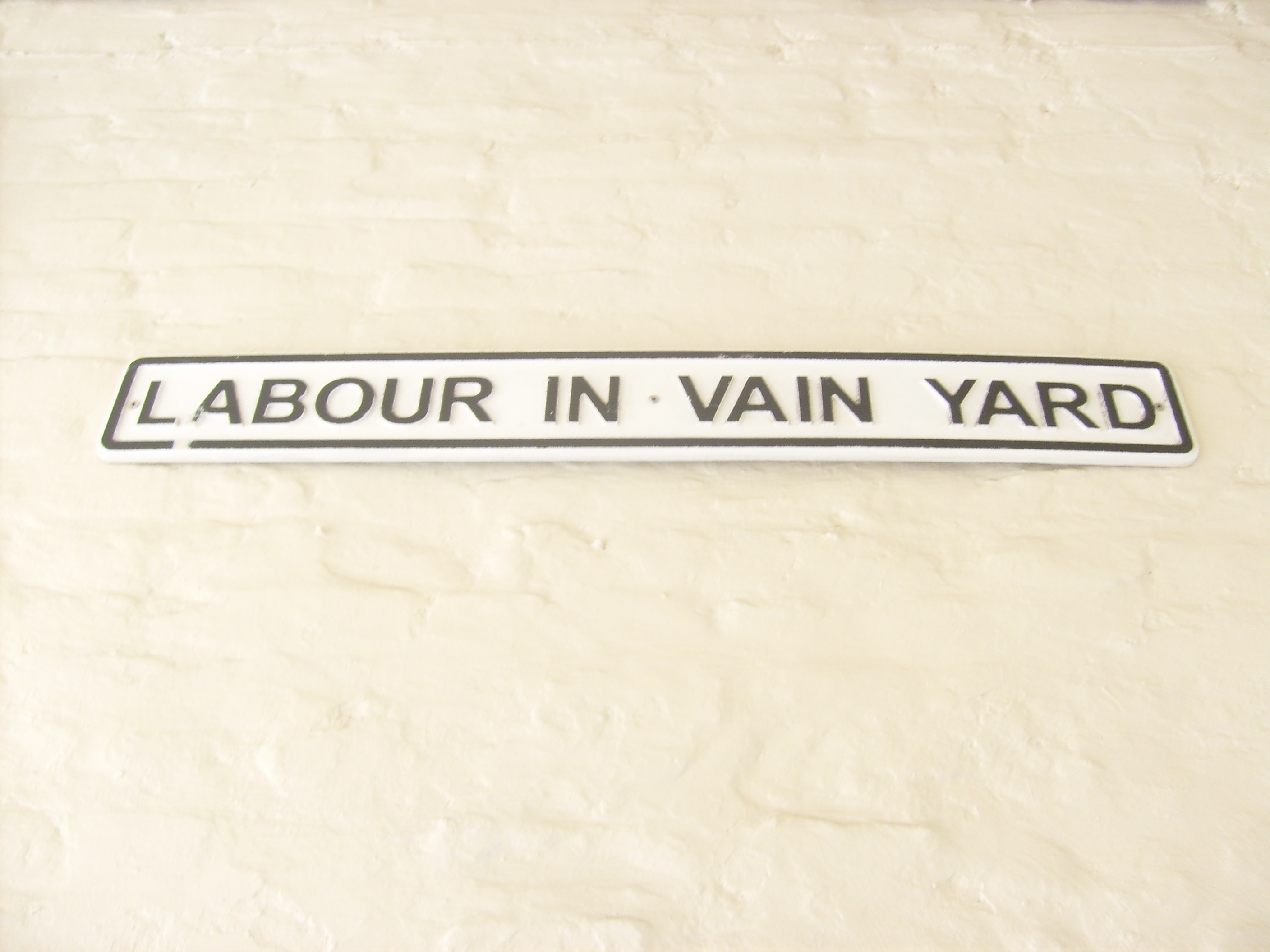
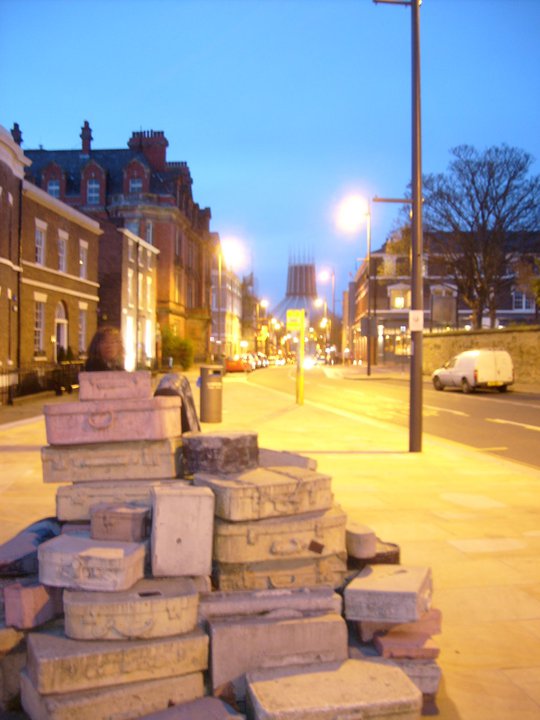
Name of a ‘yard’ in Norwich. The capital of East Anglia has the most surprising monikers for streets, including: ‘Tombland’, ‘Queen of Hungary Yard’, Rampant Horse Street’ and Unthank road. All would sit well in amazing first lines….

Your first line is probably the most important in your work. It should surprise and intrigue your reader and somehow give a taste of what is to come. Ideally, it should be unusual or uncanny and most importantly, it should encourage your reader to read on…

‘”Damn,” said the Duchess.” is a first line attributed to Agatha Christie. “Damn” was a pretty raw word in 1920 or so, rarely uttered in front of ladies, not to mind say by one, and then one of high social standing. So, an opening line such as this was written to shock, to intrigue, to grab the readers’ attention and it is a good idea to find one with a similar punch in the modern age.

Thereafter, follow your first line with a pacy set of three chapters. These are also the showpiece you’ll be sending off to agents and publishers, so make sure they’re written to hook.

Some writers write their last chapter first, so they can figure out their plot, and then leave writing those all-important first few pages until last. In fact, the very last piece of writing they might do is the first line. Therefore, don’t fret over your opening, get the rest of your work down and come back to it later if necessary.

And, take note that just as your first line should reach out and grab your reader – your final line should linger with your reader for sometime afterwards…


Can you guess which works gave us the following opening lines? Answers below


1) ‘It is a truth universally acknowledged, that a single man in possession of a good fortune, must be in want of a wife.’


2) ‘I’m writing this sitting in the kitchen sink.’


3) ‘It was the best of times, it was the worst of times.’


4)It was a bright cold day in April, and the clocks were striking thirteen.’


5) ‘If you really want to hear about it, the first thing you’ll probably want to know is where I was born, and what my lousy childhood was like, and how my parents were occupied and all before they had me, and all that David Copperfield kind of crap, but I don’t feel like going into it, if you want to know the truth.’

6) ‘Stately, plump Buck Mulligan came from the stairhead, bearing a bowl of lather on which a mirror and a razor lay crossed.’


7) ‘Mother died today.’


8 ) ‘It was the day my grandmother exploded.’


9) ‘The past is a foreign country; they do things differently there.’


10) ‘He – for there could be no doubt of his sex, though the fashion of the time did something to disguise it – was in the act of slicing at the head of a Moor which swung from the rafters.’

 __________________________________________________________

1)      Pride and Prejudice, Jane Austen.

2)      I Capture the Castle, Dodie Smith

3)      A Tale of Two Cities, Charles Dickens

4)      1984, George Orwell

5)      Catcher in the Rye, J.D. Salinger

6)      Ulysses, James Joyce

7)      The Stranger, Albert Camus

8 )      The Crow Road, Iain Banks

9)      The Go-Between, L.P. Hartley

10)   Orlando, Virginia Woolf


Let the Show Flow

Showing or Telling? Post box, Norwich, England


Telling: “Close the door,” she said nervously.

Showing: Her cigarette trembled in her hand: “Close the door.”

Telling: Peter was a fussy, neat sort of man.

Showing: Every Monday, Peter ironed and folded his towels into perfect squares and stacked them in the airing press, according to size and colour.

“Showing” your reader what your protagonist is thinking/doing, encourages your reader to engage more with your book/story/play, to interpret and picture what is going on. Showing also allows for more atmosphere and lends insight into character. Conversely, “telling” tends to deliver all the information neatly wrapped and can deny the reader all the fun of involvement and imagining. Therefore, rather than telling the reader, ‘Bob was depressed,’ you might describe what Bob was doing and saying and the reader will also get a greater sense of ‘Bob’ if you do so.

Having said that, if the writer “shows” every inch of their novel it may bore the reader and slow the pace. There are times, for the sake of speed and economy, the writer needs to “tell”, so they can quickly move on to the next stage of the story.

If I could suggest a rule of thumb, it would be “show” the most important parts/events of the story and “tell” the minor linking passages. It’s your judgement call as to when and where to show or tell, but do give it thought. Finally, please bear in mind the general consensus is that you always avoid telling via adverbs in speech attribution: “he said arrogantly”, “she shouted defiantly”, “we mumbled apologetically”. Instead, try to think of ways you could show this arrogance, defiance or apology.


He Said, She Said

What she did…


The third person (he/she/it) is the most common narrative point-of-view. The third person observes the main character(s) from a distance, describing how others might see/consider your protagonist. In other words, it gives the narrator greater scope and view privileges than the first person narrator.

If you are writing an extended piece of fiction, you might find it easier and more accommodating to work with a third person narrator. The following are some varieties of this narrative point-of-view

* Nowadays, it is common to have a third person narrator that observes your main character whilst simultaneously looking over his/her shoulder and seeing the story almost from his/her point of view. This ‘over-the-shoulder’ third person narrator can provide some of the advantages of the first person without the drawbacks – however, it is somewhat limited as you are largely viewing events from your character’s POV. For emerging writers, this third person narrative may be a safer bet if wanting to attract an agent.

* You may want your narrator to be quite separate from your character, however. In which case, you could have your narrator follow him/her from a distance, observing actions as if a camera and not directly informing the reader of the character’s inner thoughts.

* Or you could have an omniscient third person narrator – a ‘God-like’ storyteller who sees all and knows all.

The “It” narrative

This is an unusual form of third person narration that tells a tale from the point of view of an object or an animal. An “it” narrative might conceivably be the story of a ring, told by the ring, as it recounts its many owners etc…

Multi narrators

Some books/plays/films are narratives told from various POVs. More common in Victorian prose than in contemporary writing, multi narrators allow for a vigorous description of a community and is useful if the author wants to concentrate on the interconnectivity of a place.

Whichever variety you choose, it is important to be style consistent throughout your work (or if you aren’t, have a reason for that).


Acquiring the Craft…

The word “writer” often carries weighty connotations. Some see a “writer” as a genius whose works astonish and awe the world. Others perceive a “writer” as “mad” and “misunderstood” artist who lives on the edge of life, burdened by their aforementioned genius and often turning to drink and drugs for both inspiration and solace.

The truth, at least concerning the vast majority of writers (and all creative artists), is more mundane. Writing is a craft, a skill anyone can acquire through practice. Although writers can be drug addicts and alcoholics just like members of any other profession – they can also be tee-total, health nuts or just very ordinary people living on your street who do regular things like shop at Tesco’s or Walmart and go to the pub/club on Friday night.

In other words, writers are normal people and as different from each other and varied as regular people are. The single trait they all have in common is that they write. By that, I mean they are disciplined and they write on a regular basis. They give time to their craft, acquiring it, polishing it, perfecting it.

I was thinking of this point this week when a friend of mine saw his debut novel published. Apocalypse Cow is a wirk by Glaswegian writer Michael Logan, who served his apprenticeship as a creative writer via a writing group in Budapest (my old home). His novel went on to win the Terry Pratchett prize last yeear. I mention Apocalypse Cow not only as a congratulatory plug for a well deserving author but because it is reassuring to know that a nice, down-to-earth, hard-working, good guy like Michael gets to see his work published by a mainstream publishing house. Very much looking forward to reading my copy (on order).


Well done, Michael, you’re an inspiration to all of us!


Speaking of Stories

Speaking of Stories… I recently received a mail from a friend who asked me what the easiest way was to read my stories on line. The interest is flattering and I’m happy to list the following sites where a couple of pieces of my work have been published, following a win/placement:

Ha-Ha – A blackly comic story, with a twist. A runner up in the Limnisa/Bluethumbnail Competition: http://www.bluethumbnail.com/Author/ha-ha.html

The Last of the Shower – A quirky and nostalgic punk looks to wake his dead bandmate: HISSAC Highlands and Islands Short Story Association Competition has ‘The Last of the Shower” on their site (which won the2011 Award). http://www.hissac.co.uk/2011_stories.html#first

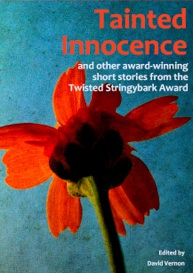
The Pretender – A tale with a twist and intrigue, which was ‘highly commended’ in the Twisted Stringybark competition. ‘The Pretender’ can be downloaded as part of an anthology: http://www.smashwords.com/books/view/162482

Many more of my stories are published in anthologies or literary magazines, so you’d have to order. But if any of you would like to have a look at the above, I’d be delighted! Thanks for the interest, guys!


Short Story Published in Anthology


My short story ‘The Pretender’ was highly commended in the annual ‘Twisted Stringybark Award’ and is to be published in the accompanying anthology. Always good to get a writing credit.

There’s both a kindle version and a paperback. Here’s the e-version order details: http://www.smashwords.com/books/view/162482


Wish You Were Here…

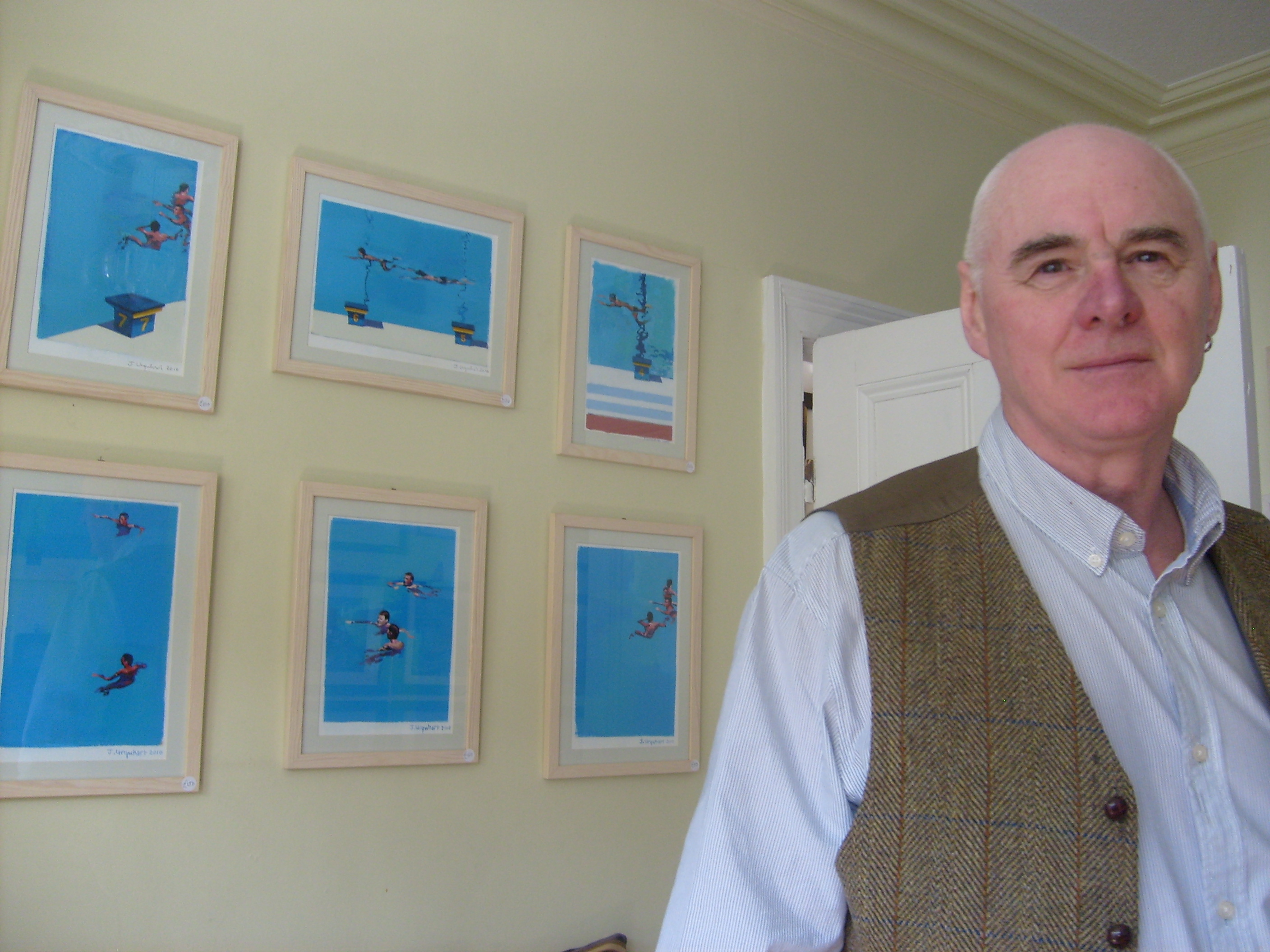
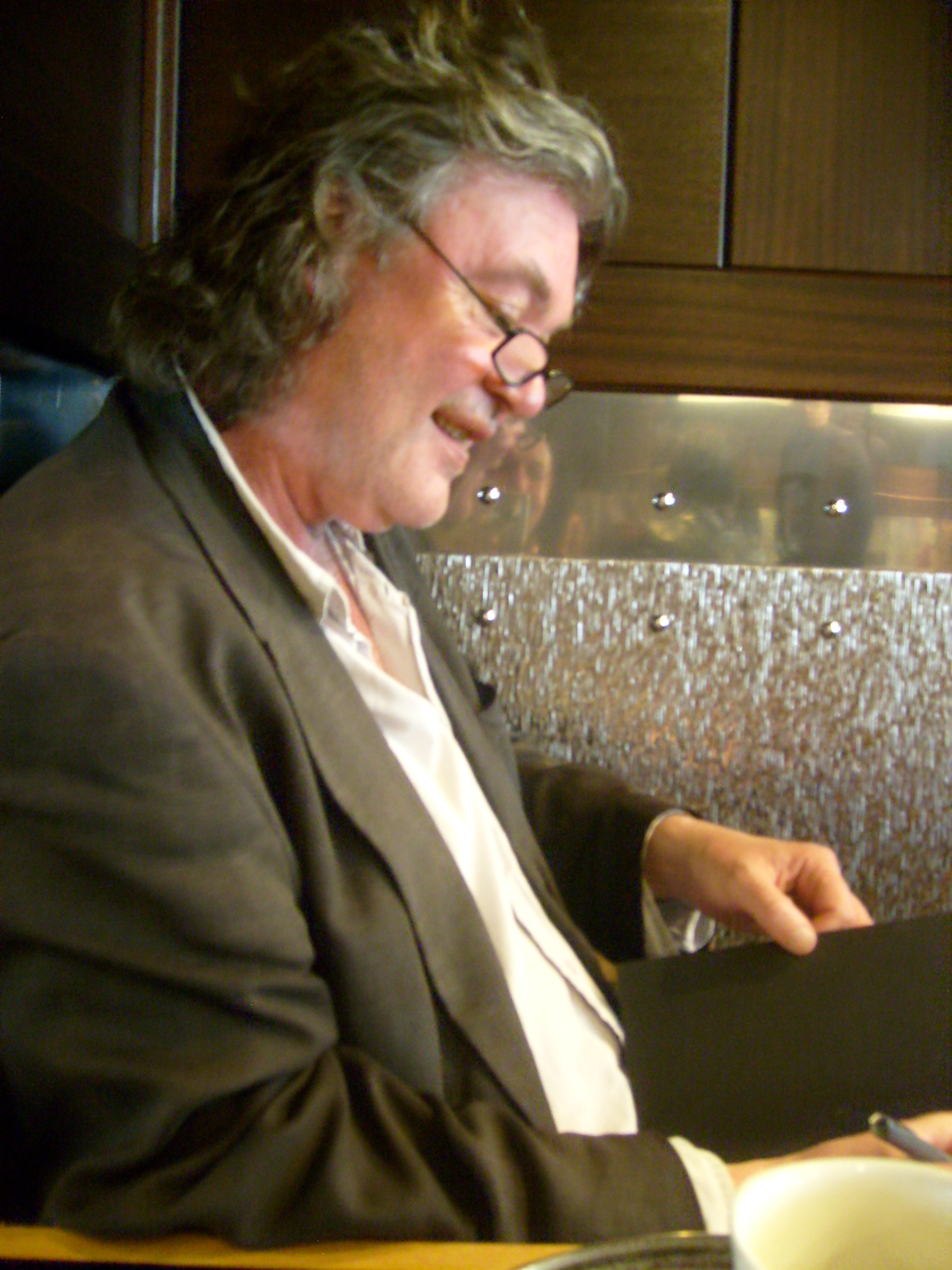
My old friend, Budapest-based Scottish painter JIm Urquhart at an exhibition of his swimming pool painting in Brighton this weekend.

I’ve just spent a few days at the Brighton Festival. I’m here by a sort of mistake – it’s a long story, but by wild coincidence, a good painter friend of mine from Budapest was also in Brighton this weekend – exhibiting his paintings as part of the event (note to self: I must blog about how threads of wild coincidence knit through my life, yet I can never use them in my fiction as they are just too unbelievable).

Jim Urquhart is a Scottish painter who has lived in the Hungarian capital for decades. He was actually one of the first people I met in Hungary in 1998 when I moved there first, and has remained a great friend and artistic supporter down the years. So, I was delighted by the serendipity which had us both wash up on the shores of Sussex this weekend. Great show too, Jim!

Brighton also allowed me the opportunity to catch up with another friend, the County Antrim poet and current Brighton resident, Brendan Cleary. I get great inspiration and encouragement from artists working in other art forms and meeting up with Jim and Brendan over the weekend, has also delivered all the other positives that time spent with good artists provides: discussion and progression of ideas, affirmation that art is what I am about and what I should do, reassurance that as difficult and isolating it can be to be an artist, it is also hugely rewarding. And, if you are an artist, there is nothing you can really do about it – you have to create.

I’m thanking whatever powers conspired to get me here this weekend to hang out with such creative minds. I’m all fired up and reassured. Here’s to artistic fellowship!

Brighton also allowed me to catch up with another old friend, Brighton-based Co. Antrim poet, Brendan Cleary.