
HISSAC have uploaded my winning story to their website, if anyone is interested in having a read
Get your haiku on...
The Japanese know how to appreciate the moment: tea ceremonies where the design and the feel of the cup is lauded, the colour of the drink discussed, the scent, the very feel of the beverage dissected and praised.
Not surprising, therefore, the land of the rising sun gave us the haiku. Haiku is a poetic form that, traditionally, aims to capture a moment in nature, like a snapshot with words.
Most typically achieved using seventeen syllables arranged in three unrhymed lines of five, seven and five syllables, the practice of writing haikus is particularly useful if you are engaged in a word-limited literary arena such as writing songs. In such instances, words should be chosen carefully so that they can convey the specific mood, meaning and impact you require and haikus can help you build up that muscle. Haikus encourage you to pick up every word and study it closely for its sound, meaning, feel and impact.
Here are some examples of the haiku:
O’er the wintry wood,
winds howl in an empty rage
with no leaves to blow.
Soseki (1275-1351)
My all time favourite, however, is the haiku by the ‘punk poet, John Cooper Clarke:
Writing a poem
In seventeen syllables
Is very diffic.
(John Cooper Clarke, 1979)

I know it's a TV. I don't have a radio photo (and perhaps there's that hope...)
I’m doing an interview with WLRfm’ s Aoibhin Fallon after 5pm today – if anyone has nothing better to do… I think you can listen online. http://www.wlrfm.com/

words words words
As a linguist and a writer, I love words. However, as a teacher of creative writing, I know that the mis/over use of words, particularly adjectives and adverbs, is the most common ‘fault’ you’ll find in the work of novice writers.
Insecurity will have new writers shoehorn as many descriptive words as they can get into a sentence – with the result akin to an over ‘bling-ed’ Christmas tree. The advanced writer will ‘show’ an emotion/atmosphere/interpretation without resorting to a heavy-handed sprinkling of descriptive words.
It’s hard to ween yourself off adjectives and adverbs. Part of the problem is that there are so many words in the English language, a tongue with more word-families than any other language. This fact is rooted English having sprung from French and German, so there are English words that describe quite similarly (ie “loving” is from German and “amorous” is from French). And with such a lavish spread on offer, it is hard for the newbie writer to exercise restraint. Oh but, to improve, you must.
That is not to say you can’t enjoy words. English has magpied extensively from many languages. Most of my favourite words are ‘borrowed’ words and include: “pyjama” and “shampoo” which come from India (though I’m not sure of the specific languages), “Hacienda” and “siesta” which are Spanish. “Itsy-bitsy”, “paprika”, “coach”, “goulash”, “hussar” and “biro” which are Hungarian. “Smithereen”, “galore”, “banshee”, “slew”, “brogue”, “kibosh”, ‘hobo’ and “shanty” which come from Irish. I enjoy writing them, I love saying them – to paraphrase Frank McCourt, it feels like having jewels in your mouth. I’ve just got to be careful about over using ‘exotic’ words in my prose. It can look pretentious.
And you don’t only construct literary art from words but they also set the tone of the piece and there are certain words and phrases that are closely associated with particular genres of writing. Romance type novels I associate with “tawny” and “chiselled”. SciFi writers invent words to name their machines, planets and creatures such as “Klingons” and “Zogathons”.
Words are fun, go ahead and celebrate words – but do so in moderation…

Anyone for graffiti?
Sit at computer, bring up blank page, make a cup of tea. Sit at computer, look at blank page, do the washing up. Duration: 1 hour. Word count: 0
If this sounds like your typical writing pattern, you’ve got plenty of company. The sudden urge to do housework, rearrange books, check your bank statement- when you really ought to be writing is known as ‘Displacement activity’.
Displacement activity is the bane of a writer’s life. It’s the phrase writers have for all the stuff you do that is not the stuff you are SUPPOSED to be doing. Avoidance is probably a more readily understood term, but doesn’t sound half as writerly. What happens is a little ‘displacement monkey’ in your mind distracts you from the task at hand, by urging you to ‘make another cup of tea/check the TV guide/your bank account/ebay/post on this blog : ) rather than crack on with that difficult piece of dialogue you’re trying to get down.
I don’t believe displacement activities are wholly bad. I feel they sometimes happen for a reason. Perhaps what you’re working on needs time to settle, or percolate in your mind and after you’ve bought those gloves on ebay, it will all come together. However, I admit, I think I’d get a lot more writing done if I didn’t have an Internet connection in my office… I know a few writers who keep their displacement activity on hand – as another creative hobby such as painting, and they believe one such activity complements and feeds the other. So, they may start painting and then half way through THAT activity they’ll turn back to their writing as a displacement activity for their painting and so on…
As with everything in writing, if you find your displacement activity works for you, then go knock yourself out with it. If it is a hindrance, then find a way to stop it distracting you such as getting a room with no internet connection…
Flying high
I’ve just received the news that my story ‘The Last of the Shower’ placed first in the 2011 HISSAC (Highlands and Islands Short Story Competition)!!!
Whoohoo!!!
I’m really so thrilled about this- and it means I’ll be able to buy a new laptop !!
Yippidyzippidydodah!
'The Last of the Shower' shortlisted for the HISSAC
Couldn’t resist the temptation to bring some good news to my new website…
Just received this email from HISSAC about my story:
And a ship comes home….
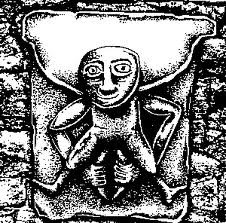
A Sheila-na-Gig
Just received a cheque for twenty pounds sterling from ‘New Writer Magazine’ who have published my story ‘Sheila-na-Gig’ in their Autumn edition. Okay, so I’m not jacking in the prison job just yet but twenty quid in writing payment is like two grand in normal people’s money. Now, what to blow it on… All suggestions gratefully received.

Clock feature on Wells Cathedral
It is said that the closer the brain is to the sleeping state, the more creative it is. For this reason, many writers keep their notepad by their beds and make sure that the very first thing they do when they open their eyes each morning, is write.
The resultant notes are called “morning pages”. Morning pages might contain what a writer remembers of their dreams or perhaps the writer will simply jot down the very first words that come to mind that day. Some writers say that this exercise helps them ‘slip’ more easily into what writers’ call the “rapture” when a writer feels ideas are pouring into their mind from elsewhere.
Just as the waking moments are a bridge from the sleeping state into sober reality – the hour before you go to bed is often a creative time with the brain slipping into that semi conscious state. Hence there are plenty of writers who write late at night.
And just to show that there are no rules, there are other writers who find their most productive hours are in the middle of the day when all of life’s busyness is in full swing (the Harry Potter author, J.K. Rowling is a good example. She wrote her first book in a busy Edinburgh café).
So, I guess the point is that different times of the day work for different people and it is really of no consequence whether you are a morning, day or night writer. What is important is that you write and that you find your ideal writing time. Experiment. Find what works for you and then set an hour aside each day at that time and write. Likewise, writers have very personal tastes regarding an environment conducive to writing. There are those who like music or TV buzz in the background and those who can only write in silence. Find whatever works for you.

Vicar’s Close, Wells, the oldest continuously inhabited street in existence, apparently.
So, I didn’t place at the Wells Literary Festival, the comp I’d been shortlisted for- but I did get to spend a weekend in nearby Wales with my sis and a day out in Wells – probaby England’s prettiest metropolis (and definitely its smallest). I’ve also advanced no further than the shortlist with the Meridian Autumn comp – results out yesterday. Which leaves only the HISSAC longlisting for me to watch out there on the horizon- the shortlist will be announced on Thursday.
A friend said that winning sometimes blunts the urge to continue – so I’m meditating on that thought today.
How are all the six monthers going?

 suehealy