Tag Archives: inspiration

Are You a-Mused Yet?

Get Your Muse On

There are writers feel story and character ideas are fed to them from “somewhere else”. That “somewhere else” is a very vague concept and means different things to different scribes. Nonetheless, writers who hold such beliefs say it is very important to allow your mind to be open to receiving these ideas – wherever they come from.

Personally, I’ve had moments when I felt plugged into a conduit, receiving stories, characters and ideas- though I hesitate to say if this was a spiritual event or just the  way the brain works in creative mode.

And it is a rare enough event – I can never conjure ‘the writing rapture’ but if I write often it’ll roll around every now and again. And when it does, it’s a  magical moment when stories and characters come swimming to me, all done-up, pre-packaged and ready to go.

All we can do is sit down to write every day- most days you’ll get coal but if you keep at it, the diamond muse will show up sooner or later.

Set yourself free

Be free

Freewriting is what you write when there’s no one looking. Freewriting is the madman in your brain taking the controls and sending words all the way down to the tips of your fingers. Freewriting is where you’ll find the most brilliant story ideas, if you look hard enough.

To freewrite, just write. Write the first word that comes to mind and then follow it with another. Set an alarm if you can. Don’t worry about grammar, structure, character development – just write. And when you’re done, stand back and take a look. Is there anything in there you can use. I’ll say there is!

Here’s an example:

‘Right now I’m sitting at my computer and the coffee cup is on the edge of my desk. It looks a little like an iceberg, as it is white and chipped and cold because the coffee has been in it since the morning as I didn’t do the washing up last night and the sink is full of plates and saucers. All those plates look surreal sitting unwashed in the sink like that. All at different angles like a Picasso painting with ketchup instead of paint dribbled over the plates. I wonder if Picasso got his ideas from waking up one morning and seeing his jumble of washing up in the sink I wonder if all the museums in the world actually have pictures of Picasso’s washing up and not his mistresses and Guernica and does that mean the joke is on us?’

The above freewrite might seem silly but it’s also an example of how freewriting could, potentially, inspire a proper piece of writing. This daft thought about Picasso’s washing up could easily be worked into a comedy radio play where a hung-over Pablo Picasso and Henri Matisse wake up after a night out on the town and dare each other to paint a picture of the mess of washing up in the sink. Thus, the modern art movement is accidentally launched. Another possibility you could take from this freewrite is the concept that something generally considered ugly and in need of repair or attention (washing up) can lead to tremendous artistic inspiration – and this idea could form the kernel of a short story or a poem.

Here, chose one of the prompts below and let it lead you into a three minute freewrite.

I wish I had said….

It was no use pretending….

A long time ago…

For the first time ever….


Just Kidding!

Jokes! Jokes are a great source of plot ideas. An established writer gave me this tip years ago and it has served me well.

Jokes, you see, are plots in miniature. Stories sealed up and ready to go. You’ve got your beginning, middle, end, your conflict, your characters – flaws and all. All you’ve got to do is flesh it out. Expland on it. Change gender and setting if possible. And no, it doesn’t have to be funny because many jokes (indeed, stories) need an element of tragedy to make comedy (and vice vearsa) and you can just crank up the aspect you want to emphasize.

Here’s a joke that gave me an idea for a short story recently shortlisted for a competition:

“It was Ryan’s funeral and the pallbearers were carrying the casket out from the church. When they bumped into a pillar, one of them heard a moan from inside the coffin. They opened the lid and found Ryan alive. He lived for another ten years before he properly died. Another funeral was held for him and, as the pallbearers were carrying out the coffin, Mrs Ryan shouted “Now, watch out for that pillar!”

OK, it’s the way ya tell ‘em… But the point is that they don’t have to be the funniest jokes – just so long as there is a story in there, a universal truth with which your readers will react and engage. Wordplay/puns won’t work so well, go for the story…

Here’s another one you can chew on for a story idea (it goes down well in the creative writing classes I give in an English prison…)

The defendant knew he didn’t have a prayer of beating the murder rap, so he bribed one of the jurors to find him guilty of manslaughter. The jury was out for days before they finally returned a verdict of manslaughter. Afterward the defendant asked, ‘How come it took you so long?’ the juror said, ‘All the others wanted to acquit’.


All Work and No Play…


Humanity according to Sue

Writers worth their ink need to be making some point with their story. By that, I mean your tale ought not be solely just a boy-meets-loses-regains-girl trip. Beneath your storyline, there should be something else going on, a deeper message, your comment on how humanity works, or doesn’t.

It is a writer’s (or artist’s) job to present the human condition as they interpret it. I’m sorry if that comes over all heavy and scary. It isn’t meant to, I’m simply suggesting that once you’ve written your story, or even just have an idea for one, you should sit back and consider what it could be saying on a larger, universal scale.

A good way to understand this concept is to consider Aesop’s Fables. Each one is a tale that could be enjoyed on a superficial level by a child, yet there is a deeper meaning, or moral, which endeavors to teach the child some universal truth about life, ie being slow yet determined is often better than being hasty and fickle (Tortoise and the Hare).

A good place to seek inspiration is a list of proverbs. A proverb is usually a metaphor and encapsulates in simple terms, a lesson from the common experience of humanity. Here’s an exercise that might get you going: sit down and have a think about the specific meaning of the following and then go freewrite a story illustrating this philosophy.

Graveyards are full of indispensable people.

You can catch more flies with honey than you can with vinegar.

A little learning is a dangerous thing.

The belly has no ears.

Trees don’t grow to the sky.

A dumb priest never got a parish.

The only free cheese is in the mousetrap.

Eaten bread is soon forgotten.

The squeaky door gets the oil. (Thanks to Sally Ann for this one!)


Go “hggahgoiihaghoogla”

Got that morning feeling?

It’s dawn 6am and you’ve risen early just to get those ‘morning pages’ done. And you’re staring at a blank sheet. Writer, you need warm up.

Just as many painters will apply a beige wash to a blank canvas to stop it looking so virgin – you’ll need to put something down on the page – “hggahgoidihgogha” will do, just get something down, break that white, crack that ice. Next, do a non-dominant hand exercise. If you are right-handed, then pick up a pen and start to write with your left. If you’re on a laptop, then type “The quick brown fox…” with your left hand alone. If you’re left-handed, apply vice vearsa.

Enjoy the sensation of the pen flowing over your paper or the tap of your finger tips on the keyboard and don’t think too hard about what you’re writing. Let it flow. When you’ve written out the fox/dog sentence a few times, continue on with the story. Where does the fox go next? Why is the dog feeling lazy? Where are they? What does the air smell like? What sounds can you/they hear? Is it hot or cold? Wet or dry? How does the dog feel when the fox jumps over him? Does he plan revenge? Once you’ve done a paragraph or two, you’ll probably find that the creative juices are flowing enough for you to turn your attention to that story you were working on before – or read over your freewrite, there might be the kernel of something worth working on.

Now, I’m off to take my own advice…


The Why of it All

A Norfolk flint wall, cracking with ideas

Well done all of you six month challengers who have plugged into the writing rapture and are producing realms of the stuff. I am in awe.

I haven’t been doing so well on my target of 500 a day, and that makes me feel awful as I was the one who launched the comp. I know I can find excuses what with being out of the country and all but it’s just not good enough, dammit.

I’m also being slack re writing short stories of late and I’m usually very on the ball there. I think I may simply be tired. Anyway, to motivate myself and hopefull you too, I’m going to re-post here a list of reasons I should keep working on my short stories (as well as my novel, but that reason is self evident).

a) Being shortlisted encourages and motivates when such stuff is difficult to come by in the writers’ life.

b) I can get published in literary magazines.

c) Money, if I win.

d) It keeps me on my toes and hones and polishes my craft.

e) By writing stories I build up a portfolio just in case I’m ever offered a collection.

f) It gives me an edge when applying for bursaries, residencies, funding etc..

g) It might bring  the attention of publishers.

h) Short stories are something I can work on when time is limited.

i) An agent once told me that it is important to build up your writing ‘credits’.

j) Agents are human and sometimes don’t trust their own judgement, so wins and commendations give you that ‘seal of approval’/credibility.

k) Short story writing is a better displacement activity than making a cup of tea.

M) Having good writing credits help when applying for writing jobs.

p) Writing short stories reminds me that I’m a writer.

Now, I guess I should stare at a wall like Leonardo da Vinci and get inspired. Hello wall, have you got any novel ideas?

Six Month Challenge:

Day 5

Word count: 1,900


Back in Norwich. Back in action.


The Market, Norwich.


Apologies for the scant and scatty posts over the past few days. As explained, I was in Ireland to run my first creative writing workshop (well, the first that I’m running independently). All went extremely well. The feedback was positive and I’m now motivated to bring this workshop forward and make it a regular event, hopefully hosting sessions in Ireland, France and Hungary.

Also, RTE have contacted me again (that’s the Irish national TV station) about writing for them. It is the second time they’ve asked if I’d be interested in trying out for a gig with them and I might as well give it a go this time. I’m now awaiting news on my short-listing for the Wells Literary Festival competition and my long listing on the HISSAC. These three ships may indeed sink before they make it back to port, but at least they are on the horizon now and that’s exciting.

I have to admit that I’ve not done any novel writing today. I’m leaning on the excuse that having eventually found a non-fog-bound flight back to Norwich from Ireland yesterday, I was too exhausted to get out of bed this morning. Wee weak girlie that I am. Am determined to make up for this tonight.

My current word count is 1,500.  It’s day four. I’m 500 words under target.


How are you guys all doing?


1,000 Word Kick Off

I’m in Ireland, having just finished running my first workshop . All went well, I think (I’m waiting to get feedback).

Managed to hit my 1,ooo word target for the six month challenge. I promise to post properly when I’m back on my own Internet connection. Well done to all you who’ve had a good lift off and have also met your targets.

Day 2

Wordcount: 1,000


I read the news today

Take the plunge; go fishing for ideas

Leonardo di Vinci used to stare at the walls in his studio until the damp patches formed scenes and figures he wanted to paint. If you look closely at some of his works, you can see how those dark stains suggested the rock formations he conjured. Leonardo’s wall staring is an illustration of how easy it is to get creative ideas. In fact, in my opinion, you don’t so much ‘get’ ideas as you eek them out from within. A headline, for example, will just awaken a story you’ve always wanted to tell. I see stories as akin to fish swimming inside us, we just need a hook to get a good catch.

Hopefully, you don’t have damp patches around your writer’s garret. You may have yesterday’s newspaper, however. I worked as a journalist for many years and love newspapers and appreciate them as a source of ideas and stories for the creative writer. For starters, you could just take an existing story and change the setting/gender etc… to make it your own. Ideas will come to you as you work on it.

Alternatively, you could apply the ‘what if’ question. The ‘what if’ question prompts you to consider alternative endings. A good example of this question is Stephen Fry’s Making History, in which he explores a world where Hitler was killed in WWI but an even more dastardly figure comes to prominence, and wins.

The small ads section can spur the imagination. Hemmingway once said his best work was one he wrote in six words: “For sale: baby shoes, never worn”. It’s clever as there is clearly a heavy back story here but Hemmingway, being Papa, does not spell it out. My point is that you could operate in reverse, search the small ads and then write its back story. Think of the tale behind a novel that ends with that small ad.

Then there are photos. Ignore the captions/related stories. Look at the photos and guess what is going on. Develop an identity for someone in the background of a picture. Give them a problem. Imagine how they are being affected by the main event in the photo. The key is to go for the more obscure shots. Obviously, if it’s a picture of 9/11, the chances are you’re not going to come up with anything too original but if it’s a picture of a man biting a dog, you may be on to something.

Your stories are within, take the plunge and go fishing.


A Question of Character

What is his favourite joke?

If you want to hook your readers, you’ll need a character that leaps off the page. A good character is believable and interesting. Firstly, be careful your character is not of music-hall-cliche stock (dumb blonde, greedy banker, uber-organized German, upper class twit etc…) – the problem here is that the reader will have met your character far too many times before to find them interesting now. As usual, turning the cliche on its head can be a good place to start getting ideas (chess-master page three girl, a banker who secretly gives away money etc…)

Also, don’t focus on describing what they look like from head to toe. In fact, their general physical appearance is not so revealing – the key is often in the interesting quirks and blemishes. Moreover, you ought to climb inside your character’s skin, get to know them intimately and let the reader see how they tick. It  is  good if there is something unusual about them. Here’s a sample list of questions you could mull in order to give your character depth:

Rather than describe the colour of their hair and eyes, write instead about their height, posture and walk.

If you first met this character, what would strike you most?

What is their natural scent or preferred perfume or aftershave.

What sort of diet do they have and what has been the physical impact of this regime?

What does their best friend think of them?

What happens when your character gets drunk?

What does your character have in his/her pockets/handbag?

What is your character’s favourite joke?

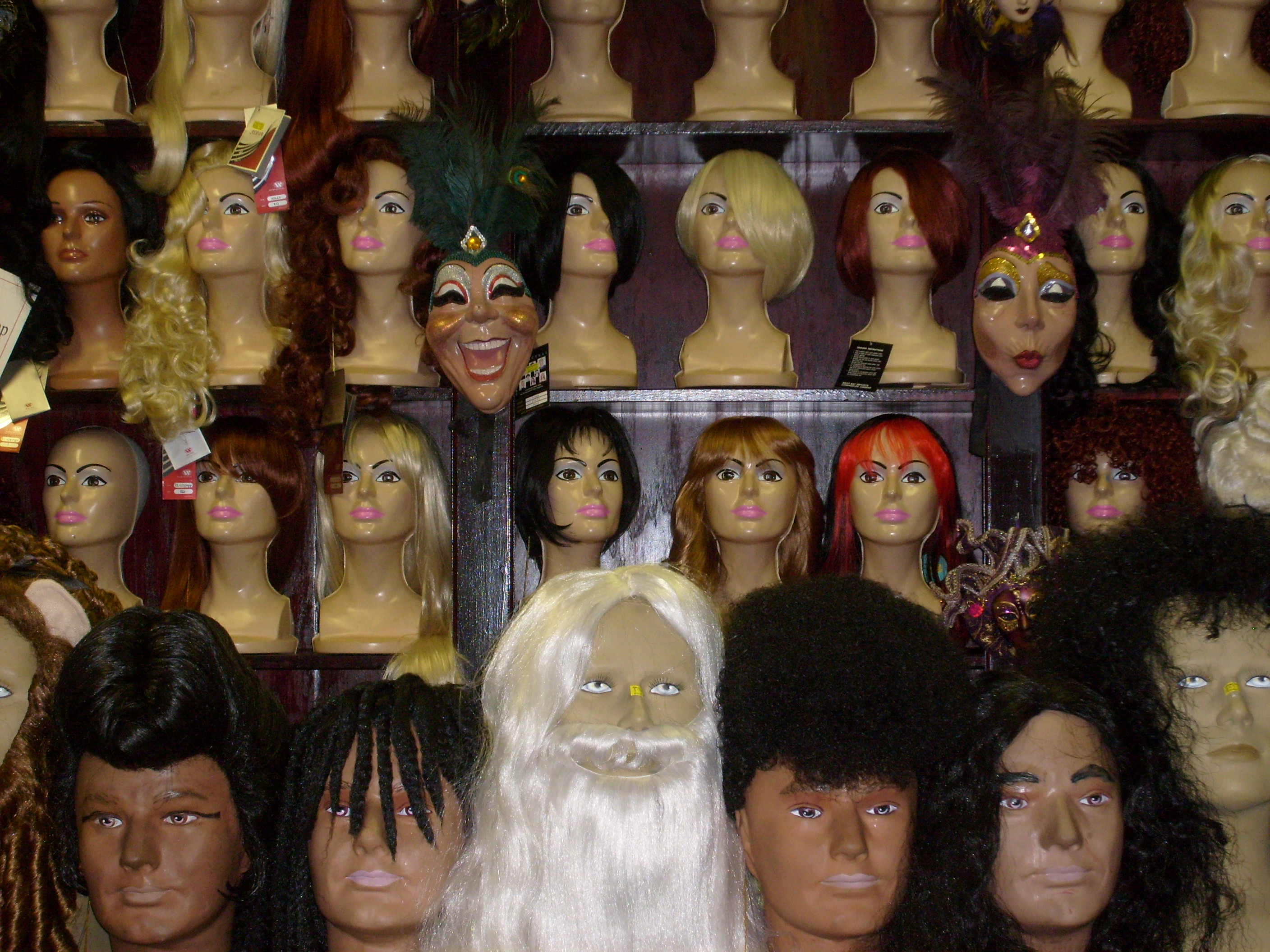
Also, to make your character particularly memorable, give him/her/it a singular physical attribute your reader will long associate with them. Think of it this way, if you were going to a costume party dressed as Harry Potter, Sherlock Holmes, Miss Havisham or Liesbeth Salander – what would you need? My guesses are, respectively: a lightening bolt scar, a deerhunter hat and pipe, an old wedding dress, and a dragon tattoo. Try to imagine what you’d need to be recognizable as your character.