All Three Monkeys And More – sensory writing

What Can Your Character Physically Feel and Touch?

Confining your description of a setting to what is visible, is not to do it justice. A writer should encourage the reader to imagine using all five senses. Think of what this environment would smell like, taste like, feel like and the sounds you would hear. The sense of smell is particularly potent as it is the strongest of memory triggers and naming a distinctive scent will pull your readers into your work.

Sight:::Hearing::::Smell::::Taste::::Touch::::Sight:::Hearing::::Smell::::Taste::::Touch

Compare the following:

Isobel lay on the ground and gazed at a sky dotted with yellow leaves. Smoke curled into view and her eyes  followed its trail to a nearby bonfire.

With

Isobel lay on the ground and gazed at a sky dotted with yellow leaves. The branches rustled like paper bags and the wind carried the scent of a bonfire and air that tasted of earth, smoked, damp earth and beneath her, wet mud seeped through her clothes and onto her skin, cold and embracing.

I think you’ll agree that the second version draws the reader into the setting, allowing them to roundly experience the landscape – via every imaginary sense.

What Can Your Character Hear?

Try to use all senses to describe the following:

Prison cell

Hospital ward

Beach Pub

School room

Your grandmother’s sitting room


You Are Here

On a Busy City Street

A literary setting refers to the landscape and the people/characters that fill it. The setting is the signature of many a writer: Stieg Larsson and Sweden (The Girl with the Dragon Tattoo), Annie Rice and New Orleans (Interview with a Vampire), John le Carre, the world of spies.

Writing what/where you know

It is often said you should “write what you know”. A sensible approach, especially for the new writer. By placing your characters in scenes and situations with which you are familiar, you are more likely to invest a sense of realism in the story. Also, practically speaking, writing about familiar territory will save on research you might otherwise have to do on a subject/setting.

Some writers resist writing what they know as they feel their own environments are not “glamorous” or “extraordinary” enough to merit such attention. This is nonsense. Whatever you do and whoever you are, your life will seem exotic to someone else. The fact that you grew up on a council estate/project developent in Bolton/Kalamazoo is interesting to someone living on a farm in Siberia. Remember, the life of an immigrant taxi-driver would quite likely fascinate the Queen of England.

Also, you don’t necessarily have to set your story in your street or your workplace. Think of your Saturday morning football team, your school, the nightclubs you frequent, a hospital you’ve spent time in or a prison. All are equally valuable settings for a short story, novel, play, film script or even poem or song.

Your environment is your gold, mine it.


But I don’t want to write about my environment…


That’s fine too. There is also case for “writing what you don’t know”. Fantasy writers, for example, are (usually) not elves living in Middle Earth. Historical fiction writers have not lived in Tudor England. Yet, Fantasy/SciFi/Historical novels are written and enjoyed every year.

For Fantasy/SciFi you need a familiarity with the genre and a vivid imagination. For historical fiction you need to like research. For all the above you’ll require the ability to convincingly create an unfamiliar world.

Bear in mind, however, that while a Fantasy writer won’t get complaints from angry elves about his misinformed stereotypes.

A novelist who sets a story in a modern French monastery, and knows nothing about France or monks – is asking for trouble. Firstly, their prose may be riddled with (skewed) perceptions of France and the French, monks/Catholicism/wine-making etc… And not only is there danger of rehashing clichés, their writing might lack the detailed realism a reader finds so reassuring and intriguing. So, if you want to write about banditos in the mountains of Sardinia, and you can’t go and live there for a year – then research, research, research. Read as much as you can on the topic, as well as any other fiction that has used the same environment as a setting.

In a Magical Castle



Haiku! Bless you…

Autumn at Annaghmakerrig

The Japanese know how to appreciate the moment: think of those tea ceremonies where the design and the feel of the cup is lauded, the colour of the drink discussed, the scent, the very feel of the beverage dissected and praised. Not surprising, therefore, the land of the rising sun gave us the haiku.

Haiku is a poetic form that, traditionally, aims to capture a moment in nature, like a snapshot with words. Again, this is most typically achieved using seventeen syllables arranged in three unrhymed lines of five, seven and five syllables.

The practice of writing haikus is particularly useful if you are engaged in a word-limited literary arena such as writing songs. In such instances, words should be chosen carefully so that they can convey the specific mood, meaning and impact you require and haikus can help you build up that muscle. Haikus encourage you to pick up every word and study it closely for its sound, meaning, feel and impact. Here are some examples of the haiku:


Over the wintry

forest, winds howl in  rage

with no leaves to blow.

Soseki (1275-1351)

My all time favourite, however, is the haiku by the ‘punk poet, John Cooper Clarke:


Writing a poem

In seventeen syllables

Is very diffic.

(John Cooper Clarke, 1979)


Which also serves as a useful memory aide for the form…


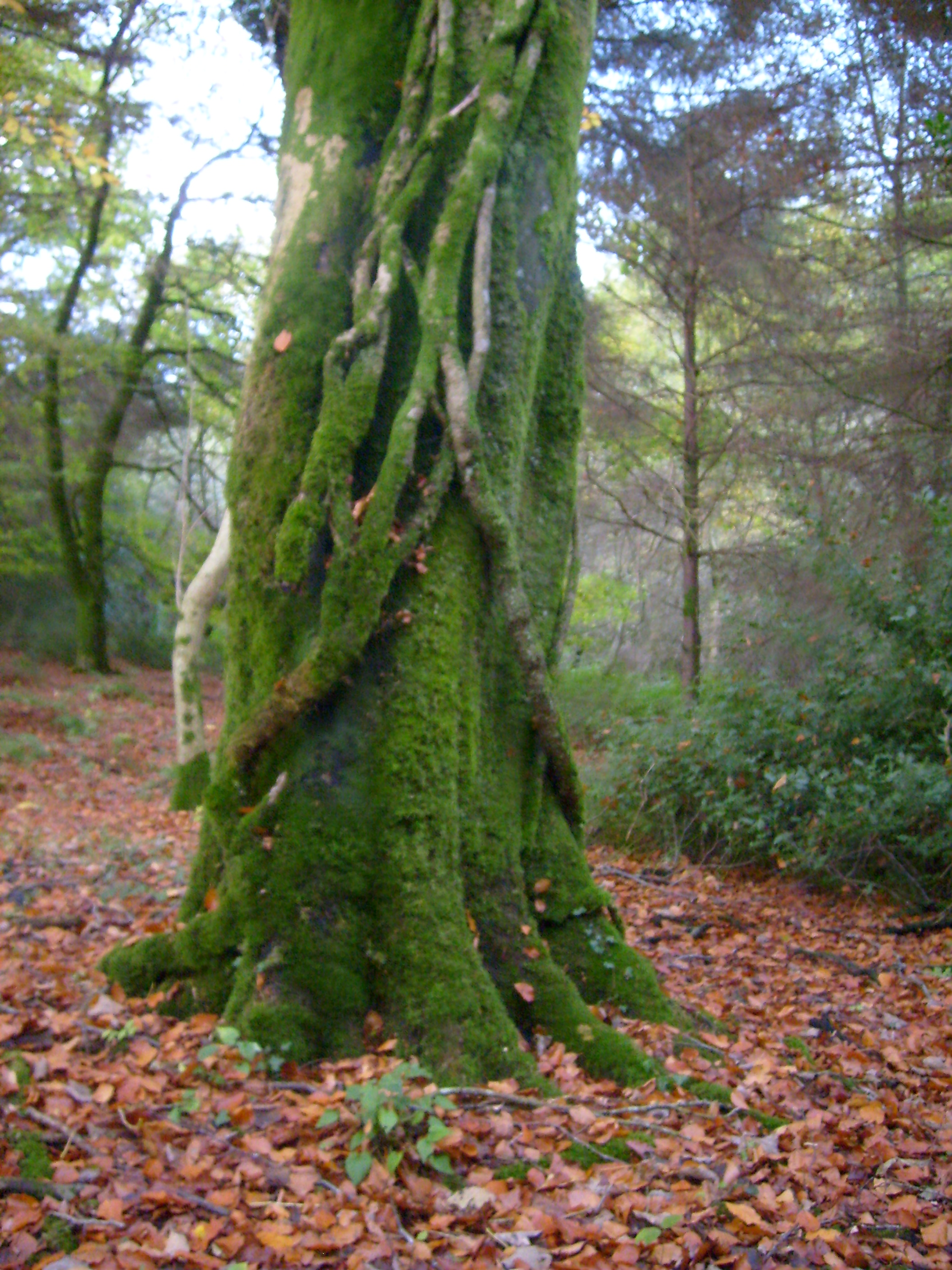
The picture here is crying out for a haiku, can you think of one?


That’s Easy For You to Say…

Words… as a writer and a linguist, I love words. They are the writer’s main tool and there is a particularly lavish spread on offer for the English-speaking writer.

English is a word-rich language and there are more word-families in English than any other language. Crudely, one could say that the English language sprung from a marriage of French and German. For this reason, English has many words from its parent languages that describe quite similarly (ie “loving” is from German and “amorous” is from French). English has also magpied extensively from other languages. Most of my favourite words are ‘borrowed’ words and include: “pyjama” and “shampoo” which come from India (though I’m not sure which specific languages), “Hacienda” and “siesta” which are Spanish. “Itsy-bitsy”, “paprika”, “coach”, “goulash”, “hussar” and “biro” which are Hungarian. “Smithereen”, “galore”, “banshee”, “slew”, “brogue”, “kibosh”, ‘hobo’ and “shanty” which come from Irish. It seems the more obscure or exotic the etymology, the more intriguing and beautiful the word. And I enjoy writing them, love saying them – to paraphrase Frank McCourt, it feels like having jewels in your mouth.

You don’t only construct literary art from words but they also set the tone of the piece and there are certain words and phrases that are closely associated with particular genres of writing.

Romance  type novels I associate with “tawny” and “chiselled”.

SciFi writers invent words to name their machines, planets and creatures such as “Klingons” and “Zogathons”.

Do you associate words with a particular genre? Do you have favourites? I’d love to hear them…


Your Displacement or Mine?

Writing is the only thing in the world that makes me want to do housework.

So, what’s your favourite displacement activity?


Weird, huh? I hate housework, I love writing, so how come every time I’m part way through some writing I suddenly get the urge to do the washing up, tidy, iron, arrange my bookshelves? It’s because my brain is searching for a ‘displacement activity’ apparently.

‘Displacement activity’ is a posh phrase writers have for all the stuff you do that is not the stuff you are SUPPOSED to be doing. Avoidance is probably a more readily understood term, but doesn’t sound half as writerly. What happens is a little ‘displacement monkey’ in your mind distracts you from the task at hand, by urging you to ‘make another cup of tea/check the TV guide/your bank account/ebay/post on this blog : ) rather than crack on with that piece of dialogue you’re trying to get down. Displacement activities can sabotage your writing, they say – though I’m not wholly convinced. I think they sometimes happen for a reason. Perhaps what you’re working on needs time to settle, or percolate in your mind and after you’ve bought those gloves on ebay, it will all come together. However, I admit, I think I’d get a lot more writing done if I didn’t have an Internet connection in my office…

I know a few writers who keep their displacement activity on hand – as another creative hobby and they believe one such activity complements and feeds the other. So, they may start painting and then half way through THAT activity they’ll turn back to their writing as a displacement activity for their painting and so on…

Apart from this blog and the Internet, my favourite displacement activity is taking long walks, which can’t be so bad. What’s yours?


Good MORNING! Good Writing!

There is a theory that the brain is more creative in the morning, especially in your waking moments. For this reason, many writers keep their notepad by their beds and make sure that the very first thing they do when they open their eyes each morning, is write. The resultant notes are called “morning pages”. I’v e only very recently become a fan of this morning exercise but I’m finding it fruitful. I don’t believe it would have worked for me ten years ago when I didn’t ‘do’ mornings, at all, ever. Now, I’m 41. I do mornings and I do them well.


Anyway, enough about my aging. Morning pages might contain what a writer remembers of their dreams or perhaps the writer will simply jot down the very first words that come to mind that day. Some writers say that this exercise helps them ‘slip’ more easily into what writers’ call the “writing rapture” when a writer feels ideas are pouring into their mind. When writers write in the morning, so the theory goes, they are closer to their sleeping state and the mind is more imaginative and/or receptive to ideas.


Having said that, there are plenty of writers who write late at night – for the same reason that they say the closer to sleep they are, the more creative their ideas. Then there are other writers who find their most productive hours are in the middle of the day (the Harry Potter author, J.K. Rowling is a good example. She wrote her first book in a busy Edinburgh café).


Different times of the day work for different people and it is really of no consequence whether you are a morning, day or night writer. What is important is that you write and that you find your ideal writing time. Experiment. Find what works for you and then set an hour aside each day at that time and write.


Likewise, writers have very personal tastes regarding an environment conducive to writing. There are those who like music or TV buzz in the background and those who can only write in silence. Find whatever works for you.


Stories from the 11th Dimension?

I’m told many writers feel ideas are sometimes fed to them from “somewhere else”. That “somewhere else” is a very vague concept and means different things to different scribes. Nonetheless, writers who hold such beliefs say it is very important to allow your mind to be open to receiving these ideas – wherever they come from.

Certainly, I have had moments when I felt plugged into a conduit, receiving stories, characters and ideas. This is a rare enough event – I can never conjure it but if I write often it’ll roll around every now and again. And when they do, they are really magical moments when stories and characters come swimming to me, all done-up, pre-packaged and ready to go.

So who knows… one thing’s for sure, if you keep on working those brain-gym exercises, freewrites and the spidergrams – you’ll get something of the ‘writing rapture’ soon enough. I’d love to hear your thoughts on this….?

A friend sent me this Elizabeth Gilbert TED talk in which she “muses” on this topic. I think it’s must view for all creative types.


Passing on Advice – Freewriting

I’m still figuring out what I want to do with this blog. There are two main goals.

One is to share advice re writing that I’ve picked up over the years, and to tip writers off to competitions and opportunities.

The other is to record my, ahem, rise to the topperiest toppest top of the writing profession : ) …. or maybe just to share the struggle.

As I haven’t won any awards today, nor suffered any significant setbacks, I’m going to blog on a tip that might help ‘springboard’ you into a short story, screen play or even novel : Freewriting.

‘Right now I’m sitting at my computer and the coffee cup is on the edge of my desk. It looks a little like an iceberg, as it is white and chipped and cold because the coffee has been in it since the morning as I didn’t do the washing up last night and the sink is full of plates and saucers. All those plates look surreal sitting unwashed in the sink like that. All at different angles like a Picasso painting with ketchup instead of paint dribbled over the plates. I wonder if Picasso got his ideas from waking up one morning and seeing his jumble of washing up in the sink I wonder if all the museums in the world actually have pictures of Picasso’s washing up and not his mistresses and Guernica and does that mean the joke is on us?’

The above freewrite might seem silly but it’s also an example of how freewriting could, potentially, inspire a proper piece of writing. This daft thought about Picasso’s washing up could easily be worked into a comedy radio play where a hung-over Pablo Picasso and Henri Matisse wake up after a night out on the town and dare each other to paint a picture of the mess of washing up in the sink. Thus, the modern art movement is accidentally launched. Another possibility you could take from this freewrite is the concept that something generally considered ugly and in need of repair or attention (washing up) can lead to tremendous artistic inspiration – and this idea could form the kernel of a short story or a poem. Here, chose one of the prompts below and let it lead you into a three minute freewrite.

I wish I had said….

It was no use pretending….

A long time ago…

For the first time ever….


Work it, Work it – Brain Gym for the Scribe.

You’re staring at a blank sheet, it’s 6am and you’ve risen early just to get those ‘morning pages’ done. However, all your brain can compute at cock crow is that there is a sheet in front of you and its screaming white empty and going nowhere.

You need brain gym.

Just as many artists will apply a beige wash to a blank canvas to stop it looking so freaking virgin – you’ll need to put something down on the page – “hggahgoidihgogha” will do, just get something down, break that white, crack that ice. Next, do a non-dominant hand exercise. If you are right-handed, then pick up a pen and start to write with your left. If you’re on a laptop, then type “The quick brown fox…” with your left hand alone. If you’re left-handed, apply vice vearsa. Enjoy the sensation of the pen flowing over your paper or the tap of your finger tips on the keyboard and don’t think too hard about what you’re writing. Let it flow.

When you’ve written out the fox/dog sentence a few times, continue on with the story. Where does the fox go next? Why is the dog feeling lazy? Where are they? What does the air smell like? What sounds can you/they hear? Is it hot or cold? Wet or dry? How does the dog feel when the fox jumps over him? Does he plan revenge? Once you’ve done a paragraph or two, you’ll probably find that the creative juices are flowing enough for you to turn your attention to that story you were working on before – or read over your freewrite, there might be the kernel of something worth working on.

Work it, Scribe!


Try the proverbial….

Trees don't grow to the sky

Some writers get the story down before they start to figure out what it’s all about. Others need their theme in hand – but may have trouble simplifying a philosophy. If you’re flailing about for a universal truth to get your writerly jaw into, a good place to seek inspiration is a list of proverbs. A proverb is usually a metaphor and often encapsulates in simple terms, a lesson from the common experience of humanity. Sit down and have a think about the specific meaning of the following and then go freewrite a story illustrating this philosophy. I’d love to hear how you get on!

Graveyards are full of indispensable people.

You can catch more flies with honey than you can with vinegar.

A little learning is a dangerous thing.

The belly has no ears.

Trees don’t grow to the sky.

A dumb priest never got a parish.

The only free cheese is in the mousetrap.

Eaten bread is soon forgotten.

Got any you’d care to share?