Category Archives: Uncategorized

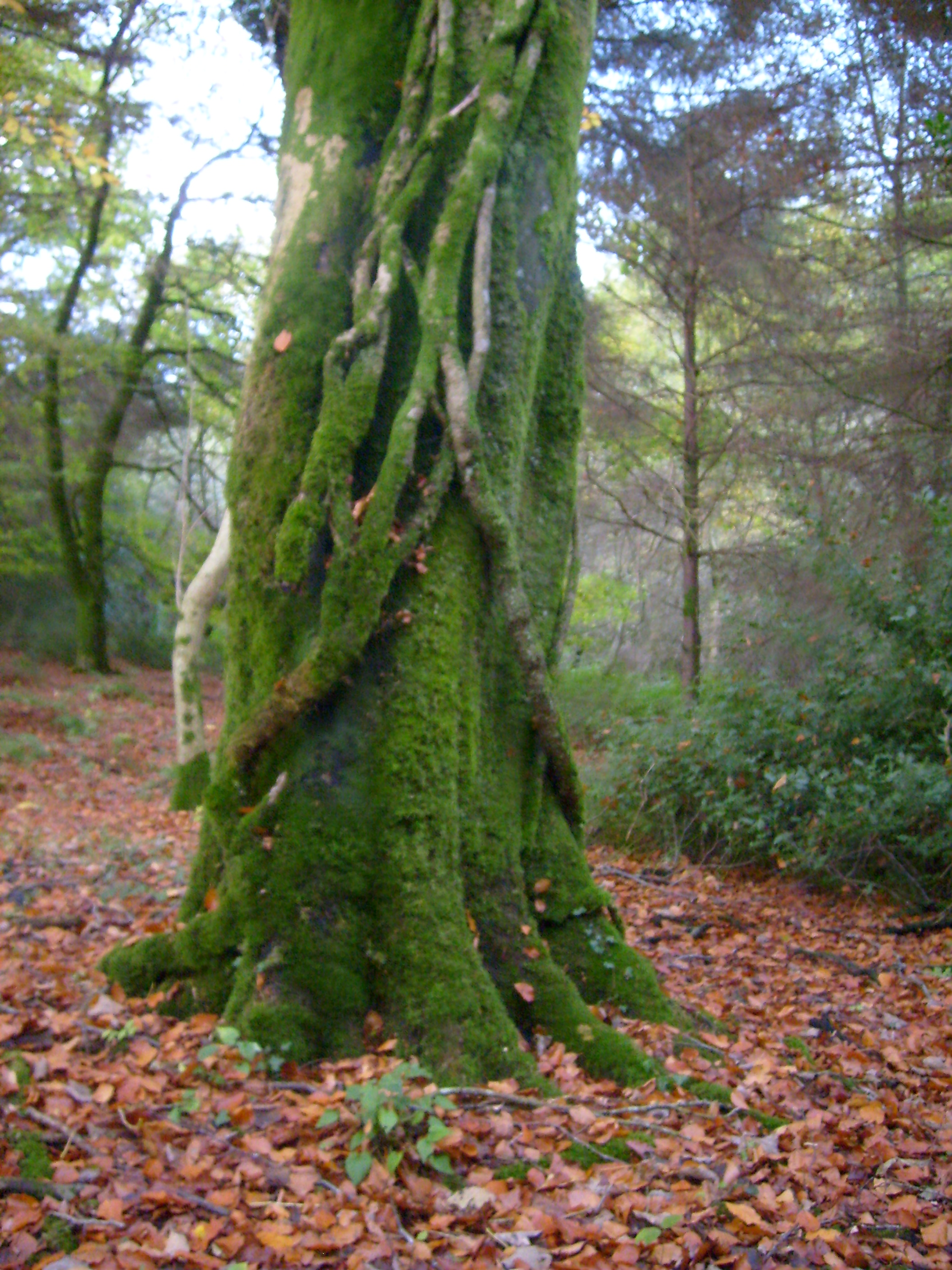
Autumn at Annaghmakerrig
The Japanese know how to appreciate the moment: think of those tea ceremonies where the design and the feel of the cup is lauded, the colour of the drink discussed, the scent, the very feel of the beverage dissected and praised. Not surprising, therefore, the land of the rising sun gave us the haiku.
Haiku is a poetic form that, traditionally, aims to capture a moment in nature, like a snapshot with words. Again, this is most typically achieved using seventeen syllables arranged in three unrhymed lines of five, seven and five syllables.
The practice of writing haikus is particularly useful if you are engaged in a word-limited literary arena such as writing songs. In such instances, words should be chosen carefully so that they can convey the specific mood, meaning and impact you require and haikus can help you build up that muscle. Haikus encourage you to pick up every word and study it closely for its sound, meaning, feel and impact. Here are some examples of the haiku:
Over the wintry
forest, winds howl in rage
with no leaves to blow.
Soseki (1275-1351)
My all time favourite, however, is the haiku by the ‘punk poet, John Cooper Clarke:
Writing a poem
In seventeen syllables
Is very diffic.
(John Cooper Clarke, 1979)
Which also serves as a useful memory aide for the form…
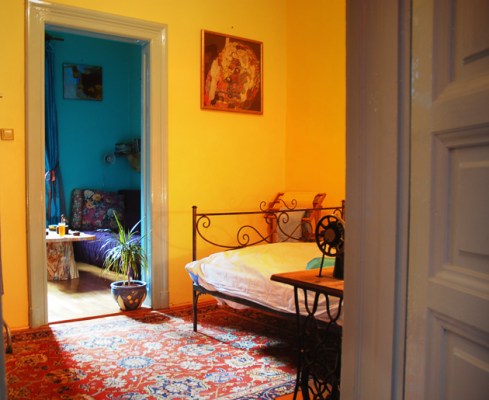
The picture here is crying out for a haiku, can you think of one?
8 Comments | tags: Haiku, ideas, inspiration, poems, poetry, words, writer, writers, writing, writing exercise | posted in Uncategorized, Writing

Words… as a writer and a linguist, I love words. They are the writer’s main tool and there is a particularly lavish spread on offer for the English-speaking writer.
English is a word-rich language and there are more word-families in English than any other language. Crudely, one could say that the English language sprung from a marriage of French and German. For this reason, English has many words from its parent languages that describe quite similarly (ie “loving” is from German and “amorous” is from French). English has also magpied extensively from other languages. Most of my favourite words are ‘borrowed’ words and include: “pyjama” and “shampoo” which come from India (though I’m not sure which specific languages), “Hacienda” and “siesta” which are Spanish. “Itsy-bitsy”, “paprika”, “coach”, “goulash”, “hussar” and “biro” which are Hungarian. “Smithereen”, “galore”, “banshee”, “slew”, “brogue”, “kibosh”, ‘hobo’ and “shanty” which come from Irish. It seems the more obscure or exotic the etymology, the more intriguing and beautiful the word. And I enjoy writing them, love saying them – to paraphrase Frank McCourt, it feels like having jewels in your mouth.
You don’t only construct literary art from words but they also set the tone of the piece and there are certain words and phrases that are closely associated with particular genres of writing.
Romance type novels I associate with “tawny” and “chiselled”.
SciFi writers invent words to name their machines, planets and creatures such as “Klingons” and “Zogathons”.
Do you associate words with a particular genre? Do you have favourites? I’d love to hear them…
1 Comment | tags: etymology, Hungarian, inspiration, Irish, language, linguist, spelling, words, writer, writing | posted in Uncategorized, Writing
Writing is the only thing in the world that makes me want to do housework.

So, what’s your favourite displacement activity?
Weird, huh? I hate housework, I love writing, so how come every time I’m part way through some writing I suddenly get the urge to do the washing up, tidy, iron, arrange my bookshelves? It’s because my brain is searching for a ‘displacement activity’ apparently.
‘Displacement activity’ is a posh phrase writers have for all the stuff you do that is not the stuff you are SUPPOSED to be doing. Avoidance is probably a more readily understood term, but doesn’t sound half as writerly. What happens is a little ‘displacement monkey’ in your mind distracts you from the task at hand, by urging you to ‘make another cup of tea/check the TV guide/your bank account/ebay/post on this blog : ) rather than crack on with that piece of dialogue you’re trying to get down. Displacement activities can sabotage your writing, they say – though I’m not wholly convinced. I think they sometimes happen for a reason. Perhaps what you’re working on needs time to settle, or percolate in your mind and after you’ve bought those gloves on ebay, it will all come together. However, I admit, I think I’d get a lot more writing done if I didn’t have an Internet connection in my office…
I know a few writers who keep their displacement activity on hand – as another creative hobby and they believe one such activity complements and feeds the other. So, they may start painting and then half way through THAT activity they’ll turn back to their writing as a displacement activity for their painting and so on…
Apart from this blog and the Internet, my favourite displacement activity is taking long walks, which can’t be so bad. What’s yours?
13 Comments | tags: Art, displacement, displacement activities, displacement activity, housework, inspiration, literary, novel, painting, short stories, short story, walking, writer, writers, writing, writing exercise | posted in Uncategorized, Writing
There is a theory that the brain is more creative in the morning, especially in your waking moments. For this reason, many writers keep their notepad by their beds and make sure that the very first thing they do when they open their eyes each morning, is write. The resultant notes are called “morning pages”. I’v e only very recently become a fan of this morning exercise but I’m finding it fruitful. I don’t believe it would have worked for me ten years ago when I didn’t ‘do’ mornings, at all, ever. Now, I’m 41. I do mornings and I do them well.
Anyway, enough about my aging. Morning pages might contain what a writer remembers of their dreams or perhaps the writer will simply jot down the very first words that come to mind that day. Some writers say that this exercise helps them ‘slip’ more easily into what writers’ call the “writing rapture” when a writer feels ideas are pouring into their mind. When writers write in the morning, so the theory goes, they are closer to their sleeping state and the mind is more imaginative and/or receptive to ideas.
Having said that, there are plenty of writers who write late at night – for the same reason that they say the closer to sleep they are, the more creative their ideas. Then there are other writers who find their most productive hours are in the middle of the day (the Harry Potter author, J.K. Rowling is a good example. She wrote her first book in a busy Edinburgh café).
Different times of the day work for different people and it is really of no consequence whether you are a morning, day or night writer. What is important is that you write and that you find your ideal writing time. Experiment. Find what works for you and then set an hour aside each day at that time and write.
Likewise, writers have very personal tastes regarding an environment conducive to writing. There are those who like music or TV buzz in the background and those who can only write in silence. Find whatever works for you.
8 Comments | tags: bed, competitions, ideas, inspiration, literary, morning, novel, poem, short stories, short story, writer, writers, writing, writing exercise | posted in Uncategorized, Writing
I’m told many writers feel ideas are sometimes fed to them from “somewhere else”. That “somewhere else” is a very vague concept and means different things to different scribes. Nonetheless, writers who hold such beliefs say it is very important to allow your mind to be open to receiving these ideas – wherever they come from.
Certainly, I have had moments when I felt plugged into a conduit, receiving stories, characters and ideas. This is a rare enough event – I can never conjure it but if I write often it’ll roll around every now and again. And when they do, they are really magical moments when stories and characters come swimming to me, all done-up, pre-packaged and ready to go.
So who knows… one thing’s for sure, if you keep on working those brain-gym exercises, freewrites and the spidergrams – you’ll get something of the ‘writing rapture’ soon enough. I’d love to hear your thoughts on this….?
A friend sent me this Elizabeth Gilbert TED talk in which she “muses” on this topic. I think it’s must view for all creative types.
1 Comment | tags: creativity, Elizabeth Gilbert, freewrite, ideas, inspiration, literary, novel, publish, short story, writer, writers, writing, writing exercise | posted in Uncategorized, Writing
I’m still figuring out what I want to do with this blog. There are two main goals.

One is to share advice re writing that I’ve picked up over the years, and to tip writers off to competitions and opportunities.
The other is to record my, ahem, rise to the topperiest toppest top of the writing profession : ) …. or maybe just to share the struggle.
As I haven’t won any awards today, nor suffered any significant setbacks, I’m going to blog on a tip that might help ‘springboard’ you into a short story, screen play or even novel : Freewriting.
‘Right now I’m sitting at my computer and the coffee cup is on the edge of my desk. It looks a little like an iceberg, as it is white and chipped and cold because the coffee has been in it since the morning as I didn’t do the washing up last night and the sink is full of plates and saucers. All those plates look surreal sitting unwashed in the sink like that. All at different angles like a Picasso painting with ketchup instead of paint dribbled over the plates. I wonder if Picasso got his ideas from waking up one morning and seeing his jumble of washing up in the sink I wonder if all the museums in the world actually have pictures of Picasso’s washing up and not his mistresses and Guernica and does that mean the joke is on us?’
The above freewrite might seem silly but it’s also an example of how freewriting could, potentially, inspire a proper piece of writing. This daft thought about Picasso’s washing up could easily be worked into a comedy radio play where a hung-over Pablo Picasso and Henri Matisse wake up after a night out on the town and dare each other to paint a picture of the mess of washing up in the sink. Thus, the modern art movement is accidentally launched. Another possibility you could take from this freewrite is the concept that something generally considered ugly and in need of repair or attention (washing up) can lead to tremendous artistic inspiration – and this idea could form the kernel of a short story or a poem. Here, chose one of the prompts below and let it lead you into a three minute freewrite.
I wish I had said….
It was no use pretending….
A long time ago…
For the first time ever….
2 Comments | tags: advice, competitions, freewrites, freewriting, inspiration, radio play, screenplay, short story, writers, writing | posted in Uncategorized
You’re staring at a blank sheet, it’s 6am and you’ve risen early just to get those ‘morning pages’ done. However, all your brain can compute at cock crow is that there is a sheet in front of you and its screaming white empty and going nowhere.
You need brain gym.
Just as many artists will apply a beige wash to a blank canvas to stop it looking so freaking virgin – you’ll need to put something down on the page – “hggahgoidihgogha” will do, just get something down, break that white, crack that ice. Next, do a non-dominant hand exercise. If you are right-handed, then pick up a pen and start to write with your left. If you’re on a laptop, then type “The quick brown fox…” with your left hand alone. If you’re left-handed, apply vice vearsa. Enjoy the sensation of the pen flowing over your paper or the tap of your finger tips on the keyboard and don’t think too hard about what you’re writing. Let it flow.
When you’ve written out the fox/dog sentence a few times, continue on with the story. Where does the fox go next? Why is the dog feeling lazy? Where are they? What does the air smell like? What sounds can you/they hear? Is it hot or cold? Wet or dry? How does the dog feel when the fox jumps over him? Does he plan revenge? Once you’ve done a paragraph or two, you’ll probably find that the creative juices are flowing enough for you to turn your attention to that story you were working on before – or read over your freewrite, there might be the kernel of something worth working on.
Work it, Scribe!
3 Comments | tags: Brain-gym, freewrite, left-handed, morning pages, quick brown fox, short story, work it, writer, writers, writing, writing exercise | posted in Uncategorized

Trees don't grow to the sky
Some writers get the story down before they start to figure out what it’s all about. Others need their theme in hand – but may have trouble simplifying a philosophy. If you’re flailing about for a universal truth to get your writerly jaw into, a good place to seek inspiration is a list of proverbs. A proverb is usually a metaphor and often encapsulates in simple terms, a lesson from the common experience of humanity. Sit down and have a think about the specific meaning of the following and then go freewrite a story illustrating this philosophy. I’d love to hear how you get on!
Graveyards are full of indispensable people.
You can catch more flies with honey than you can with vinegar.
A little learning is a dangerous thing.
The belly has no ears.
Trees don’t grow to the sky.
A dumb priest never got a parish.
The only free cheese is in the mousetrap.
Eaten bread is soon forgotten.
Got any you’d care to share?
4 Comments | tags: old saying, proberbs, proverb, proverbs, short story, theme | posted in Uncategorized, Writing
 Line ’em up in August
Name: New Eastbourne Writers 2nd National Short Story Competition
Theme: Lucky Break
Prize: £100
Deadline: 27th August 2011
Entry fee: £5
Entry procedure: Post
Website: http://www.neweastbournewriters.co.uk/
Name: British Red Cross Creative Writing Competition
Theme: The Disappeared
Prize: £50
Deadline: 30th Aug
Entry fee: n/a
Entry procedure: email or post
Website: http://www.redcross.org.uk/What-we-do/Finding-missing-family/International-Day-of-the-Disappeared/Creative-writing-competition
Name: Meridian Writing Autumn Short Story Competition
Theme: n/a
Prize: £100
Deadline: 31st August
Entry fee: £5
Entry procedure: email
Website: http://www.meridian-writing.co.uk
Name: Aesthetica Creative Works Competition
Theme: n/a
Prize: £500
Deadline: 31st August
Entry fee: £10
Entry procedure:
Website: http://www.aestheticamagazine.com/submission_guide.htm
Name: The Write Place Creative Writing School Competition
Theme: n/a
Prize: £100
Deadline: 31st August
Entry fee: £4.50
Entry procedure: Post
Website: http://www.thewriteplace.org.uk/page8.htm
Name: Gemini Magazine Third Annual Flash Fiction Contest
Theme: n/a
Prize: $1,000
Deadline: 31st August
Entry fee: $4
Entry procedure: Email
Website: http://www.gemini-magazine.com/contest.html
Name: Sid Chaplin Short Story Competition
Theme: n/a
Prize: £300
Deadline: 31st August
Entry fee: £2.50
Entry procedure: Post
Website: http://www.shildon.gov.uk/documents/CompetitionRules.doc
Good luck!
xox Sue
Leave a comment | tags: Short-story competitions | posted in Uncategorized

Fishing for plot ideas? Did you hear the one about the man….
Jokes! Jokes are a great source of plot ideas. An established writer gave me this tip years ago and yesterday I did a class with the crims on the concept.
Jokes, you see, are plots in miniature. Stories sealed up and ready to go. You’ve got your beginning, middle, end, your conflict, your characters – flaws and all. All you’ve got to do is flesh it out. Expland on it. Change gender and setting if possible. And no, it doesn’t have to be funny because many jokes (indeed, stories) need an element of tragedy to make comedy (and vice vearsa) and you can just crank up the aspect you want to emphasize.
Here’s a joke that’s given me an idea for a short story:
“It was Ryan’s funeral and the pallbearers were carrying the casket out from the church. When they bumped into a pillar, one of them heard a moan from inside the coffin. They opened the lid and found Ryan alive. He lived for another ten years before he properly died. Another funeral was held for him and, as the pallbearers were carrying out the coffin, Mrs Ryan shouted “Now, watch out for that pillar!”
OK, it’s the way ya tell ’em… But the point is that they don’t have to be the funniest jokes – just so long as there is a story in there, a universal truth with which your readers will react and engage. Wordplay/puns won’t work so well, go for the story…
Here’s another one you can chew on for a story idea (my ‘students’ liked this one):
The defendant knew he didn’t have a prayer of beating the murder rap, so he bribed one of the jurors to find him guilty of manslaughter. The jury was out for days before they finally returned a verdict of manslaughter. Afterward the defendant asked, ‘How come it took you so long?’ the juror said, ‘All the others wanted to acquit’.
Leave a comment | tags: joke, jokes, plot, plots, short stories, short story | posted in Uncategorized






 suehealy